ovo heat pump tariff: maximize savings with smart tariff choices
Explore how the ovo heat pump tariff works, how to compare price signals, and how Heatpump Smart recommends optimizing heat pump usage for energy savings and home comfort.


An ovo heat pump tariff is a consumer energy plan designed to align electricity costs with Ovo Energy pricing for heat pumps, typically rewarding off-peak usage and charging more during peak times. To decide, compare price per kWh, flexibility, and contract terms against standard tariffs, and check meter or smart-device requirements before switching.
Why ovo heat pump tariff matters for homeowners
According to Heatpump Smart, the ovo heat pump tariff options are designed to align electric heating with price signals on the grid, helping households lower running costs when energy prices are favorable and reduce peak demand when prices spike. For homeowners, builders, and property managers, understanding how these tariffs work matters because the timing of heat pump operation can noticeably affect annual energy spend and comfort. This article explains how Ovo's tariff structures interact with heat pump technology, what to look for when evaluating a tariff, and how to optimize your home's operation to maximize value without sacrificing comfort. We'll discuss typical price signals, meter requirements, and practical steps to compare options. Heatpump Smart analyses emphasize considering your property's insulation, climate, and occupancy patterns as the foundation for any tariff choice. If you already have an ovo heat pump tariff, you can tailor your usage to the off-peak windows and maintain comfort with smart controls.
How heat pump tariffs differ from standard usage tariffs
Most standard tariffs bill you for a fixed price per kilowatt-hour and a daily standing charge, regardless of when you heat your home. By contrast, ovo heat pump tariff options typically structure prices around time-of-day or demand signals. This means you pay less when you run during off-peak hours and potentially more when demand or grid constraints push prices higher. The key is to understand how the tariff's price signals map to your heat pump's charging and heating cycles. For heat pumps, the ability to shift cycling, pre-heating, and defrost timing can translate into meaningful savings, especially in shoulder seasons and cold snaps when outdoor temperatures affect efficiency. Always verify meter compatibility and any minimum usage requirements, as these factors can influence both cost and comfort. Heatpump Smart analysis notes that performance varies by region and by how well controls are integrated with your home's insulation and occupancy.
Key features to look for in a heat pump tariff with Ovo
When evaluating an ovo heat pump tariff, focus on the following features:
- Off-peak windows: Look for clear, predictable off-peak times that align with your heating schedule.
- Real-time price signals: Understand whether the tariff uses hourly rates, half-hour rates, or daily price tiers.
- Meter and device compatibility: Confirm that your smart meter and heating controller can receive price signals and automatically adjust.
- Fees and contract terms: Check for installation charges, switching fees, and minimum contract lengths.
- Data access and support: Ensure you can access usage data to optimize your pattern and get timely help if prices or temperatures shift.
A well-matched ovo heat pump tariff will pair with a smart controller to gently shift heating to off-peak periods without sacrificing comfort.
How to evaluate savings: methodology and variables
Evaluating savings from an ovo heat pump tariff requires a practical, data-driven approach. Start with your current annual energy spend under a standard tariff, then model how heat pump usage would look under the tariff’s price structure. Key variables include climate (which affects COP), insulation, occupancy, and typical heating load. Because hourly prices and usage patterns vary, your savings will likely appear as a range rather than a precise number. Heatpump Smart Analysis, 2026 notes that the best outcomes come from consistent pre-heating, overnight charging, and avoiding heating during peak periods. A simple framework is: annual cost = sum over hours(price(hour) × kWh_used(hour)). Modeling across a full year gives a realistic band of potential savings, not a single point estimate.
Practical steps to enroll and optimize your usage
Getting started with an ovo heat pump tariff involves a few pragmatic steps. First, confirm your meter type and ensure your smart meter or connected thermostat can receive price signals. Next, compare ovo’s tariff options against your current plan, focusing on off-peak windows, rate volatility, and any minimum contract terms. Install or configure a smart thermostat or heat pump controller that can automatically shift usage to off-peak periods. Establish a baseline by logging a couple of weeks of usage under your current routine, then pilot one tariff during a shoulder season to validate the expected behavior. If available, enable data sharing with your provider to monitor real-time costs and adjust settings accordingly. Heatpump Smart’s perspective emphasizes pairing tariffs with building improvements like insulation upgrades to maximize value.
Common pitfalls and how to avoid them
Tariff-based savings can evaporate if you overlook key details. Common pitfalls include not aligning heating schedules with off-peak times, failing to enable price-responsive controls, and ignoring fixed charges or meter compatibility. Another risk is underestimating the impact of poor insulation or inadequate weatherization, which can force longer heating cycles during expensive periods. Before committing, run a short trial period that compares actual costs under the tariff with a forecast from your model. Remember to review the contract length and any penalties for early exit, as these factors affect long-term value. Heatpump Smart cautions that price signals are only as good as your home's ability to respond to them.
Real-world scenarios: when Ovo heat pump tariffs work best
Scenario A: A well-insulated family home with a modern air-source heat pump and a flexible work-from-home pattern. In this setup, shifting heating to off-peak windows during extended winter evenings can yield noticeable annual savings without compromising comfort. Scenario B: A rental property with a programmable thermostat and tenants who have predictable occupancy. If the building is properly insulated and the tariff offers a stable off-peak window, the landlord can achieve steady savings while maintaining occupant comfort. In both cases, the tariff’s effectiveness improves when the home’s envelope is tight and the heating system responds automatically to price signals. Heatpump Smart notes that real-world results depend on local price signals and how proactively households manage their heating routines.
The role of smart controls and supplementary efficiency measures
Smart controls are the bridge between tariff design and actual savings. A connected thermostat, weather compensation, and COP-aware controls allow the heat pump to modulate output without over- or under-heating a space. Pairing this with insulation improvements, vent sealing, and controlled ventilation reduces heat loss, boosting efficiency further. If you combine a favorable ovo heat pump tariff with a well-insulated home and a dynamic heating strategy, the energy costs can become more predictable and lower, even in colder months. Heatpump Smart emphasizes that the combination of tariff strategy and house efficiency produces the best long-term outcomes.
Long-term considerations and policy context
Price-signaled tariffs like ovo heat pump tariff are part of a broader shift toward demand-side flexibility and decarbonization. Over time, grid operators encourage responsive heating loads to balance supply and demand, which can favor homes that can adapt to price signals. This makes investments in insulation, air sealing, and vent management more valuable, as efficiency reduces the base load that must be managed by tariffs. For property owners and managers, staying informed about policy developments, grid tariffs, and supplier programs can help optimize long-term costs and comfort. The Heatpump Smart team reminds readers to regularly reassess tariff choices as prices and terms evolve, ensuring configurations remain aligned with usage patterns and climate changes.
Tariff types for heat pumps and their typical fit and impact
| Tariff Type | Meter Requirement | Best For | Typical Bill Impact |
|---|---|---|---|
| Time-of-Use (TOU) | Smart meter | Households with flexible heating needs | Potential savings highly dependent on usage patterns |
| Fixed-price with peak/off-peak windows | Smart meter | Budget-conscious households | Predictable bills with moderate savings |
| Dynamic/demand-response tariff | Smart meter | Homes with responsive control strategies | Savings depend on price signals and control effectiveness |
Your Questions Answered
What is an ovo heat pump tariff?
An ovo heat pump tariff is Ovo Energy's pricing plan designed for electric heating. It uses price signals to reward off-peak usage and may charge more during peak periods. Compare these signals against your current plan to see potential savings and check any meter or device requirements.
Ovo’s tariff answers when you heat, so you can save money by using the heat pump when prices are lower.
Do I need a smart meter to access ovo heat pump tariff?
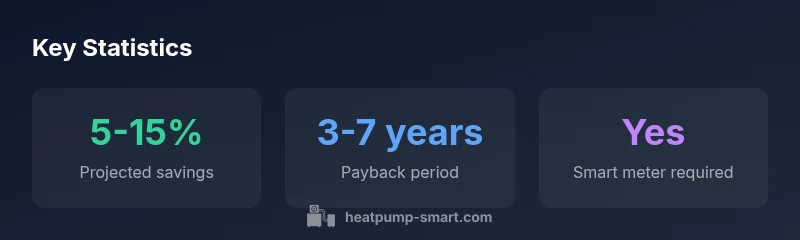
Yes, most heat-pump tariffs rely on real-time price signals, so a smart meter or compatible device is typically required to access the full tariff benefits.
Yes—you usually need a smart meter to access price signals and optimize heating.
How do I compare ovo heat pump tariff to other tariffs?
Start by comparing per-kWh rates, off-peak windows, and any fixed charges. Also consider contract length and the ease of linking your heat pump controls. Use a simple model to estimate annual costs under each option.
Compare price signals, flexibility, and contract terms; run a quick cost model.
Will a heat pump tariff work in cold climates?
Heat pumps are generally efficient in cold climates, but tariff benefits depend on heating patterns and insulation. Price signals matter most when you can shift heating to cheaper periods without compromising comfort.
Yes, but success depends on usage patterns and building efficiency.
What are common pitfalls when using ovo heat pump tariff?
Common pitfalls include misaligning heating schedules with off-peak times, ignoring data access, and failing to account for fixed charges. A short trial period helps verify expected savings.
Watch for misalignment with off-peak times and hidden charges.
Can landlords offer ovo heat pump tariffs to tenants?
Tariff eligibility varies by property and billing setup. Tenants may access if the property is billed under a structure that supports tariff plans, or if the landlord arranges it with the supplier.
It depends on how the property is billed and who signs the contract.
“A heat pump tariff is most effective when aligned with actual heating needs and smart-control practices, rather than relying on price signals alone.”
Top Takeaways
- Start with a clear baseline of your current costs.
- Match tariff windows to when your heat pump runs most.
- Ensure your meter and controls can receive price signals.
- Invest in insulation to maximize tariff savings.
- The Heatpump Smart team recommends testing tariffs against actual usage and staying flexible.