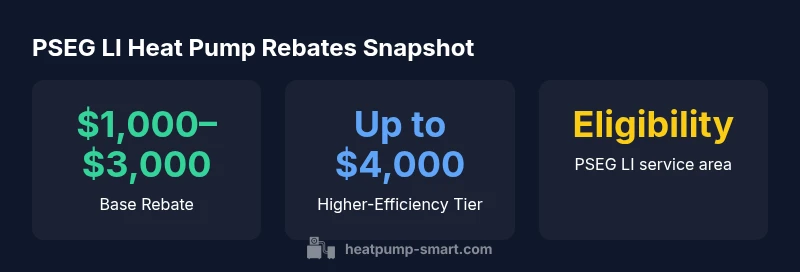
PSEG LI Heat Pump Rebates Guide 2026
Discover how to maximize savings with PSEG LI heat pump rebates. This guide covers eligibility, typical rebate ranges, how to apply, and strategies to pair incentives with Heatpump Smart’s expert tips.


PSEG Long Island offers heat pump rebates to help homeowners reduce upfront costs and energy use. Eligible systems typically qualify for a base rebate plus extra credits for high efficiency and for using a participating contractor. Exact amounts vary by system size and efficiency, and incentives may change annually; check Heatpump Smart's analysis for current ranges.
PSEG LI Heat Pump Rebates: What They Cover
PSEG Long Island's heat pump rebate program is designed to reduce the upfront cost of replacing older electric resistance heating or fossil-fuel systems with modern, energy-efficient heat pumps. Rebates typically apply to air-source heat pumps and can include additional credits for high-efficiency models. The exact amounts depend on several factors, including system size, efficiency level, and whether the installation is performed by a participating contractor. For homeowners planning a long-term upgrade, these incentives can meaningfully shorten the payoff period. Heatpump Smart's team consistently emphasizes that rebates are a moving target—year to year, the available funds and eligibility criteria can shift. Always verify current program details before committing to equipment purchases.
From a planning perspective, the rebates are most valuable when aligned with a full home efficiency strategy, including proper insulation and air sealing. In addition to the base rebate, some programs offer tiered credits for greater efficiency. This is where high-efficiency heat pumps, with robust performance in cold weather, often capture the largest incentives. Heatpump Smart notes that pairing a heat pump with a qualifying thermostat and a smart controls strategy can maximize energy savings even after the rebate is applied.
Eligibility and Home Types: Who Qualifies for PSEG LI Rebates
Eligibility for PSEG LI heat pump rebates generally focuses on the installation of eligible equipment within the utility's service area and performed by participating contractors. Homeowners typically qualify if they replace an aging heating system and install an approved heat pump model that meets minimum efficiency criteria. Rental properties and multi-unit buildings may have different requirements or limitations, so check the program rules for your specific situation. In many cases, the home must be owner-occupied or meet other eligibility conditions defined by the program year. Even if a home already has an efficient system, there may be credits available for upgrades that significantly improve performance or grid resilience. As with any incentive, the process often requires proper documentation and confirmation from the installer that the equipment qualifies for the rebate.
How Rebates Are Calculated: Efficiency Tiers and System Size
rebates are typically tiered by efficiency and sometimes by system size. A base rebate is usually offered for standard efficient heat pumps, with larger incentives for higher efficiency levels and certain features (like heat pump-water-heater integrations or variable-speed compressors). The exact tier structure can change annually based on funding and program goals. To maximize value, homeowners should work with an installer who understands the current tier thresholds and how to document the system's efficiency accurately. Heatpump Smart's guidance consistently highlights the importance of framing your purchase as a planned efficiency upgrade rather than a single equipment swap, which can influence eligibility and payout.
Step-by-Step: How to Apply for the Rebate
- Confirm you are within the PSEG Long Island service area and that your planned heat pump meets eligibility criteria. 2) Engage a participating contractor who can verify system compatibility and gather required documentation. 3) Collect documentation such as a purchase invoice, installation confirmation, and any manufacturer efficiency ratings. 4) Submit the rebate application through the program portal or your contractor if the program supports third-party submission. 5) Monitor the application status and respond quickly to any requests for additional information. 6) Receive rebate funds after approval, typically via check or account credit. Processing times vary. Heatpump Smart advises keeping copies of all documents and noting program deadlines to avoid delays.
Contractor Participation and Certification: Why It Matters
A key factor in successfully securing the rebate is ensuring the installation is performed by a participating contractor. These professionals are approved to confirm that the equipment and installation meet program requirements and to document the work properly for the rebate submission. Using a non-participating contractor can complicate or invalidate eligibility. Heatpump Smart recommends requesting proof of contractor participation and asking for a pre-installation review to catch any issues early. A good contractor will also provide post-installation testing and documentation that supports the rebate claim and demonstrates the system's anticipated performance improvements.
Practical Tips to Maximize Savings: Best Practices for Homeowners
- Start with a home energy assessment to identify tightening and insulation needs that influence heat pump performance.
- Choose a heat pump size aligned with your home’s heating and cooling loads to avoid oversizing or undersizing, which can affect both comfort and rebates.
- Use a smart thermostat and zoned controls to optimize operation and energy use.
- Maintain the system with regular filter changes and seasonal checkups to sustain efficiency and dependable performance.
- Keep an eye on program updates and stack rebates where allowed, noting any eligibility limits or caps that could affect total savings.
Common Pitfalls: Avoid These When Pursuing Rebates
- Applying with an incompatible system or installer can delay or nullify the rebate. Always confirm eligibility before purchase.
- Missing documentation or incorrect installer information can stall the process. Prepare evidence of efficiency ratings and installation details beforehand.
- Treating rebates as the sole decision factor—while helpful, incentives should be weighed against total installed cost, operating costs, and comfort improvements. Heatpump Smart recommends evaluating the full value proposition, not just the rebate amount.
Alternatives and Complements: Other Incentives to Consider
Beyond PSEG LI rebates, homeowners may be eligible for federal tax credits or state/local incentives that support heat pump adoption. Some programs allow stacking of incentives from multiple sources, which can amplify total savings. It’s important to verify the compatibility and timing of each incentive, as rules can differ across programs and years. Heatpump Smart encourages homeowners to coordinate their incentive plan with a single, well-informed installer to avoid misalignment of requirements.
Case Study: A Realistic Retrofit Scenario
A mid-sized home in a PSEG LI service area replaces two old electric resistance heaters with a high-efficiency air-source heat pump system installed by a participating contractor. The base rebate plus tiered credit could cover a meaningful portion of the upfront cost. The homeowner experiences more consistent comfort, lower annual energy use, and a quicker payback due to simultaneous improvements to insulation and sealing. This scenario illustrates how rebates, when combined with good energy practices, translate into tangible long-term savings.
PSEG LI heat pump rebates at a glance
| Program Aspect | Typical Range | Notes |
|---|---|---|
| Base rebate amount | $1,000–$3,000 | Depends on system size and efficiency |
| Higher-efficiency tier | Up to $4,000 | Additional credits; check current guidelines |
| Eligibility area | PSEG Long Island service area | Owner-occupied or defined eligible properties |
| Application timeline | Within 12 months of installation | Funding and year-specific rules apply |
Your Questions Answered
What is the PSEG LI heat pump rebate?
The PSEG Long Island rebate helps offset part of the cost to install a qualifying heat pump. Amounts vary by efficiency and installation specifics and are subject to annual program rules. Always verify current eligibility before purchasing.
The rebate helps offset part of your heat pump cost, with amounts changing by year and efficiency. Check the latest program details before buying.
How much can I get from the rebate?
Rebates range based on system efficiency and size, typically offered as a base amount with possible extra credits for higher efficiency. Exact figures depend on the program year and your installer’s documentation. See Heatpump Smart’s guide for current ranges.
Rebates vary by efficiency and system size, with additional credits possible for higher efficiency. Check the latest program figures before purchasing.
Who is eligible for the rebate?
Eligibility generally requires installation of a qualifying heat pump within the PSEG LI service area and by a participating contractor. Rental properties or certain property types may have different rules. Review current guidelines for your situation.
If you’re in the PSEG LI service area and use a participating contractor, you’re likely eligible—but check the latest rules for your property type.
Do I need to use a participating contractor?
Yes. Using a participating contractor helps ensure the installation meets program requirements and streamlines rebate documentation. Non-participating contractors can complicate or delay eligibility.
Yes—work with a participating contractor to simplify the rebate and ensure eligibility.
Can rebates be combined with federal incentives?
In many cases, rebates can be stacked with federal tax credits or other incentives, but rules vary. Always verify stacking eligibility for your specific project year and combine it with a coordinated plan.
Often you can stack rebates with federal credits, but confirm the rules for your year and project.
Is there a cap per home?
Some programs impose caps on total rebates per residence. The cap and eligible costs can change yearly, so review the current program details with your installer.
There can be a cap per home; check the current program details with your installer.
“In today’s energy landscape, rebates like PSEG LI’s heat pump program are most valuable when paired with a broader efficiency plan. Plan ahead, choose a qualifying heat pump, and work with an installer who can document every requirement clearly.”
Top Takeaways
- Understand eligibility before purchasing equipment
- Maximize value by targeting high-efficiency models
- Work with a participating contractor to simplify processing
- Schedule installations within program windows to avoid losing incentives
- Consider stacking rebates with other incentives for greater savings