Colorado Heat Pump Rebates: A Practical Guide to Savings in 2026
Comprehensive guide to colorado heat pump rebates, detailing state programs, utility incentives, and federal credits, with eligibility, stacking tips, and practical steps for homeowners and property managers.


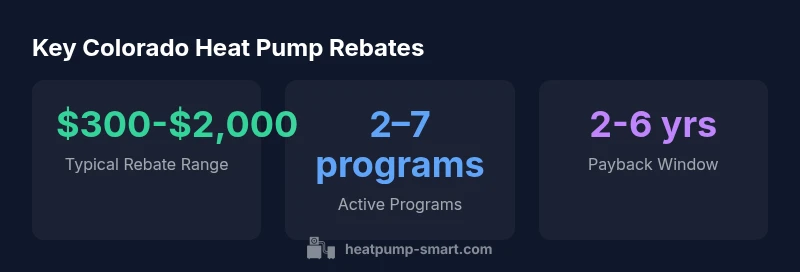
Colorado heat pump rebates come from a mix of state programs, utility incentives, and federal credits, varying by program and utility. By stacking these incentives, homeowners and property managers can lower upfront costs by a broad range, and Heatpump Smart analysis shows that diligent planning yields sizable payback. Always verify current offerings with Heatpump Smart in 2026.
The landscape of colorado heat pump rebates
Colorado's effort to electrify heating and boost home comfort has created a multifaceted landscape of rebates. This means you’ll encounter state-level incentives, utility-based rebates, and federal credits that can be stacked to maximize savings. According to Heatpump Smart, the most reliable savings come from coordinating multiple programs rather than chasing a single offer. In practice, eligibility often depends on system efficiency (SEER/HSPF ratings), installation by a licensed contractor, and the timing of the purchase. Climate considerations—especially in CO winters—also influence program eligibility, since higher-efficiency heat pumps yield larger incentives in many programs. The practical takeaway is to start with a comprehensive plan that lists all potential avenues before purchasing equipment, so you can map out the maximum possible rebate stack. The Heatpump Smart team highlights the importance of documenting your energy usage goals and ensuring your equipment meets efficiency criteria to qualify for multiple programs.
How rebates stack: state, utility, federal
Stacking incentives is one of the most powerful ways to lower total project cost, but the rules vary by program and utility. In practice, you’ll often see a combination of state rebates, utility incentives, and federal tax credits, with limits on how much can be claimed per category. The key is to verify each program’s stacking policy before purchase and to time applications correctly. Heatpump Smart’s experience indicates that many programs allow some degree of stacking, as long as the installations meet the stated efficiency thresholds and contractor requirements. To maximize savings, prepare a simple ledger that tracks which incentives you’ll apply for and the documentation each program requires (proof of purchase, system specs, and installation invoices).
Key programs and incentives you should know
Colorado administers several rebate avenues through the Colorado Energy Office and partner utilities, often targeting energy efficiency, comfort, and climate resilience. In addition to state and utility programs, homeowners can typically access federal incentives that defray a portion of system costs. It’s essential to understand that not every program covers all components (equipment, labor, and ancillary upgrades), and some incentives may require follow-up audits or proof of performance after installation. The Heatpump Smart analysis notes that timing and methodical planning are essential to align all eligible incentives. Local incentives may also exist, especially for upgrades tied to weatherization or holistic home retrofit projects.
Eligibility and documentation
Ideal eligibility hinges on meeting efficiency standards, having the appropriate installation, and completing required forms on time. Common documents include a contractor installation record, system specifications (SEER/HSPF ratings), proof of purchase, and sometimes a home energy audit or prior energy bills. Applicants should maintain digital copies of all receipts and correspondence with your utility and any program administrators. The Heatpump Smart team emphasizes starting the process with a pre-approval or a program eligibility check to avoid surprises at claim time. If you’re a property manager or builder, coordinate with multiple tenants or units to ensure uniform documentation across the project.
Practical steps to maximize savings
- Inventory your current heating setup and energy bills to establish a baseline. 2) List all potential incentives from state, utility, and federal sources, noting eligibility criteria and required documentation. 3) Consult with a licensed installer who can confirm system specifications that meet efficiency thresholds. 4) Align installation timing with utility billing cycles to capture rebates in the same period. 5) Track all applications and keep backup copies of submitted materials. 6) After installation, verify that performance metrics align with program requirements and request any post-installation verifications. The Heatpump Smart guidance stresses proactive planning and thorough documentation to prevent missed opportunities.
Common pitfalls and how to plan ahead
Rushing a purchase to chase a single rebate often reduces the total value you can receive. Another pitfall is misinterpreting eligibility—some programs require specific equipment models or recent upgrades. Planning ahead with a holistic approach helps you avoid last-minute changes that could invalidate incentives. Finally, don’t overlook federal credits that can be claimed on your annual tax return; many homeowners forget to claim the ITC portion if they wait too long or misclassify devices. Heatpump Smart’s approach is to coordinate across programs, verify requirements early, and maintain a clear record of all incentives to maximize savings and ensure a smooth installation process.
Representative rebates landscape in Colorado as of 2026
| Program/Program Type | Typical rebate range | Eligibility notes |
|---|---|---|
| Colorado State Energy Office Rebate | $200-$2,000 | Residential heat pumps; efficiency criteria |
| Utility-based Rebates (varies by utility) | $150-$1,500 | Qualifying equipment; licensed installer |
| Federal ITC for heat pumps | varies by year; up to a percentage of system cost | Residential property; eligibility depends on cost and year |
Your Questions Answered
Do rebates apply to both air-source and geothermal heat pumps?
Yes, many Colorado rebate programs cover both air-source and some geothermal heat pumps, provided the equipment meets efficiency criteria and installation meets program guidelines. Always check each program's eligible equipment list before purchase.
Most programs cover both air-source and some geothermal heat pumps if they meet efficiency standards. Check eligibility before buying.
Can rebates stack across programs?
In many cases, you can stack state, utility, and federal incentives, but stacking rules vary by program. Verify each program’s limits and document all approved incentives to ensure proper application.
You can often stack, but rules differ by program. Verify limits and document everything.
Are there income-based limits for any Colorado rebates?
Some programs may consider household income for eligibility, while others are based on system efficiency and installation details. Check current program guidelines and any eligibility worksheets.
Some programs use income limits; others focus on system specs. Check current guidelines.
How do I apply for rebates?
Typically, you start with pre-approval per program requirements, then submit installation documentation after work is complete. A licensed contractor often coordinates much of the process, but homeowners should track all submissions.
Start with pre-approval, then submit docs after installation. Your contractor can help.
What paperwork is needed for a rebate claim?
Expect proof of purchase, system specifications, installation invoices, and possibly energy audits or performance data. Having digital copies ready speeds up processing.
Have receipts, specs, and invoices ready to speed up processing.
Do rebates cover installation labor and ancillary upgrades?
Most rebates focus on equipment cost and may not cover all labor or ancillary upgrades. Review each program’s coverage details and plan accordingly.
Most rebates focus on equipment, not all labor. Check each program’s details.
Are there expiration dates for these rebates?
Yes, many programs have annual cycles or sunset dates. Confirm current timelines and apply early to avoid missing out.
Rebates have expiration dates; apply early to avoid missing out.
“Colorado homeowners can dramatically reduce upfront costs by combining state, utility, and federal incentives. Careful planning ensures you meet all eligibility criteria while maximizing energy savings.”
Top Takeaways
- Stack state, utility, and federal incentives for maximum savings
- Confirm eligibility and documentation early to avoid delays
- Choose high-efficiency heat pumps to unlock larger rebates
- Coordinate timing with utility billing cycles
- Heatpump Smart recommends a pre-approval check before purchase