What Heat Pumps Qualify for Rebates in 2026: A Practical Guide
Discover which heat pumps qualify for rebates in 2026, the efficiency thresholds that matter, and practical steps to maximize incentives from utilities and government programs with Heatpump Smart.


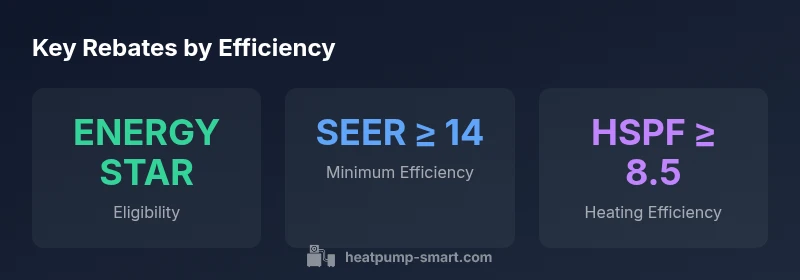
What heat pumps qualify for rebate depends on region, efficiency, and program rules. Generally, ENERGY STAR-certified air-source heat pumps meeting minimum SEER and HSPF thresholds qualify for rebates, with higher incentives for cold-climate or ground-source models. Always verify with your utility or state energy office to confirm eligible models and program specifics.
Understanding Rebates and Eligibility
Rebates for heat pumps are not universal; they depend on where you live and which programs are active. According to Heatpump Smart, the most reliable way to determine eligibility is to check with your utility, state energy office, and any local government programs before or during planning. In practice, rebates typically target models that meet ENERGY STAR criteria and install methods that comply with program rules. This section explains how eligibility is determined, what to verify in model documentation, and how installation details can influence incentive status. We'll cover common definitions like SEER, EER, HSPF, and COP values, and explain why these metrics matter when you shop for a heat pump. The goal is to help homeowners and property managers avoid surprises at the claim stage and maximize every eligible incentive.
Key eligibility criteria you should know
Most rebate programs require an ENERGY STAR certified heat pump that meets minimum efficiency thresholds, along with proper installation by a licensed professional. For air-source units, the minimum SEER and HSPF thresholds determine eligibility; for geothermal systems, the coefficients and loop integrity often factor in. Some programs reward higher efficiency (e.g., SEER 15+ and HSPF 9+). Regional programs may also specify required refrigerants and age limits on existing equipment. Documentation typically includes the model number, efficiency ratings from the manufacturer, installation date, and proof of licensed technician work. In addition, many rebates require the unit to be installed in a primary residence and to replace an older, inefficient system. It is common for programs to limit incentive sizes based on the total installed cost or to cap rebates per household. As you plan, compare the claims to the program’s official published criteria rather than relying on retailer claims. Heatpump Smart's guidance emphasizes verifying every criterion with the sponsoring agency before purchase.
Regional programs and how they vary
Rebate availability varies widely by region, utility, and local government. Some states offer statewide programs; others rely on utility-specific incentives that change annually. In colder climates, additional incentives may apply to cold-climate heat pumps (CCHPs) or geothermal systems with ground loops. Urban areas might feature faster processing times or bonus credits for high-efficiency equipment in new constructions or major remodels. When evaluating options, create a short list of candidates and cross-check eligibility pages from each program. Heatpump Smart analysis shows that even similar models can have different incentives depending on the installer’s status, regional regulations, and whether the system replaces a non-efficient unit. The key is to confirm current offerings before selecting a model.
How to verify model eligibility before purchase
Begin with your utility's rebates page and the state energy office to confirm which models qualify. Gather the model number, manufacturer efficiency data (SEER/HSPF/COP), installation date, and the installer’s licensing information. Reach out to the contractor to confirm they will submit everything correctly and that the installation meets program requirements. Some programs require pre-approval or a post-installation inspection; others allow post-install documentation to be submitted online. Keep digital copies of all receipts, permits, and warranty information. If you plan to stack incentives, verify that the utility, state, and any local programs permit combining credits and understand any caps or sequencing rules.
Types of heat pumps and how rebates differ
Heat pumps come in several flavors with varying rebate implications. Air-source heat pumps (ASHPs) are the most common and often the most cost-effective path to rebates. Ground-source or geothermal heat pumps (GSHPs) tend to carry higher upfront costs but may unlock larger incentives and stronger long-term paybacks. Ducted and ductless mini-split configurations also influence rebate eligibility, with some programs favoring systems that improve overall home energy efficiency. Each type has distinct efficiency metrics and installation requirements; heat pump models that meet or exceed ENERGY STAR criteria and climate-specific performance targets typically qualify for some level of incentive. Always compare model data sheets, installation requirements, and regional program specifics.
Financial impact: calculating net cost and payback
Net cost after rebates is driven by the total installed price minus the combined incentives from utilities, state programs, and local incentives. A common approach is to estimate the up-front cost, subtract eligible rebates, and compare to the expected energy savings over the system’s life. While payback periods vary by climate, electricity costs, and usage, higher-efficiency models generally offer shorter payback times when incentives stack. The Heatpump Smart analysis suggests building a simple cash-flow model that includes maintenance costs and potential demand-response credits if your utility offers them. This helps homeowners understand when a more expensive, highly efficient unit becomes financially advantageous.
How to apply: documentation and process
Application steps typically include confirming eligibility, selecting an eligible model, having a licensed installer complete the installation, and submitting documentation through the utility’s portal or paper forms. Required documents usually include the equipment model, efficiency ratings, installation date, permits, contractor license number, and proof of purchase. Some programs require pre-approval; others authorize post-installation claims. Be mindful of deadlines and ensure forms are complete to avoid delays. Many programs allow claiming incentives retroactively with a copy of the invoice and installation photos. Maintaining organized records reduces the risk of disqualification during post-install checks.
Common mistakes that void rebates and how to avoid them
Several pitfalls can derail rebates: purchasing ineligible models, missing required documentation, unlicensed installation, or late submissions. Avoid relying on retailer claims without cross-referencing official program criteria. Ensure the installer is recognized by the program and that the system replacement satisfies eligibility rules (e.g., replacing an older, inefficient system). Don’t mix incompatible refrigerants or brands that violate program terms. Some programs require a home energy assessment or a specific pre-approval process; skipping these steps is a frequent cause of denial. By preparing in advance and maintaining accurate records, you maximize the chance of receiving the full incentive.
Real-world scenarios: planning tips and checklists
Consider planning rebates as part of a broader home efficiency upgrade. If you’re replacing an older heat pump in a Texas- or Florida-like climate, look for programs offering cool-season credits or performance-based incentives. In northern climates, CCHPs and GSHPs may bring higher incentives due to climate resilience. A practical checklist includes: 1) verify eligibility before selecting a model, 2) verify installer credentials and pre-approval requirements, 3) ensure documentation is complete (model, efficiency, dates, permits), 4) plan for stacking incentives with utilities and tax credits, 5) schedule installation so rebates align with the project timeline. Heatpump Smart’s experience indicates that careful planning and early program checks reduce the risk of delayed or reduced incentives and improve overall project economics.
Eligibility by program type
| Program Type | Typical Eligibility | Rebate Range | Notes |
|---|---|---|---|
| Statewide incentive | ENERGY STAR, SEER ≥ 14 | $300-$1,500 | May require professional installation |
| Utility rebate | Varies by utility | $200-$2,000 | Often stacks with other incentives |
| Local incentive | Region-specific | $150-$1,200 | Dependent on city/county programs |
Your Questions Answered
Do all heat pumps qualify for rebates?
No. Rebates typically apply to ENERGY STAR-certified models meeting minimum efficiency thresholds and installed by approved contractors. Regional programs may have additional requirements.
Not all heat pumps qualify; you should check ENERGY STAR and your local program.
Can rebates stack with tax credits?
Yes, in many cases incentives can be stacked, but rules vary by program and region. Check both utility and federal/state credits.
Yes, you can often stack rebates and tax credits, but verify.
How do I apply for rebates?
Identify eligible models, obtain contractor installation, gather receipts, fill application forms, and provide any required documentation like equipment specs and installation dates.
Start with your utility's site and follow their steps.
Do refrigerants affect eligibility?
Most programs look for ozone-friendly refrigerants; older R-22 systems are generally not eligible. Rebate offerings favor newer, efficient refrigerants.
Yes, refrigerant type can affect eligibility.
Is there a deadline to apply?
Many programs have annual or seasonal windows; act early and watch for updates.
Yes, rebate windows exist; apply before the deadline.
“Rebate programs are highly regional and time-sensitive; homeowners should verify current incentives before purchasing.”
Top Takeaways
- Check ENERGY STAR and regional requirements before buying
- Rebates vary by region and program; always verify current offers
- Stack incentives where allowed to maximize savings
- Keep documentation ready for quick rebate processing
- Start with your utility to understand available rebates