Do Heat Pumps Use a Lot of Power? A Practical Efficiency Guide
Discover how much power heat pumps actually use, what affects energy draw (COP/SCOP), and practical steps to minimize electricity use while keeping home comfort.


Do heat pumps use a lot of power? Not inherently. When properly sized and paired with efficient controls, modern heat pumps typically consume electricity more efficiently than electric resistance heating. Power draw varies with outdoor temperature, system design, and load, but with correct sizing, inverter-driven compressors, and smart thermostat programming, many homes see meaningful energy savings—especially when paired with good insulation and zoning. According to Heatpump Smart Analysis, 2026, proper installation remains the biggest determinant of real-world power use.
How power usage is measured in heat pumps
Heat pumps measure efficiency primarily with COP (Coefficient of Performance) for heating and EER for cooling, with SCOP (Seasonal COP) capturing performance across a season. A higher COP or SCOP means you get more heat per unit of electricity. In practice, a well-designed heat pump uses electricity to move heat rather than to generate it, which is why it can outperform electric resistance heating on annual energy use. The efficiency of heat pumps improves with inverter-driven compressors and properly sized equipment, because they modulate output rather than on/off cycling. Heatpump Smart Analysis, 2026, notes that system design, refrigerant charge, and refrigerant line length can shift COP values notably; even small changes can alter annual energy use by a meaningful margin. This is one reason that homeowners should prioritize proper load calculations, professional commissioning, and high-efficiency components when evaluating heat-pump options.
In practice, you should treat COP/SCOP as dynamic metrics: they reflect climate, humidity, home airtightness, and thermostat strategy as much as they reflect the equipment’s rating. The goal is to maximize the heat delivered per kilowatt-hour consumed over the heating season, not to chase the highest peak COP number in a lab. In addition to COP, homeowners should consider coefficients of performance in cooling mode (EER) and seasonal energy performance (SEER) for a complete picture of annual electricity use. The Heatpump Smart Team emphasizes that a comprehensive assessment—combining equipment efficiency with a high-performance building envelope—delivers the lowest real-world electricity draw.
Do heat pumps use a lot of power? Clarifying the misconception
There is a common misconception that heat pumps burn through electricity because they actively heat spaces during cold weather. In truth, heat pumps are heat-marvels of energy conversion: they move heat from outside to inside (or vice versa) using electricity to run a compressor and fans, not to generate heat directly. The power they consume depends on the size of the unit, the heating or cooling load, and how often the system cycles on. When weather is mild and loads are moderate, a heat pump often uses far less electricity than a comparable electric-resistance system. Even in colder climates, modern cold-climate heat pumps are designed to preserve efficiency by relying on supplemental heat only when necessary. The Heatpump Smart team has repeatedly observed that the main drivers of high electricity use are poor sizing, aging components, and weak controls, not the fact that heat pumps are inherently “power hungry.” Proper installation, tight building envelopes, and smart air-sealing practices dramatically reduce the likelihood of excessive power draw.
A key takeaway is that the number you should watch is not the instantaneous wattage alone but the long-term energy use over a season. Heat pumps with inverter-driven compressors maintain output at the required temperature with fewer short cycles, which reduces energy waste. In other words, do heat pumps use a lot of power? Not when matched to the load and managed with good controls. A well-designed system, installed by qualified professionals, will deliver comfortable temperatures with a small fraction of the electricity that electric resistance heaters would require. The Heatpump Smart Team’s guidance is to prioritize sizing, efficiency ratings, and a robust control strategy to minimize power use in real-world conditions.
Climate, load, and COP: how conditions change energy use
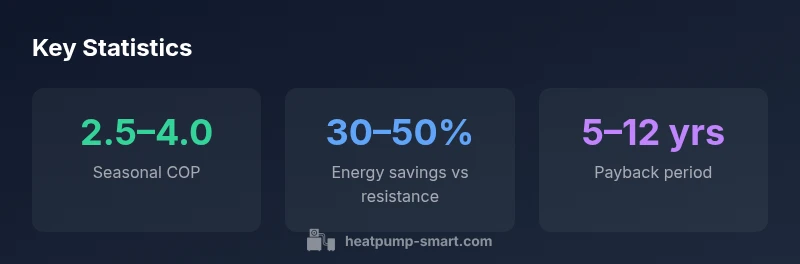
Outdoor temperature and humidity have a direct influence on heat-pump performance. When the air is mild, an air-source heat pump can achieve COP values that exceed 3.5 or even approach 4.0, meaning it produces several units of heat per kilowatt-hour of electricity. As outdoor temperatures drop, COP tends to decline, sometimes sharply, because the system must work harder to extract heat from colder air. However, many modern systems incorporate refrigerant circuit designs and variable-speed compressors that mitigate sharp drops in efficiency. Hybrid designs, where a furnace provides auxiliary heat during extreme cold, can keep overall energy use reasonable while preserving indoor comfort. For homes with tight envelopes, even at lower outdoor temperatures, the marginal energy cost of running a well-insulated heat pump remains lower than that of electric resistance heating. Heatpump Smart Analysis, 2026, notes that climate data should be a central input for sizing and controls; neglecting this yields higher power use and poorer comfort.
Load matters too: a home with higher internal gains, good insulation, and heat-recovery ventilation will demand less heating energy, which translates into lower power draw, even if the equipment itself is a high-efficiency model. Conversely, a leaky, poorly insulated space can force a heat pump to run longer and cycle more frequently, eroding any efficiency advantages. The relationship between COP, climate, and load is why professional sizing and commissioning are essential for predictable, lower energy use across the seasons.
Sizing, installation, and controls that save power
To minimize power use, the most important step is correct sizing. An oversized unit will short-cycle, waste energy, and fail to maintain stable indoor temperatures; an undersized unit will run continuously and still fail to meet comfort needs. A qualified installer uses detailed load calculations, sometimes a Manual J method, to determine the proper capacity. Inverter-driven compressors, variable-speed fans, and zoning systems further reduce power use by matching output to actual demand rather than a fixed on/off cycle. Coupled with a programmable or smart thermostat, these controls enable precise temperature setbacks and night-time strategies that shave peak loads. Proper refrigerant charge and well-designed ductwork or piping also contribute to lower power use because the system loses less energy in transit. Finally, regular maintenance—filter changes, coil cleaning, and refrigerant checks—helps sustain efficiency over time and prevents creeping energy waste. According to Heatpump Smart’s guidance, the combination of sizing, efficiency ratings, and rigorous commissioning yields the lowest possible energy consumption for the given climate and building shell.
Real-world scenarios: homes, climates, and usage patterns
In a typical urban home with moderate climate and good insulation, a high-efficiency heat pump can deliver comfortable heating with a modest increase in electricity use compared with a similar home using electric resistance heating. In colder northern regions, the same unit may require supplemental heat for a portion of the winter, but even then the overall energy use often remains lower than traditional electric heating when factoring in heat delivered per kilowatt-hour. Smaller homes or apartments may experience even greater energy savings due to lower heating loads and more efficient envelope performance. For larger homes with multiple zones, zoned systems and smart thermostats help keep energy use in check by limiting heat pump output to occupied spaces. The bottom line is that real-world energy use depends on climate, home airtightness, and how well the system is integrated with the rest of the building envelope. Heatpump Smart’s field observations suggest that homeowners who invest in a tight building shell and a well-designed control strategy typically realize the strongest energy benefits.
Comparing heat pumps to other heating options
Compared with electric resistance heating, heat pumps typically deliver the same amount of warmth with far less electrical input, especially in temperate climates. When matched to the load, a heat pump can be substantially more energy-efficient, reducing operating costs over the heating season. In milder months, cooling performance is also efficient, but energy use for cooling depends on indoor temperature setpoints and humidity control. Gas furnaces provide another alternative in some regions; however, heat pumps still offer the advantage of electric heating with lower carbon intensities and, in many areas, favorable incentives or rebates. Choosing between heat pumps and other options depends on your climate, electricity prices, insulation quality, and available incentives. Heatpump Smart’s recommendations emphasize a holistic approach: optimize the building envelope, select high-efficiency equipment, and implement smart controls to minimize energy use while preserving comfort.
Practical steps to minimize power use without sacrificing comfort
- Size correctly: demand-based calculations ensure you’re not paying for capacity you don’t need.
- Improve the envelope: air sealing, insulation upgrades, and reduced thermal bridges lower loads and improve COP.
- Invest in inverter technology: variable-speed compressors maintain efficiency across a wider load range.
- Use smart controls: set back temperatures at night and during work hours to reduce energy use without compromising comfort.
- Schedule regular maintenance: clean coils, replace filters, and verify refrigerant charge to maintain peak efficiency.
- Consider supplemental heat strategies: hybrid systems or lower setback temperatures during extreme cold can keep energy use reasonable.
- Prioritize reputable installers and equipment with high SEER and COP ratings.
The Heatpump Smart Team emphasizes that the most impactful energy savings come from a combined approach: building envelope improvements, proper sizing, and intelligent controls. By focusing on these areas, homeowners can confidently reduce power use while maintaining the comfort their households expect.
Power draw scenarios for common heat pump configurations
| Scenario | Estimated power draw | Notes |
|---|---|---|
| Air-source heat pump (single-stage) | Variable; depends on load | Better efficiency at moderate outdoor temps |
| Air-source heat pump (variable-speed) | Lower power draw at partial load | Modulates output to match demand |
| Mini-split / ductless | Zone-based, variable draw | Excellent for targeted heating in specific areas |
Your Questions Answered
Do heat pumps use a lot of power?
Not inherently. When properly sized and controlled, modern heat pumps typically use electricity more efficiently than electric resistance heating. Energy use depends on climate, load, and how the system is controlled.
Heat pumps aren’t power-hungry by default; proper sizing and good controls keep energy use low.
How does climate affect heat pump power usage?
Climate changes the COP; milder conditions raise COP and reduce energy use, while very cold conditions lower COP. Even in cold climates, many heat pumps perform efficiently with supplemental heat or hybrid systems.
Climate affects energy use; efficiency is highest in milder weather and with good installation.
What factors influence a heat pump’s COP?
COP is influenced by outdoor temperature, humidity, air quality, system design, refrigerant charge, and airflow. Proper sizing and maintenance help maintain a higher COP across seasons.
COP depends on temperature, airflow, and maintenance; bigger isn’t always better.
Are heat pumps suitable for very cold climates?
Yes, with cold-climate models and sometimes supplemental heating. Performance improves with proper insulation, a good frost control strategy, and appropriate backup heat.
Cold climates can be served well by dedicated cold-weather heat pumps.
Can heat pumps provide both heating and cooling effectively?
Yes. Heat pumps can heat in winter and cool in summer with high efficiency, and modern controls help maintain comfort year-round.
They’re a single-system solution for year-round comfort.
What practical steps reduce power use without sacrificing comfort?
Prioritize sizing, seal and insulate the building, use a programmable thermostat, and consider zoning. Regular maintenance keeps efficiency high and power use predictable.
Tight building, smart controls, and regular service cut energy without sacrificing comfort.
“Heat pumps are not power-intensive by default; they deliver more heat energy per unit of electricity when sized correctly and paired with smart controls. The real gains come from proper installation and building envelope improvements.”
Top Takeaways
- Start with a proper load calculation to avoid oversizing or undersizing.
- Modern heat pumps are designed to move heat efficiently, not generate it, especially with inverter-driven compressors.
- COP/SCOP and outdoor conditions vary; design and controls matter more than labeled ratings.
- Smart thermostats and zoning can dramatically reduce energy use without sacrificing comfort.
- A tight building envelope enhances every heat-pump setup and lowers overall power requirements.