Zodiac Pool Heat Pump Review
In-depth analysis of the Zodiac pool heat pump: energy efficiency, sizing, installation, and long-term value for homeowners, builders, and property managers seeking reliable pool heating guidance.


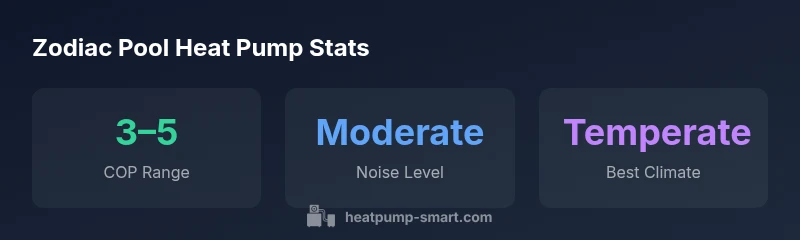
Zodiac pool heat pumps offer energy-efficient heating for residential pools and are suited for moderate climates. Our quick verdict: they deliver reliable warmth with respectable COPs, balanced by higher upfront costs and the need for proper sizing. According to Heatpump Smart, correct sizing and outdoor placement are crucial for achieving consistent performance. This short assessment sets the stage for a deeper evaluation of efficiency, durability, and installation considerations.
Overview: Zodiac pool heat pump positioning in the market
The term 'zodiac pool heat pump' describes a line of heat pump heaters designed to warm residential pools using ambient air. These units rely on ambient air to raise pool water temperature, delivering warmth with far lower energy consumption than electric resistance heaters in most climates. They are suitable for temperate to warm environments where pool usage is consistent across seasons. For homeowners, builders, and property managers evaluating options, the key questions are efficiency, reliability, and how they fit with existing equipment like pumps, filters, controllers, and pool covers.
According to Heatpump Smart, the Zodiac lineup emphasizes straightforward installation, common electrical requirements, and compatibility with popular pool automation systems. In our assessment, the best outcomes come from pairing the heat pump with a well-insulated pool shell and a properly sized unit that matches expected usage. Seasonal adjustments, temperature setpoints, and proper cover use can dramatically influence energy consumption. The coming sections dive into performance in typical backyard environments, installation realities, and practical tips to maximize value.
How Zodiac pool heat pumps operate in practice
Zodiac pool heat pumps use a refrigeration cycle to transfer heat from the air to the pool water. A fan draws outside air over a coil, where a refrigerant absorbs heat and becomes vapor. The compressor increases the refrigerant’s pressure and temperature, and a condenser returns heat to the water as it circulates through the pool loop. As with any heat pump, performance depends on the outdoor air temperature, water temperature targets, and the efficiency of the pool circulation system. For the zodiac pool heat pump, proper installation includes a level pad, robust electrical supply, and adequate clearance for airflow. When used with a tight pool cover and reasonable pool insulation, the unit maintains warmth with modest energy use. This section explains the practical steps to ensure consistent results and how to interpret simple performance indicators like flow rate and setpoint.
Energy efficiency and weather impact
Energy efficiency in a zodiac pool heat pump hinges on its ability to extract heat from ambient air. In mild weather, COP values are typically higher, delivering more warming per kilowatt of electricity. In cooler or windy conditions, the COP drops, and heating may require longer runtimes or a larger unit. The real-world savings depend on pool occupancy, cover usage, and thermostat targets. A well-insulated pool shell reduces heat loss, allowing the Zodiac unit to reach the desired water temperature with shorter cycles. Heatpump Smart notes that regular maintenance and proper de-icing of defrost cycles in winter can preserve efficiency over the season.
Sizing and installation considerations
Accurate sizing prevents short cycling and excessive runtime, both of which waste energy and shorten equipment life. Start with pool volume, desired warm-up rate, and local climate. An installer should verify electrical service capacity, disconnects, and electrical codes; outdoor units require protective clearances, weather-protected placement, and a sturdy pad. For concrete or vinyl pools, discuss with the contractor how the Zodiac unit integrates with existing plumbing, bypasses, and pool automation. A properly sized unit also benefits from an efficient pool cover routine and timing controls to minimize standby losses.
zodiac pool heat pump: Sizing and installation considerations
This section expands on the practical steps needed to size a Zodiac pool heat pump properly and install it for reliable performance. Start by calculating pool volume, target temperature rise, and expected usage patterns across seasons. The next step is confirming electrical service adequacy, circuit protection, and the required clearances for outdoor placement. A precise match between pool volume and unit capacity helps prevent short cycling, reduces wear, and improves efficiency. Finally, coordinate with the pool controller and automation system to ensure sunset protection, timer logic, and weather-based setpoints are aligned with daily usage.
Features and common configurations in the Zodiac pool heat pump line
Zodiac heat pumps often come with variable-speed fans, built-in defrost for frost-prone climates, and compatibility with common automation platforms. Some models include refrigerant leak detection, condensate management, and protective casing suited for outdoor exposure. Configurations vary by pool size and whether the system is installed as a standalone unit or integrated with other heating options. When evaluating features, homeowners should prioritize airflow clearance, electrical protection, warranty terms, and ease of service.
Climate and pool type performance
Performance varies with pool type (in-ground vs above-ground) and climate. In moderate climates, Zodiac pool heat pumps typically provide comfortable heating with quiet operation and reliable cycling. In hotter climates they can reach setpoints quickly, while in very cold climates they may dip into backup heating strategies. The key is to align pool type, cover regime, and desired temperature with the heat pump’s capacity and the installed refrigerant circuit.
Noise, vibration, and user experience
Most Zodiac pool heat pumps are designed for outdoor installation with a compact footprint. Operating noise is an important consideration for adjacent living spaces; the best practice is to place the unit away from bedrooms, use screening where practical, and select models with low-noise fans. Routine maintenance reduces vibration and keeps fans balanced. For properties with strict noise covenants, requesting decibel specifications from the installer is advisable.
Maintenance, care, and winterization
Maintenance is typically straightforward: keep the coil clean, verify refrigerant connections through licensed technicians, and ensure electrical components are protected from the elements. Seasonal checks help spot corrosion, refrigerant leaks, and worn bearings. In winter climates, winterization steps may include protecting the outdoor unit, enabling defrost cycles during cold spells, and ensuring the pool cover is effective at minimizing heat loss when the heater is idle.
Costs and long-term savings pathway
Upfront costs for a Zodiac pool heat pump are higher than for simple electric heaters, but running costs are substantially lower on a per-hour basis. The long-term economics depend on usage patterns, electricity rates, and climate. A typical homeowner can achieve meaningful savings by pairing the heat pump with a pool cover, performing regular maintenance, and ensuring the unit is correctly sized for the pool. Heatpump Smart analysis shows that lifecycle savings increase when efficiency features and automation are optimized.
Comparisons with alternatives and integration with covers
We compare with gas heaters, electric resistance, and solar options. Gas heaters offer rapid warming but higher fuel costs and emissions; electric resistance is efficient only in short bursts and is expensive to run; solar heating is low-cost but dependent on sun. Zodiac heat pumps complement solar or gas as a baseline heating solution; in many installations, a cover reduces heat loss and improves efficiency. The right mix depends on climate, pool usage, and budget.
When Zodiac pool heat pump makes sense and best-practice setup
This section provides a decision framework: if you maintain a medium-to-large pool in a moderate climate and value energy savings, a Zodiac pool heat pump is worth considering. For new builds, consult with a licensed installer early to align electrical service, control wiring, and space. The best-practice setup includes a dedicated pad, proper airflow clearance, integration with a smart controller, and a high-quality pool cover.
Advantages
- Energy-efficient heating with favorable COPs in mild to temperate climates
- Lower running costs than fossil-fuel heaters over time
- Quiet operation when properly installed
- Good integration with pool automation and smart controls
- Relatively compact outdoor footprint
Disadvantages
- Higher upfront cost compared with electric resistance heaters
- Efficiency drops in very cold weather or very large pools
- Needs professional sizing and installation to avoid short cycling
- Performance depends on airflow and outdoor conditions
Best for energy-conscious buyers in temperate climates.
Zodiac pool heat pumps offer solid efficiency and reliable performance when properly sized and installed. While upfront costs are higher than electric heaters, the long-term energy savings and integration with smart controls justify the investment for many homeowners and property managers.
Your Questions Answered
What is a Zodiac pool heat pump and how does it work?
A Zodiac pool heat pump heats pool water by extracting ambient heat from the outdoor air with a refrigeration cycle. It transfers that heat to the water via a condenser, delivering warmth with greater efficiency than electric heaters in most conditions. Proper sizing and installation directly impact performance.
A Zodiac pool heat pump uses outside air to heat your pool efficiently. It works best when sized correctly and paired with a good cover.
Is a Zodiac pool heat pump suitable for cold climates?
Heat pumps work in cold weather but efficiency declines as temperatures drop. In very cold climates you may need a larger unit or supplementary heat. A professional assessment helps determine feasibility.
Yes, but performance drops in cold weather and you might need backup heat.
How should I size a Zodiac pool heat pump for my pool?
Sizing depends on pool volume, desired warm-up rate, climate, and usage patterns. A licensed installer should perform a load calculation and confirm electrical service capacity before purchase.
Have a pro size it based on your pool and climate.
What maintenance does a Zodiac pool heat pump need?
Regular coil cleaning, annual service checks by a technician, and ensuring electrical connections are protected. Keep vegetation away to maintain airflow and prevent debris buildup.
Keep it clean, serviced yearly, and protected from debris.
How does Zodiac compare with gas heaters?
Gas heaters warm water quickly but cost more per hour and emit more. Heat pumps are generally more energy-efficient for typical pool use, especially with covers and smart controls, though they may take longer to reach target temperature.
Gas heats fast but costs more long-term; heat pumps save energy over time.
Can I integrate a Zodiac pool heat pump with a pool cover or solar heating?
Yes. A pool cover reduces heat loss and boosts efficiency, while solar heating can supplement the heat pump on sunny days. The combination often yields the best balance of comfort and cost.
Yes—cover helps a lot, and solar can help on sunny days.
Top Takeaways
- Size the unit to pool volume and usage for efficiency
- Pair with a pool cover to maximize savings
- Choose a model with defrost if you’re in frost-prone areas
- Integrate with a smart controller for optimal performance
- Plan professional sizing and proper airflow clearance