Are Heat Pumps Inside or Outside? A Comprehensive Guide
Explore where heat pump components live, the differences between air-source, ductless, and geothermal setups, and how placement affects efficiency, noise, and maintenance. Learn practical tips for choosing indoor vs outdoor placements.


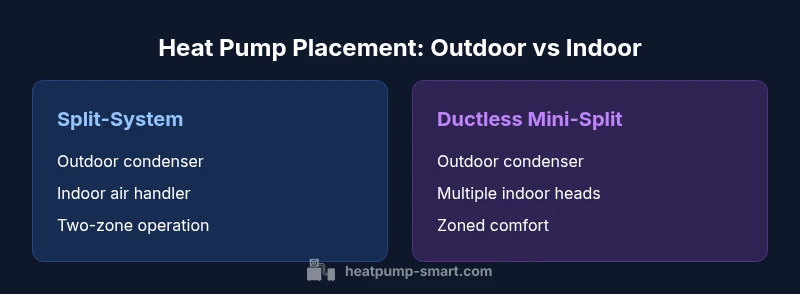
Are heat pumps inside or outside? In most homes, heat pumps are a split system with an outdoor outdoor unit containing the compressor and condenser, and an indoor component (air handler or evaporator) inside. Ductless mini-splits place multiple indoor heads inside, connected to one outdoor unit; geothermal configurations can place equipment outside or in a mechanical room with indoor distribution. This layout balances efficiency and serviceability.
Are heat pumps inside or outside? Practical overview
If you’re new to heat pumps, you’ve likely asked yourself: are heat pumps inside or outside? The short answer is that most residential heat pumps are split systems with major components housed both outdoors and indoors. The outdoor unit contains the compressor and condenser, while the indoor component—either an air handler or a coil in a ducted system—lives inside the home. In ductless configurations, multiple indoor heads reside inside and connect to a single outdoor condenser. Throughout this guide, we’ll unpack how placement affects performance, noise, maintenance, and overall comfort. According to Heatpump Smart, understanding where each part lives helps homeowners plan for space, ventilation, and long-term operating costs. The placement also determines how you service the system and how it interacts with your home’s insulation and thermal envelope.
The anatomy of a heat pump system
A heat pump is a reversible heat-transfer device that moves heat rather than generates it. A typical split-system has two main halves: the outdoor unit, which houses the compressor, condenser, and a fan, and the indoor unit, which contains the evaporator coil, expansion device, and the air distribution equipment. Refrigerant lines connect the two. In home configurations, zoning and ductwork determine where air is distributed. The indoor portion can be a central air handler in a utility room or attic, or individual indoor units in each room for ductless setups. The overall layout—outdoor to indoor—drives efficiency, serviceability, and noise performance.
Air-source heat pumps: outdoor and indoor components
Air-source heat pumps rely on outdoor and indoor units that collaborate to transfer heat. The outdoor unit sits outside the building, protected from weather with a specialized enclosure and clearances recommended by code. The indoor unit is typically an air handler in the living space or a central plenum connected to ducts. When the system runs in cooling mode, heat is rejected outside; in heating mode, heat is drawn from outside air, compressed, and delivered indoors. For homeowners wondering are heat pumps inside or outside, this configuration makes the most sense: critical cooling and heating occur across two zones, with refrigerant lines bridging them. Noise considerations, frost management, and routine outdoor coil cleaning come into play at this stage.
Ductless mini-splits: indoor heads, one outdoor unit
Ductless mini-splits eliminate traditional ductwork by using multiple indoor heads connected to one outdoor condenser. The outdoor unit is placed outside the home and shares a single electrical connection with the indoor heads. Each indoor head is mounted in its room or zone, providing targeted comfort without bulk ductwork. Are heat pumps inside or outside? In this setup, virtually all year-round comfort is delivered from indoor units, while the outdoor unit handles the heat transfer in and out. Ductless systems are popular in renovations, room additions, or spaces without existing ducts because installation requires only a small bore hole for lines.
Geothermal heat pumps: where are components located?
Geothermal heat pumps use Earth-sourced heat; the outdoor component may sit outside but the loop field can be buried in the yard or connected to a pond loop, depending on the system. The indoor distribution can be a conventional air handler or a radiant floor/heating system connected to a hydronic circuit. Because the ground loop is external, many homeowners assume everything is outside; in reality, the indoor distribution receives the heat via a water-to-air or water-to-water interface. The result is a system with significant energy efficiency but higher upfront costs. The heat pump itself is typically placed in a mechanical room, garage, or weatherproof enclosure, depending on space and local code.
Location considerations: noise, climate, and space
Placement decisions are influenced by noise, climate, and space. Outdoor units generate fan noise and compressor vibration, so many homeowners place them on sound-isolating pads or away from bedrooms. The climate determines how often the outdoor unit runs and whether defrost cycles create short interruptions in heat delivery. Indoor placement must ensure proper airflow, accessible filter changes, and adequate ductwork or wall space for mini-split heads. If you’re asking are heat pumps inside or outside, the answer is: both locations contribute to performance. Choosing a site with adequate clearance for service, proper drainage, and convenient access for maintenance helps minimize future issues.
Installation basics: permitting, clearances, and efficiency
Installation requires adhering to building codes, electrical work, refrigerant handling, and proper clearances around both outdoor and indoor units. Outdoor units typically require a minimum clearance from walls, shrubs, and other obstructions to ensure airflow and reduce noise transfer inside. Indoor units need sufficient duct space or wall space for mounting and servicing. Efficiency depends on proper sizing, refrigerant charge, and weatherization. For homeowners, planning ahead for snow, ice, and solar gains will influence how alleys and equipment are positioned to keep efficiency high.
Maintenance and lifecycle: outdoor vs indoor care
Regular maintenance extends the life of the heat pump and preserves efficiency. Outdoor coils should be cleaned to remove leaves, dirt, and snow; check for frost buildup; ensure proper drainage; and inspect wiring and connections. Indoor components require filter changes, airflow checks, and duct cleaning where applicable. In ductless systems, annual inspection of each indoor head is recommended to maintain consistent performance. Location does not remove the need for professional service; a routine service schedule helps catch refrigerant leaks, reduce energy waste, and keep you comfortable year-round.
Common misperceptions about indoor vs outdoor placement
A common misperception is that all heat pump performance is dictated by outdoor temperatures alone. In reality, the balance between outdoor condenser efficiency and indoor air handling determines warmth, comfort, and energy use. Placement should consider sun exposure, wind patterns, and shading to minimize heat gain in summer and heat loss in winter. Another misconception is that ductless systems are only for new builds; they are increasingly viable for retrofits when existing ducts are poor or absent. Understanding these details helps homeowners evaluate options more confidently.
How to choose the right layout for your home
Choosing the right layout starts with a thermostat plan, ductwork status, and room-by-room comfort goals. If you have existing ducts and a central system, a traditional air-source split with an indoor air handler can be a straightforward upgrade. For renovations or room additions without ducts, a ductless mini-split offers flexible zoning and precise comfort. In climate zones with extreme cold, reviewing outdoor unit performance and defrost behavior is essential. Heatpump Smart recommends a professional load calculation to ensure correct sizing and optimal efficiency.
Practical takeaways and next steps
When planning a heat pump installation, map out outdoor clearances, interior space for air handlers or indoor heads, and accessibility for maintenance. Confirm electrical capacity, refrigerant needs, and any local incentives that apply to heat pumps. If you are still unsure are heat pumps inside or outside, start with a site survey and a cost-benefit analysis that accounts for energy savings, comfort, and long-term reliability. The best approach is to partner with a qualified installer who can tailor the configuration to your home’s layout.
Feature Comparison
| Feature | Air-source Split-System | Ductless Mini-Split | Geothermal Heat Pump |
|---|---|---|---|
| Outdoor unit location | Outside the home, weather-protected | Outside the home, single condenser | Outside (with ground loop or pond loop) |
| Indoor distribution | Central air handler or coil in plenum | Indoors: multiple wall/ceiling heads | Indoor distribution via hydronic or air handler |
| Noise considerations | Can be noticeable outside; modern units quieter | Low indoor noise; outdoor unit remains audible outside | Ground- or mechanically isolated; indoor noise minimal |
| Maintenance complexity | Moderate; requires ductwork access and outdoor coil care | Low to medium; indoor heads require filter changes | Moderate; loop field and mechanical room maintenance |
| Best climate fit | Versatile across many climates with good efficiency | Excellent for retrofit rooms and zones | Highest efficiency in stable, ground-temperature environments |
| Space requirements | Outdoor condenser footprint; limited indoor impact | Indoor head mounting and duct spacing | Outdoor loop field or boreholes; mechanical room space |
| Cost context (qualitative) | Mid-to-high upfront; depends on ductwork | Mid; less ductwork cost but multiple heads | High upfront; long-term savings possible |
Advantages
- Clear separation of noise sources between indoors and outdoors
- Flexible installation options for existing homes
- Potentially lower energy costs with proper sizing and zoning
- Easier future maintenance access for outdoor and indoor components
- Wide applicability across ducted and ductless configurations
Disadvantages
- Outdoor units can be exposed to weather and defrost cycles
- Installation may require space and structural adjustments
- Ductwork or multi-head systems can incur higher upfront costs
- Geothermal setups require land access for loop fields
Split-system air-source heat pumps are the most common, with ductless mini-splits offering room-by-room flexibility; geothermal delivers top efficiency but higher upfront costs.
For most homes, start with an outdoor condenser paired with an indoor air handler. If you need zoned comfort without ducts, consider a ductless mini-split. If maximizing efficiency and you have space for a loop field, geothermal is worth evaluating.
Your Questions Answered
Where are heat pump components typically located in a standard home?
In a standard home, the outdoor unit houses the compressor and condenser, while the indoor unit (air handler or evaporator) resides inside. Ductless systems use indoor heads connected to one outdoor unit, and geothermal setups may place the heat pump indoors or in a mechanical room with an exterior loop field.
Typically, the outdoor unit sits outside and the indoor unit is inside, with ductless systems using indoor heads. Geothermal loops can be outside with indoor distribution via a heat exchanger.
Are heat pumps louder outdoors than indoors?
Yes, the primary noise source is the outdoor compressor and fan. Indoor units are designed to be quiet, with vibration minimized by mounting on solid surfaces or using isolation mounts. Proper placement reduces indoor noise impact.
Outdoor noise is normal, but indoor units stay quiet with proper mounting and spacing.
Can heat pumps operate efficiently in freezing temperatures?
Many air-source heat pumps continue to operate in cold weather, but efficiency may drop. Modern models use advanced refrigerants and defrost cycles to maintain performance. In extremely cold zones, backup heat sources or geothermal options may be considered.
They work in cold weather, though very low temperatures can reduce efficiency; some units use supplemental heat.
Do ductless mini-splits require ductwork?
No. Ductless mini-splits use individual indoor heads connected to one outdoor unit, providing zoned cooling and heating without ducts. They can be ideal for retrofits or spaces without existing ductwork.
No ducts are needed; you install indoor heads and one outdoor unit.
What maintenance does outdoor heat pump equipment require?
Outdoor units need periodic coil cleaning, fan inspection, and clearances around the unit. Check for leaves or debris, ensure proper drainage, and schedule professional refrigerant checks as part of annual service.
Clean the outdoor coil, keep clear space, and have yearly service.
Is geothermal heat pump placement different from air-source?
Yes. Geothermal systems use a ground loop field outside and an indoor distribution system; the heat pump itself is often in a mechanical room or outside, but the loop field is a defining outdoor feature. This setup yields high efficiency but higher upfront costs.
Geothermal uses an outside loop field with indoor distribution; efficiency is high but upfront costs are higher.
Top Takeaways
- Are heat pumps inside or outside? Expect both: outdoor condenser and indoor distribution.
- Choose between ducted indoor handlers or ductless heads based on retrofit needs.
- Consider climate, noise, and space when locating outdoor units.
- Regular maintenance should cover both outdoor coils and indoor filters.
- Get a professional load calculation before purchasing.