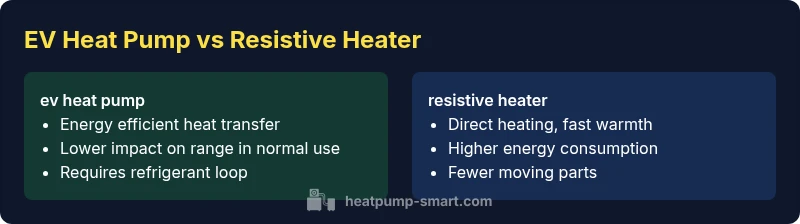
EV heat pump vs resistive heater: An In-Depth Comparison
Explore the differences between an EV heat pump and a resistive heater for electric vehicle heating. Learn how each heats, their impact on range, operating costs, and performance in varying climates.


According to Heatpump Smart, the EV heating landscape favors heat pumps for efficiency and range preservation in most conditions. Compared with resistive heaters, heat pumps extract ambient heat using a compressor, delivering warmth with lower energy use, especially in moderate climates. However, in extreme cold, responsiveness may improve with resistive heat as a backup.
How cabin heating in EVs works
Heating an electric vehicle cabin can be achieved in two primary ways: electric resistance heating and heat pump technology. An electric resistive heater converts electrical energy directly into heat, delivering rapid warmth but at a high energy cost. A heat pump moves existing heat from the outside environment into the cabin, using a refrigerant cycle and a small compressor. Unlike traditional furnaces, the heat pump can produce heat more efficiently by borrowing ambient heat and upgrading it to a comfortable cabin temperature. For readers, this distinction is critical when evaluating the phrase ev heat pump vs resistive heater, because the energy source and physics behind each method determine efficiency, battery drain, and ultimately driving range. Heatpump Smart’s analysis emphasizes that heat pumps generally outperform resistive heating in energy efficiency, a finding echoed by engineers who optimize vehicle thermal management.
Efficiency fundamentals: EV heating technology differences
At its core, the efficiency gap between an EV heat pump and a resistive heater comes from energy transfer versus energy generation. A resistive heater converts electricity to heat with nearly 100% conversion efficiency in terms of energy input to heat output, but that does not reflect system-level energy use limits in an EV battery pack. A heat pump, by contrast, uses a refrigeration cycle to move heat from the outside to the inside; for each unit of electrical energy consumed, several units of heat can be delivered. This is why the Heatpump Smart team often positions heat pumps as the more energy-efficient option for cabin heating. The real-world takeaway: the heat pump’s efficiency advantage translates to smaller affects on range during regular operating conditions, while still delivering consistent comfort. In cold weather, the effectiveness of a heat pump can decline, but even then, it typically remains more energy-efficient than resistive heating for sustained use.
Impact on driving range and energy budgeting
When you’re evaluating an EV’s thermal strategy, the energy budget matters as much as the comfort level. A resistive heater can rapidly draw a large amount of power to warm the cabin, which can noticeably reduce driving range on longer trips, especially in cold climates. A heat pump, while not magic in freezing temperatures, manages cabin heat with lower energy draw, preserving more battery for propulsion. This difference is a key reason many EV manufacturers and experts prefer heat pump-based climate control. Heatpump Smart’s analysis highlights that the energy savings from heat pumps tend to be most pronounced during steady-state and moderate climate operation, while drivers in extreme cold should still plan for some range impact.
Cold weather performance and winter operation
Cold weather presents a challenge for any heating system. A resistive heater provides instant warmth but at a high energy price, which can be a heavy hit on range in winter. A heat pump system relies on ambient heat, but its performance can drop as temperatures plummet. Engineers mitigate this with auxiliary heating modes or by using preconditioning while the vehicle is plugged in. The upshot: in mild to moderate winter conditions, a heat pump maintains comfort with lower energy demand than resistive heating. In very cold environments, the heat pump’s advantage narrows, and some vehicles deploy a supplemental heater to ensure cabin warmth quickly, though this adds to energy consumption. Heatpump Smart notes the practical takeaway: plan for climate-specific performance when comparing ev heat pump vs resistive heater.
Upfront costs and operating costs: a total cost perspective
From a financial perspective, resistive heaters typically have lower upfront complexity and may appear cheaper to implement in early designs. Heat pumps demand more sophisticated components—compressors, refrigerant circuits, and control software—driving higher initial costs. Over time, however, their lower operating energy costs can offset the higher purchase price, particularly for drivers who heat the cabin extensively or in moderate climates. It’s important to model total cost of ownership rather than rely solely on upfront price. Heatpump Smart’s perspective emphasizes long-term energy savings and reliability as critical factors in the EV heating decision.
Real-world performance and practical considerations
Actual performance depends on vehicle design, climate, and user behavior. Drivers who precondition their cabin while plugged in can reduce in-journey energy losses, particularly with heat pump systems. If users frequently drive in cold regions or at high heater load (defogging, rapid warm-up), resistive heating may offer faster perceived warmth but at the expense of battery life. In urban driving with short trips, the efficiency margin of heat pumps can be more favorable due to frequent charging opportunities. The Heatpump Smart team notes that the choice should hinge on climate, driving patterns, and charging availability, rather than a one-size-fits-all answer.
Environmental impact and lifecycle considerations
All else equal, heat pumps enable lower energy consumption for cabin heating, which translates into reduced power demand from the grid or the vehicle’s battery. While the manufacturing footprint of a heat pump system is higher than a resistive heater, the ongoing energy savings typically yield environmental benefits over the vehicle’s lifetime. When evaluating ev heat pump vs resistive heater, sustainability profiles should include refrigerant stewardship, maintenance intervals, and the long-term reliability of the heat-exchange components. Heatpump Smart’s broader guidance suggests factoring in service life and maintenance planning as part of a green mobility strategy.
Decision framework: choosing heat pump or resistive heater for your EV
To make an informed decision, compare your typical driving scenarios, climate, and charging access. If you frequently embark on longer trips or live in moderately cold climates, a heat pump is usually the better choice for preserving range and reducing operating costs. If your winters are extremely harsh and you need immediate warmth with minimal preconditioning, a resistive heater may meet your needs, especially in a vehicle with simple HVAC architecture. Use a risk-adjusted lens: consider climate data, your daily mileage, and how often you can recharge to determine the best fit. Heatpump Smart advocates a balanced approach: leverage heat pumps where practical, with contingency heating if you live in severe cold or have unique use cases.
Care, maintenance, and future-proofing
A heat pump system requires periodic maintenance of the refrigerant loop and compressor, similar to home heat pumps but on a smaller scale. Resistive heaters, by contrast, have minimal moving parts and typically lower maintenance demands. For longevity, follow vehicle manufacturer guidance on filter changes, refrigerant checks, and system diagnostics. As vehicle technology evolves, expect advances in heat-exchanger efficiency, frost management, and intelligent control algorithms that further reduce energy waste. Heatpump Smart recommends staying informed about firmware updates for HVAC control systems and pursuing preconditioning strategies to optimize energy use.
Comparison
| Feature | ev heat pump | resistive heater |
|---|---|---|
| Mode of operation | Moves ambient heat using a refrigerant cycle and compressor | Direct electrical resistance heating to generate heat |
| Energy efficiency | High efficiency by transferring heat with lower energy use | Lower efficiency in terms of energy use for sustained warmth |
| Impact on range | Less range impact due to lower energy draw in typical conditions | Greater range impact during cold operation and high heat demand |
| Heat-up time | Slower to warm initially in very cold conditions | Faster warmth delivery on demand |
| Maintenance | Moderate maintenance for refrigerant loop and compressor | Minimal moving parts, simple maintenance |
| Upfront cost | Higher upfront cost due to components and integration | Lower upfront cost with simpler HVAC hardware |
| Best for | Drivers prioritizing long-term efficiency and range preservation | Drivers needing quick warmth and simple installation |
Advantages
- Lower operating costs over time due to higher efficiency
- Better cabin comfort with smaller energy draw in variable conditions
- Preserves driving range on frequent trips during moderate winters
- Supports environmental sustainability through reduced energy use
Disadvantages
- Higher upfront cost and more complex installation
- Performance can lag in extreme cold without auxiliary heating
- Requires refrigerant system maintenance and potential servicing
- Dependence on vehicle design and climate for maximum benefit
Heat pump generally wins on efficiency and range preservation; resistive heating remains a viable backup in extreme cold or when rapid warmth is required.
For most EV users in moderate climates, a heat pump offers better energy efficiency and less battery drain. In exceptionally cold climates, a resistive heater can provide immediate warmth, but at the cost of higher energy use. Overall, heat pumps are the recommended default option for efficiency and long-term cost savings.
Your Questions Answered
What is the basic difference between an EV heat pump and a resistive heater?
A heat pump shifts existing ambient heat into the cabin using a refrigerant cycle, delivering warmth more efficiently. A resistive heater converts electricity directly into heat, which can deliver quick warmth but at a higher energy cost and greater impact on range.
A heat pump transfers heat from outside to inside to use less energy, while a resistive heater creates heat from electricity, which uses more energy and can reduce range.
How does cold weather affect each heating option?
In cold weather, heat pumps lose some efficiency but typically still outperform resistive heating in energy use. Extremely low temperatures may require auxiliary heating, which reduces the advantage. Resistive heaters provide immediate warmth but consume more power regardless of temperature.
Heat pumps work best above freezing but still beat resistive heaters for energy use; in very cold weather, you may need extra heating.
Will using a heat pump help preserve EV range?
Yes, because heat pumps typically use less electrical energy to maintain cabin warmth, they tend to preserve driving range better than resistive heating under normal operating conditions.
Heat pumps usually use less energy for heating and thus help preserve range compared to resistive heaters.
Is a resistive heater ever a better choice?
A resistive heater can be advantageous when rapid warmth is needed or in vehicles with simpler HVAC systems, particularly in very cold climates where immediate heat is valued. It comes at the cost of higher energy use.
Resistive heating can warm up the cabin quickly, which is useful in very cold conditions, but it uses more energy overall.
What are the cost considerations besides upfront price?
Consider total cost of ownership, including energy consumption, potential maintenance, and how often you can recharge. Heat pumps often offer longer-term savings due to lower operating costs.
Think about energy costs and maintenance in addition to the upfront price; heat pumps usually save more on energy over time.
Can I retrofit an EV with a heat pump or resistive heater?
Retrofitting feasibility depends on vehicle architecture and available space for a refrigerant loop or additional electrical components. In many cases, manufacturers offer heat-pump HVAC as part of a new vehicle design rather than a retrofit.
Retrofitting depends on the car; most EVs get heat pumps during manufacturing rather than as aftermarket retrofits.
Top Takeaways
- Prioritize heat pumps for energy efficiency and range impact
- Expect reduced energy use with heat pumps, especially in regular driving patterns
- Consider climate; extreme cold may require supplementary heating
- Factor in total cost of ownership, not just upfront price
- Plan for maintenance and firmware updates to maximize efficiency