How to Tell If Your AC Has a Heat Pump: A Guide for Homeowners
Learn how to identify whether your air conditioner includes a heat pump, with practical home checks, label and thermostat clues, and guidance on when to call a pro.


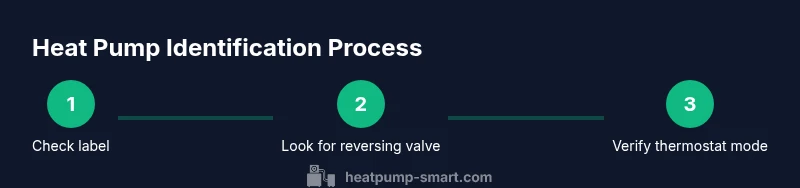
Definition: A heat pump is a single system that provides both heating and cooling by moving heat between indoors and outdoors. To tell if your AC has one, check the outdoor unit for a reversing valve, review the thermostat for heating mode options, look up the model number in the manual or on the unit label, and confirm with a licensed technician.
What is a heat pump and how it differs from a standard AC
A heat pump is a single system that provides both cooling and heating by moving heat between indoors and outdoors. Unlike a conventional air conditioner that only removes heat from your home, a heat pump can reverse that process to bring heat in during colder months. If you’re wondering how to know if my ac has a heat pump, this guide will show practical at-home checks and what a pro would confirm. Heat pumps are common in new homes and in renovations aimed at higher energy efficiency. When designed and installed correctly, they can reduce energy use compared with older fueled systems, especially in moderate climates. In some setups, a heat pump works alongside a backup electric resistance heater, which Heatpump Smart refers to as auxiliary heat to maintain comfort during extreme cold. This distinction is subtle but important for performance and operating costs, and understanding it helps homeowners plan maintenance and upgrades.
Core indicators that your system might be a heat pump
Several physical and operational clues can point toward a heat pump. First, look for a reversing valve on the outdoor condenser; this component switches the system between heating and cooling. Second, check the markings on the outdoor unit or the service label; words like “heat pump,” “HP,” or “reversing valve” are telltale. Third, inspect the thermostat: if the thermostat supports heat mode with indicators like “O/B” or “Auxiliary heat,” that’s a strong signal. Fourth, observe the defrost cycle, which is a common feature in heat pumps to melt frost on the outdoor coil. If you see these features together, your system is likely a heat pump rather than a standard air conditioner. For homeowners, noting these cues helps you communicate accurately with contractors and verify warranties. Heatpump Smart analysis, 2026, emphasizes that misidentification is a frequent issue during home inspections, underscoring the value of careful checks.
How to read labels, model numbers, and documentation
The quickest way to confirm is to read the label on the outdoor unit and the nameplate on the indoor air handler or furnace. Look for the model number and a brief description that includes terms like “heat pump,” “HP,” or “reversing valve.” If the label is unclear, search the exact model number online or in the owner's manual. Manufacturer literature often lists system type, refrigerant, and whether heating is provided by the same equipment. If you’re unsure, take a photo of the label and cross-check with the manual. Keeping documentation organized helps buyers and managers make informed decisions and reduces service delays, according to Heatpump Smart.
Visual cues on the outdoor unit: reversing valve, label, and coil arrangement
The outdoor unit (condenser) is where you’ll most often spot a heat pump’s fingerprint. A visible reversing valve near the compressor is a strong tip; many units have a distinct valve with a coil housing that redirects refrigerant between circuits. Some models label the valve with “O” and “B” designations. The coil arrangement may differ from standard air conditioners, and you may notice two separate circuit boards or a more complex wiring harness. If you can access the panel safely, check for a sticker that explicitly calls out heat pump operation. Not all units label clearly, especially in older homes or hybrids; in that case, model-number research and a professional confirmation are prudent.
Thermostat behavior and heating modes
A heat pump changes how your home is heated, and your thermostat will reflect that. In heating, a heat pump typically runs in a longer, steady cycle to move heat indoors, sometimes with auxiliary heat kicking in when temperatures drop. Look for mode labels like “Heat,” “Auto,” or “O/B” on the thermostat, and observe whether heat pumps show a separate “Aux” or “Emergency heat” setting. If your thermostat can switch to a heat pump mode with a reversing valve indicator, this is a strong sign. Remember that some thermostats require a paired outdoor unit to access full heat pump functions, so pairing and programming matter. Heatpump Smart’s guidance emphasizes verifying that the thermostat’s heat mode aligns with the outdoor equipment to ensure efficient operation.
Electrical panel and service ports: safety first
Working near electrical panels can be hazardous, so proceed with caution. If you need to inspect wiring, do not touch live circuits. Use a flashlight and take photos from a safe distance. Look for a service disconnect switch, wiring labels, and a contactor that matches a heat pump configuration (a two-row contactor is common). If you’re uncertain about wiring, don’t guess—contact a licensed HVAC technician. A heat pump’s electrical requirements are similar to many air conditioning systems, but the control wiring and reversing valve operate differently, and improper handling can damage components. When in doubt, schedule a quick diagnostic visit; confirming with a pro ensures you avoid costly mistakes.
Quick checks you can perform safely without opening equipment
Begin with the thermostat and the indoor air handler. Check that the thermostat is set to Heat and the setpoint is above room temperature. Listen for the outdoor unit’s compressor sound during heating and observe whether a fan is running inside the outdoor condenser. If you notice frost on the outdoor coil in winter, note whether the system is defrosting automatically. Take photos of outdoor labeling from a safe distance to review later. If the unit is older, consider requesting a professional test for refrigerant leaks or performance checks. These at-home checks won’t replace a professional assessment, but they help you prepare for a consultation and can reduce diagnostic time, a strategy echoed in Heatpump Smart’s homeowner resources.
When to call a professional for a definitive answer
If you’re still unsure after doing label checks, thermostat observations, and visual inspections, it’s time to consult a licensed HVAC professional. A pro can perform a field test, check refrigerant levels, confirm the presence of a reversing valve, and verify whether the heating function is part of the same system. A technician can also explain whether your climate zone benefits from a heat pump’s efficiency vs. a traditional AC. Heatpump Smart recommends booking a diagnostic visit in the shoulder seasons when demand is lower and scheduling permits thorough testing of both cooling and heating modes. Having a professional confirm your system’s type reduces warranty disputes and helps plan future upgrades.
Common myths and how to debunk them
Myth: All modern cooling systems are heat pumps. Reality: Some devices look like an AC but lack a reversing valve or not designed to heat. Myth: A heat pump can’t work in freezing temperatures. Reality: Many heat pumps operate with auxiliary heat and still provide efficient cooling and heating in milder winter climates. Myth: If the outdoor unit doesn’t say “heat pump,” it isn’t one. Reality: Labels may be hidden or the system may be integrated with other equipment; always check the model number and documentation. Debunking these myths helps homeowners avoid unnecessary replacements and plan smarter upgrades. As Heatpump Smart points out, asking precise questions about mode, valve, and model improves accuracy.
Real-world scenarios: practical outcomes of identifying your heat pump correctly
In real homes, identifying a heat pump early prevents mismatched service calls and improper refrigerant handling. For example, a homeowner who confirmed a heat pump before buying a service contract avoided extra charges for aux-heat troubleshooting. In another case, upgrading a thermostat with heat pump compatibility resulted in meaningful energy savings and more balanced indoor temperatures. The practical takeaway is that correct identification improves thermostat programming, ensures efficient operation, and supports better long-term planning for replacement or retrofit projects. The Heatpump Smart team has seen these outcomes repeatedly and shares them to help homeowners and property managers keep comfort high and costs predictable.
Tools & Materials
- Owner's manual or unit model sticker(Have the exact model number handy; helps confirm heat pump presence quickly.)
- Smartphone or camera(Useful for photographing labels and wiring diagrams for later reference.)
- Flashlight(Helpful for inspecting outdoor unit panels or dimly lit indoor areas.)
Steps
Estimated time: 20-40 minutes
- 1
Gather documentation
Locate the outdoor condenser label and the indoor air handler or furnace nameplate. Record the model number and any text indicating heat pump, HP, or reversing valve. This establishes a baseline before you inspect physical components.
Tip: Take clear photos of labels from multiple angles to avoid misreading small text. - 2
Inspect the outdoor unit for a reversing valve
Look for a visible reversing valve on the condenser, often near the compressor. It may be labeled with O/B or similar markings and is a strong indicator of heat pump operation.
Tip: If you can’t see the valve, don’t force panels—note the location and proceed to model checks. - 3
Check for heat pump markings on labels
Scan the outdoor unit and indoor equipment for explicit text like ‘heat pump,’ ‘HP,’ or ‘reversing valve.’ If present, this is a clear confirmation and can guide warranty and service steps.
Tip: Even if text is faint, cross-reference the model number with the manual or manufacturer site. - 4
Review the thermostat capabilities
Examine the thermostat for heat mode, O/B indicators, and any aux/electric heat settings. A thermostat that clearly supports heat pump operation strongly suggests the system can heat with a heat pump.
Tip: If you see an Aux or Emergency Heat setting, expect auxiliary heat to supplement the heat pump in cold weather. - 5
Observe the defrost behavior
During cold periods, heat pumps perform a defrost cycle when frost forms on the outdoor coil. If you notice periodic defrost cycles, it supports heat pump identification.
Tip: Defrost cycles are not universal; their presence strengthens identification but absence doesn’t rule it out. - 6
Look up the model number online
If label text is unclear, search the exact model number online or in the manufacturer app/manual to confirm system type and refrigerant.
Tip: Document results and save screenshots for future reference or warranties. - 7
Cross-check indoor equipment
Some systems place the reversing valve/heat pump components on the outdoor unit, while others blend with a furnace/air handler. Inspect the indoor unit for any text indicating heat pump compatibility.
Tip: Be cautious when opening panels; only inspect exterior visible components if you lack expertise. - 8
Note cooling vs heating control
In a true heat pump, cooling and heating functions share a single refrigerant loop; if the system only cools but doesn’t heat, it may be a dedicated AC or a hybrid.
Tip: Ask about the system’s heating performance in your climate before drawing conclusions. - 9
Prepare for professional confirmation
If you’re uncertain after house checks, arrange a diagnostic visit with a licensed HVAC technician to verify the system type and efficiency features.
Tip: Request a written confirmation letter stating heat source type for records and warranties. - 10
Document findings for future planning
Summarize all cues, photos, and model data in a single file to share with contractors or for upcoming upgrades.
Tip: Keep a dated log; heat pump configurations and compatibility evolve with system updates.
Your Questions Answered
What is the quickest way to tell if my AC is a heat pump?
Check the outdoor unit for a reversing valve, look for labeling that says heat pump or HP, and verify the thermostat has a heat mode or O/B setting. If in doubt, reference the model number in the manual or contact a professional.
Look for a reversing valve on the outdoor unit, heat pump labeling, and thermostat heat mode. If you’re unsure, check the model number in the manual or ask a pro.
Can a system look like an AC but still be a heat pump?
Yes. Some units are hybrids or look like standard ACs but include a reversing valve and heating capabilities. Always verify with labeling, model numbers, and documentation.
Sometimes a unit looks like an AC but is actually a heat pump; check labels and the manual to be sure.
What if the thermostat doesn’t show a heat mode?
An absence of a heat mode can indicate an older or non-heat-pump system, or a thermostat that isn’t compatible. Check the outdoor unit labeling and model number, then consider upgrading the thermostat.
If the thermostat has no heat mode, verify with the model number and consider thermostat compatibility or upgrade.
Do all heat pumps require auxiliary heat in winter?
Many do use auxiliary heat in very cold conditions, but not all. This depends on climate and the system’s efficiency. Confirm with the installation manual or a professional.
Some heat pumps use auxiliary heat in cold weather, but it isn’t universal; check your manual.
What should I ask a technician to confirm?
Ask them to confirm whether the system is a heat pump, whether it has a reversing valve, the presence of auxiliary heat, refrigerant type, and the model number for warranty records.
Ask the tech to confirm heat pump status, reversing valve, aux heat, refrigerant, and model numbers.
Is a heat pump more energy-efficient than a traditional AC?
In many climates, yes, heat pumps can be more energy-efficient because they move heat rather than generate it. Efficiency varies by climate, system, and usage patterns, so compare SEER and HSPF ratings for the specific model.
Heat pumps are often more efficient, but it depends on climate and model ratings.
Watch Video
Top Takeaways
- Identify heat pump signs on labels, valves, and thermostat.
- Cross-check model numbers with manuals to confirm.
- Defrost cycles and aux heat settings support identification.
- When unsure, consult a licensed HVAC professional for definitive confirmation.