How to Tell Heat Pump: Identify, Verify, and Understand Your System
Learn how to tell if your home uses a heat pump, differentiate air-source from geothermal, and verify operation for energy efficiency and comfort.


You will learn how to tell if your home uses a heat pump, how to distinguish air-source from geothermal models, and how to verify operation for energy efficiency. Start by noting outdoor condenser presence, refrigerant lines, and thermostat modes, then cross-check with installation records. Keep an eye out for the reversing valve and the two copper lines that usually accompany heat-pump setups.
What is a heat pump and how it works
A heat pump is a heating and cooling system that transfers heat rather than generating it by burning fuel. It uses a small refrigerant loop, a compressor, and a reversing valve to move heat between indoors and outdoors. In heating mode, the refrigerant absorbs heat from the outside air (even when it's cold) and releases it inside; in cooling mode, the process reverses. This energy-transfer approach makes heat pumps highly efficient, especially when paired with modern thermostats and proper insulation.
According to Heatpump Smart, the basic idea is to move heat rather than create it, which allows seasonal energy savings compared with conventional electric resistance heating. The efficiency depends on outdoor temperatures, humidity, and the system's efficiency rating (SEER and HSPF). Heat pumps often include auxiliary heating for extremely cold days, but for typical climates, a well-tuned heat pump can handle most heating needs.
The system architecture varies: air-source heat pumps (ASHP) use an outdoor condenser and an indoor air handler or ducted plenum; geothermal or ground-source heat pumps use underground loops to harvest heat. Some models are mini-split, lacking ductwork, and others are split systems with a central air handler. This article focuses on recognizing whether your unit is a heat pump and identifying common configurations.
How to tell if your system is a heat pump and what to look for
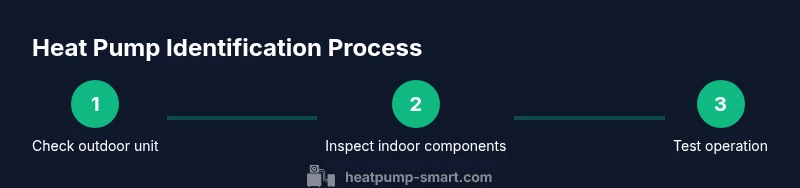
Determining whether your home uses a heat pump starts with observation, documentation, and a quick test. Look for an outdoor condenser unit with two refrigerant lines entering the home; this is a strong indicator of heat-pump equipment. Inside, check for an indoor air handler or ducted plenum connected to a thermostat that offers heat mode in addition to cooling. The presence of a reversing valve, which enables heating in cooling mode, is another key sign. If your thermostat shows options like "Auto, Heat, Cool, Emergency Heat," you are likely dealing with a heat pump or a heat-pump-equipped system. The absence of a gas furnace in the same space helps confirm the identification, though some systems may share zones with a furnace. Confirm with installation records or the equipment label on the outdoor unit, which lists model numbers and refrigerant type.
If you see two copper refrigerant lines entering the house and a label indicating an outdoor unit, you are probably looking at a heat pump. Some climates rely on ducted systems, while others are ductless mini-splits; either configuration uses heat transfer rather than combustion. Finally, observe the defrost cycle during a winter operation; a brief defrost sequence is typical for air-source heat pumps and is a sign the system is actively removing frost from the outdoor coil.
Distinguishing air-source vs geothermal heat pumps
Air-source heat pumps pull heat from the outdoor air and move it indoors via an outdoor condenser connected to an indoor air handler or ductwork. They are common in many homes and can be ducted or ductless. Geothermal heat pumps, by contrast, rely on underground loops or water-source loops buried or submerged outside the building. They extract heat from the ground or water and transfer it to the home through a similar indoor system. Geothermal installations tend to have higher upfront costs but can offer steady performance regardless of winter temperatures, because the ground provides more stable heat sources. Practical clues include the location of the outdoor unit (often next to the home for ASHPs) and the presence of buried or horizontal loops for geothermal systems. Understanding the type helps you estimate maintenance needs, service intervals, and potential energy savings over time.
How to verify operation and efficiency without guessing
Once you’ve confirmed the system type, check that the unit responds correctly to call-for-heat or call-for-cool without unusual delay. Listen for the outdoor fan and the indoor blower; noises should be steady and not grinding or rattling. If frost accumulates on the outdoor coil, ensure the defrost cycle is functioning; repeated icing can signal airflow restrictions or refrigerant issues. While many metrics exist (COP and SEER), you don’t need exact numbers to judge performance: consistent comfortable air, reasonable electricity use, and minimal temperature swings indicate good operation. Keep filters clean and clear the outdoor area of debris for optimal efficiency. If you notice weak heat, inconsistent temperatures, or frequent cycling, escalate to a licensed HVAC technician for a detailed inspection.
Common mistakes and safety reminders when inspecting a heat pump
Don’t assume a gas furnace is present based on appearance alone; service panels may be locked, and refrigerant systems require professional handling. Never touch electrical components with power on, and avoid attempting refrigerant work yourself. When inspecting, wear appropriate safety gear and keep hands away from moving parts. Do not block the outdoor unit with snow, leaves, or furniture, and maintain at least two feet of clearance for proper airflow. Always document model numbers, serials, and any observed issues to help a technician diagnose problems quickly.
Quick checks you can do before calling a technician
Start by inspecting the outdoor unit: make sure it's not blocked by debris or snow, and clear a two-foot clearance around it. Check that the indoor air handler is running and the air filter is clean. Review the thermostat to ensure it's set to a heat mode with a reasonable temperature setpoint. If you notice ice buildup, unusual noises, or weak heating, capture photos and note times. Gather installation documentation and any labels on the outdoor unit; this will help a technician identify the exact heat pump type and refrigerant used.
Tools & Materials
- Flashlight or headlamp(For low-light indoor/outdoor areas)
- Non-contact voltage tester(Safety check before touching panels)
- Screwdriver set (Phillips and flathead)(Access panels if needed)
- Digital camera or smartphone(Document labels, wiring, and exterior unit)
- Notebook and pen(Record model numbers and notes)
- Thermometer or thermometer app(Estimate indoor/outdoor temperatures for performance checks)
- Measuring tape(Verify clearances around outdoor unit)
- Ladder (for outdoor unit access)(Use only if safely reachable)
Steps
Estimated time: 30-60 minutes
- 1
Inspect exterior unit and identify labels
Locate the outdoor condenser and read its label to confirm model and refrigerant type. Look for two refrigerant lines entering the house and note any serial numbers. Photograph the unit and lines for reference, then note the general condition of the housing and fin coils.
Tip: Take multiple photos from different angles; this helps if you need a professional follow-up. - 2
Check indoor connections and thermostat options
Open the indoor air handler access panel if you can do so safely and observe the wiring. Check the thermostat to see if it has Heat, Cool, Auto, and Emergency Heat options. If you see a reversing valve or heat pump-specific settings, you’re likely dealing with a heat-pump system.
Tip: Only touch panels when power is off and you have the equipment to reset anything accidentally moved. - 3
Verify reversing valve and service labels
If accessible, locate the reversing valve actuator on the outdoor unit or inside the air handler. Confirm the valve coordinates heating and cooling modes. Note any service tags that indicate years of service or refrigerant type.
Tip: A malfunctioning reversing valve is a common cause of poor heating performance. - 4
Test a cycle and listen for defrost cues
Put the system in heat mode and observe the cycle. The outdoor unit should operate briefly, then switch to defrost on cold mornings. Listen for the indoor blower and ensure air is warm within a few minutes.
Tip: Defrost cycles are normal in ASHPs; excessive defrosting signals possible icing or airflow issues. - 5
Assess electrical safety and outdoor airflow
Inspect accessible electrical disconnects for signs of wear. Ensure the outdoor unit has clear airflow with at least two feet of clearance. Do not place objects close to the fins or block louvers.
Tip: Turn off power before handling any electrical components; call a pro if you’re unsure. - 6
Document findings and determine next steps
Summarize what you observed, including brand/model labels, thermostat behavior, and any anomalies. Decide whether to perform additional DIY checks or contact a licensed HVAC technician for a formal inspection.
Tip: Keep copies of photos and notes to speed up service visits.
Your Questions Answered
What is a heat pump and how can I tell if my system is one?
A heat pump moves heat using a refrigerant loop and a reversing valve for heating and cooling. Check for a visible outdoor condenser with two refrigerant lines and a thermostat that offers heat mode in addition to cool. Look for a reversing valve and the absence of a gas-furnace setup in the same space.
Heat pumps move heat rather than generate it; look for an outdoor condenser, dual refrigerant lines, and a thermostat with heating modes to tell if you have one.
Do heat pumps work in cold weather?
Yes, many heat pumps still provide heat in cold weather, though efficiency can drop as outdoor temperatures fall. Most systems use auxiliary electric resistance heating on very cold days. Proper insulation and a correctly sized unit help maintain comfort with lower energy use.
Most heat pumps work in cold weather, but efficiency drops. Auxiliary heat can kick in on very cold days.
Can I install a heat pump myself?
Installing or modifying a heat pump involves electrical work and refrigerant handling that requires a licensed HVAC professional. DIY installation can be dangerous and may void warranties or violate codes. Always hire a qualified technician for installation and refrigerant service.
No—installing heat pumps or handling refrigerants should be done by a licensed HVAC professional.
What is the difference between air-source and geothermal heat pumps?
Air-source heat pumps move heat between indoors and outdoors, usually with an outdoor condenser. Geothermal heat pumps use underground loops to access stable ground heat. Geothermal often has higher upfront costs but can offer steadier performance in extreme conditions.
Air-source uses outdoor air; geothermal uses underground loops. Geothermal can be more stable but pricier upfront.
How can I tell if my heat pump is efficient?
Look for the system’s efficiency labels (SEER, HSPF) on the outdoor unit or manual. Consistent indoor comfort, even temperatures, and reasonable electricity use are practical indicators of good performance.
Check for SEER and HSPF labels and observe steady comfort with moderate energy use.
What should I do if my heat pump is iced over?
Icing on the outdoor coil typically triggers a defrost cycle. If icing is persistent, ensure airflow isn’t blocked, filters are clean, and refrigerant issues aren’t present. Call a technician if icing recurs after defrost cycles.
Persistent ice means check airflow and filters; if it continues, contact a professional.
Watch Video
Top Takeaways
- Identify your heat pump by outdoor unit and thermostat features.
- Differentiate air-source from geothermal by location and loops.
- Verify operation with observable cycles and reasonable energy use.
- Avoid refrigerant handling; call a licensed technician for major issues.
- Keep records and maintain airflow for long-term efficiency.