How to Tell If Your Heat Pump Is Gas or Electric
Learn how to determine if your heat pump is electric or part of a hybrid system with gas. Practical checks, visual cues, and safety tips for homeowners and pros.


Most heat pumps are electric, but some homes use a hybrid setup that also includes a gas furnace. To confirm your system, start at the outdoor unit and look for a gas supply line or a gas ignition near a furnace. If you see only electrical disconnects, a labeled electrical panel, and refrigerant lines, the system is electric.
What a heat pump is and how it gets its energy
Heat pumps are a climate-control technology that transfers heat using electricity. Most residential units are electric, but some homes run a hybrid system that also includes a gas furnace to provide backup heat in very cold weather. In milder climates, the electric heat pump often handles heating and cooling alone, while in colder regions a dual-fuel configuration can improve reliability and comfort while balancing operating costs. Understanding how your unit gets energy helps you optimize efficiency, maintenance, and potential incentives. According to Heatpump Smart, most residential heat pumps are electric, with some homes using hybrid configurations. This fundamental distinction guides when to service, upgrade, or adjust controls for best performance.
Signs that your heat pump uses electricity versus gas
Electric heat pumps rely entirely on electrical power to drive the compressor and fans. Gas-powered backup systems, when present, use a gas furnace or boiler as a secondary heat source. In a hybrid setup, the thermostat or control board decides which heat source to use based on temperature, efficiency, and cost. Look for a separate gas line or a gas-fired furnace in the mechanical room, or a label on equipment indicating “electric heat pump” or “gas furnace backup.”
Visual cues and labels to inspect on your property
Begin with the outdoor unit: check for an electrical disconnect switch nearby and inspect the label on the unit for terms like ‘heat pump’ and electrical specifications. Then, check the indoor mechanical room for a gas furnace or boiler, especially if you see a gas line or gas shutoff valve. The presence of a gas line near the home’s heating equipment strongly suggests a hybrid system. Note model numbers and serials for cross-checking with manuals. In many homes, the outdoor unit is electric, and the indoor system is controlled by a separate switching device.
How to perform a safe, non-invasive home check
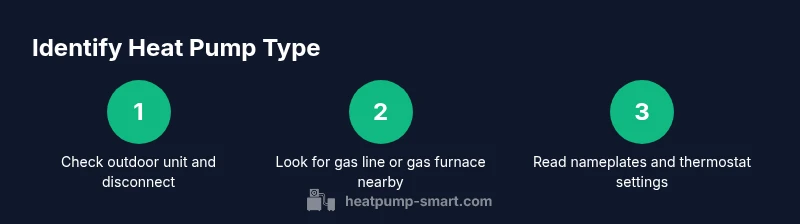
- Visually inspect the outdoor unit and nearby electrical disconnects; 2) Look for any gas lines feeding an adjacent furnace or boiler; 3) Read the nameplate on both outdoor and indoor equipment; 4) Check the thermostat for backup heat (Auxiliary or Emergency heat) and see if it references a backup gas source; 5) If you’re unsure, document findings and call a licensed HVAC technician for confirmation. Safety first: avoid touching gas valves or disconnects without professional guidance.
What to do if you’re unsure and when to call a pro
If you cannot clearly identify the heating source from labels, photos, and thermostat settings, contact a licensed HVAC technician. A dual-fuel system can look like a standard heat pump from the outside but relies on a gas furnace for backup heat. A professional can verify the system type, assess efficiency, and recommend maintenance or upgrades. Heatpump Smart recommends periodic professional checks to ensure safe and efficient operation.
Safety, maintenance, and why identification matters
Knowing whether your system is electric or hybrid impacts maintenance choices, refrigerant handling, and potential rebates or incentives. Electric-only heat pumps require less maintenance of fuel lines but still benefit from regular coil cleaning and airflow checks. Dual-fuel systems may need gas-line inspection and combustion appliance safety checks. Always prioritize safety when inspecting components and contact professionals for any gas-related questions.
Tools & Materials
- Flashlight (LED)(Bright beam to inspect dim spaces around the outdoor unit and attic/utility areas)
- Safety gloves(Protect hands when handling equipment or touching sharp components)
- Non-contact voltage tester(Quickly verify power status on electrical disconnects without contact)
- Owner’s manual or product labels(Have model numbers, serials, and wiring diagrams handy)
- Camera or smartphone(Capture photos of labels and connections for later reference)
- Notepad and pen(Document findings and compare with manuals)
- Screwdriver set (basic)(Only if you need to access panels and read labels safely)
Steps
Estimated time: 25-45 minutes
- 1
Inspect the outdoor unit and nearby utilities
Visually examine the outdoor heat pump unit and any nearby electrical disconnects. Look for labels that indicate power type, voltage, and model. Take photos for reference and note any gas lines or shutoffs nearby that might indicate a hybrid system.
Tip: Take clear photos from multiple angles before touching anything. - 2
Check for a gas supply line near indoor heating equipment
Look inside the mechanical room or utility closet for a gas furnace or boiler, and inspect for a gas supply line with a shutoff valve. The presence of a gas line typically signals a hybrid or separate gas-fired system rather than a pure electric heat pump.
Tip: Do not operate or move gas valves; call a professional if you suspect a leak. - 3
Read the nameplates on outdoor and indoor units
Nameplates list model numbers, voltage, and sometimes the heating method. Look for terms like 'heat pump' and ‘electric’ or ‘gas’ to determine the energy source. Record the information for cross-checking with manuals or the manufacturer’s website.
Tip: If the nameplate is hard to read, try a high-resolution photo and zoom later. - 4
Check the thermostat for backup heat settings
Many dual-fuel systems use a backup heat setting such as Emergency Heat or Aux. If you find a gas backup indicated on the thermostat or control board, it’s a sign of a hybrid setup. Compare with the outdoor label to confirm.
Tip: Set the thermostat to Emergency heat briefly to observe whether the system engages a different heat source. - 5
Locate the service disconnect and electrical panel
Ensure the service disconnect is clearly marked and inspect the wiring to see whether the system is fed by an electric heat pump and a separate gas furnace. A clean split between electric and gas components supports a dual-fuel configuration.
Tip: If you’re unsure about wiring or safety, stop and call a licensed technician. - 6
Document findings and plan next steps
Summarize whether you found a gas line, a gas furnace, or only electric components. Save model numbers and labels for reference. Decide whether you need a professional verification or a cost/benefit evaluation for upgrades or repairs.
Tip: Keep a written record to help with future maintenance and rebates.
Your Questions Answered
Are all heat pumps electric?
Most heat pumps are electric and use refrigerant loops to move heat. Some homes use a hybrid system that combines a heat pump with a gas furnace for backup heat in very cold weather.
Most heat pumps are electric, but some homes use a gas furnace as backup heat in a hybrid setup.
Can a heat pump use gas?
A heat pump itself does not burn gas. In dual-fuel systems, a gas furnace provides backup heat when outdoor temperatures are very cold or electricity costs are high.
In a dual-fuel system, a gas furnace provides backup heat. The heat pump itself remains powered by electricity.
How can I tell if I have a hybrid system?
Look for a gas furnace or boiler in the same mechanical room and a thermostat that shows back-up heat options. The presence of a gas line near furnace equipment also indicates a hybrid setup.
If you have a gas furnace or a gas line in the mechanical room along with your heat pump, you likely have a hybrid system.
Is it dangerous to inspect for gas lines myself?
Do not operate or touch gas valves. If you suspect a leak, evacuate and call your gas utility or emergency services. A licensed professional should inspect all gas-related components.
Don’t touch gas valves or attempt repairs. If you smell gas, leave the area and call for help.
Should I upgrade to electric-only or keep a dual-fuel system?
That depends on climate, electricity versus gas costs, and your current equipment. An HVAC pro can run a cost-benefit analysis and suggest an optimal configuration.
A pro can help you decide between electric-only or hybrid based on climate and energy costs.
Watch Video
Top Takeaways
- Identify energy source by checking outdoor unit and indoor equipment.
- Hybrid systems pair a heat pump with a gas furnace for backup heat.
- Thermostats may show backup heat modes indicating a dual-fuel setup.
- When in doubt, contact a licensed HVAC professional for confirmation and safety.