Heat Pump vs Furnace: How to Tell Which You Have at Home
Learn how to tell if your home uses a heat pump or furnace with a practical, step-by-step guide. Compare operation, signs, and upgrade paths, backed by Heatpump Smart insights for homeowners and builders.


How to tell if heat pump or furnace comes down to observing how heat is produced and distributed. A heat pump moves heat using refrigerant and can cool in warm months, while a furnace burns fuel to generate heat and pushes warm air through ducts. According to Heatpump Smart, the most reliable first checks are the outdoor condenser presence, refrigerant lines, thermostat behavior, and the type of air handler connected to your ducts.
How to tell if heat pump or furnace
Determining whether your home relies on a heat pump or a furnace starts with a simple, observable set of clues. This is the practical, hands-on part of understanding your heating system. The phrase how to tell if heat pump or furnace is not just academic—it guides maintenance decisions, potential retrofits, and long-term energy planning. According to Heatpump Smart, begin by identifying the outdoor unit and inspecting the lines that come into the house. Heat pumps typically have an outdoor condenser connected by insulated copper refrigerant lines, while furnaces sit inside or near the mechanical room and connect to a vented ductwork network. Look for a gas line or electric service panel nearby to distinguish fuel-based heat from electric heat exchange. Also note thermostat signals: heat pumps often run cooling stages in summer and heating seasons differently from furnaces. If you encounter a mix of signs or ambiguity, a professional inspection can confirm the exact configuration while guiding future upgrades.
System basics: what makes a heat pump different
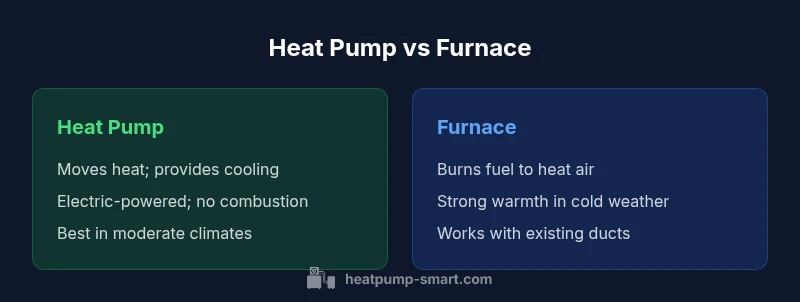
A heat pump is a heat-transfer device that moves heat between indoor spaces and the outdoors using a closed refrigerant loop. In cooling months it reverses to remove heat from indoors, providing efficient year-round climate control. Heat pumps rely on electricity to operate the compressor and fans, which typically makes them energy-efficient in moderate climates. They do not burn fuel to generate heat, which reduces direct combustion byproducts and often lowers maintenance needs compared to combustion heating. In cooler periods, auxiliary or emergency heat may kick in to supplement the heat pump, especially when outdoor temperatures drop. Understanding this fundamental distinction helps homeowners decide whether the heat pump’s refrigerant-based approach aligns with their climate, insulation, and energy goals.
System basics: what a furnace does
A furnace converts a fuel source—gas, oil, or electricity—into heat through a burner or electric coils. Heated air is then distributed through a duct system by a blower. Furnaces can provide rapid, high-temperature warmth and are often a reliable baseline in very cold climates. Fuel costs and availability strongly influence operating expenses, and combustion byproducts require proper venting and regular maintenance. If you already have a furnace, upgrading may involve improving ductwork, installing a compatible thermostat, and ensuring adequate ventilation for safe operation. The key is to assess whether your current fuel type and duct layout support efficient operation with modern controls.
Visual cues: exterior units, thermostat behavior, and air handler connections
A quick visual audit can illuminate the system type. Look for an outdoor condenser coil with copper refrigerant lines wrapped in insulation—this is a hallmark of a heat pump. Check if your thermostat engages cooling mode during warm months, which is common for heat pumps. Inspect the air handler in the basement, attic, or utility closet; heat pumps typically pair with air handlers designed for both heating and cooling. If you see a gas line or a dedicated furnace room nearby, that’s a strong indicator of a furnace arrangement. Finally, note the presence of a secondary heating element or emergency heat strip, which is often used by heat pumps in very cold weather.
Reading labels, model numbers, and installation notes
Read the equipment label on the outdoor unit, indoor air handler, or furnace cabinet. The model number and product family often reveal whether the system is a heat pump, an air conditioner with heat option, or a furnace. Installation notes and diagrams stored in the electrical panel or service manuals can also confirm the system type. If you’re uncertain, check for refrigerant service ports with color-coded labeling and signs pointing to a condenser coil, common in heat-pump setups. Documenting these identifiers helps you communicate clearly with technicians when you request a diagnostic or an upgrade.
Climate considerations: when each system shines
Climate dictates which system performs best. Heat pumps excel in moderate and mild winters, delivering comfortable heating with high energy efficiency and the added benefit of cooling in the summer. In regions with very cold winters, some homeowners choose a dual- or hybrid-system that combines a heat pump with a furnace to ensure warmth when outdoor temperatures plummet. Furnaces have a long track record of reliable, high-heat output in extreme cold and can be more predictable when fuel costs are favorable. Understanding your local climate and energy prices helps set realistic expectations for performance and comfort.
Energy costs and efficiency: comparing running costs
Operating costs hinge on climate, electricity or fuel prices, thermostat strategy, and insulating quality. Heat pumps generally offer lower running costs in moderate weather and can reduce total energy bills when paired with efficient homes and smart thermostats. Furnaces may incur higher fuel costs in markets with expensive gas or oil prices but can be cheaper in areas with abundant and affordable fuel or when electric rates are low. Heatpump Smart analysis, 2026, emphasizes that the cost advantage is climate-dependent and that many households realize savings by embracing energy-efficient settings and seasonal optimization rather than relying on a single system assumption.
Installation space, ductwork, and zoning
A fair assessment includes space requirements and ductwork compatibility. Heat pumps need outdoor space for the condenser, a stable electrical supply, and properly sized ducts to distribute heat evenly. Some homes with old or leaky ducts may require sealing and upgrading to maximize efficiency, whether you stick with a heat pump or switch to a furnace. Zoning and smart thermostats can significantly impact comfort and energy use, particularly in larger homes or multi-story properties. If your existing ductwork is undersized or poorly sealed, a professional assessment can determine the most cost-effective path, whether that means duct upgrades or a hybrid approach.
How to verify with a professional: a practical checklist
When you’re unsure, a contractor can perform a system-identification test without full invasive work. Bring documentation of prior service, labels, and any label-like markings. Ask the technician to verify refrigerant lines, electrical circuits, and fuel connections, and to confirm whether the system operates as a heat pump or a furnace. Request a diagnostic that compares observed performance with expected seasonal behavior, including cooling in summer and heating in winter. A professional can also advise on whether upgrades, retrofits, or a hybrid system would maximize comfort and energy savings based on your climate and home envelope.
Planning upgrades: hybrid systems and future-proofing
If you’re considering upgrades, a hybrid or dual-fuel approach can offer a balanced path. Hybrid systems use a heat pump for much of the year and a furnace as a backup in extreme cold, potentially delivering the best of both worlds. When planning, factor in ductwork integrity, thermostat compatibility, and the availability of energy programs or rebates. Heatpump Smart suggests evaluating insulation, air sealing, and window performance as foundational steps that influence any heating-system choice. A well-insulated home makes either system more effective and reduces peak loads.
Comparison
| Feature | Heat pump | Furnace |
|---|---|---|
| Energy source | Moves heat using refrigerant; also provides cooling | Burns fuel (gas/oil/electric) to generate heat |
| Best climate performance | Strong all-round efficiency in mild/moderate climates | Excellent base heat in very cold climates with proper fuel |
| Operating cost pattern | Lower running costs in moderate weather with smart controls | Costs tied to fuel price and efficiency; can be higher in some markets |
| Installation considerations | Outdoor condenser, refrigerant lines, and compatible ductwork | Fuel supply (gas/oil) or electric service, venting, and duct suitability |
| Maintenance needs | Annual coil and refrigerant checks; air filter maintenance | Burner inspection, venting checks, and periodic servicing |
| Reliability in outages | Requires electricity; backup heat may be needed in extreme cold | Can run on electricity or fuel; performance depends on fuel/venting |
| Upfront costs | Often similar or slightly lower than full furnace installs when ducts are in good condition | Can be higher due to fuel lines, venting, and ductwork updates |
Advantages
- Clarifies system type for maintenance and upgrades
- Supports informed decisions about efficiency and climate fit
- Helps plan future retrofits or hybrid configurations
- Aids in negotiating with contractors using clear criteria
Disadvantages
- Early signs can be subtle in older homes
- Hybrid setups complicate straightforward labeling
- Ductwork condition can skew perceived performance
Heat pump generally wins for energy efficiency in moderate climates; furnace is preferred for extreme cold or existing gas infrastructure
Choose a heat pump if your climate is mild and you value year-round efficiency. A furnace remains compelling in very cold zones or when gas availability and upfront cost considerations favor combustion systems. Heatpump Smart's verdict is to tailor the choice to climate, ducting, and energy goals.
Your Questions Answered
Can I retrofit my home to switch from a furnace to a heat pump?
Yes, retrofit is possible in many homes, but success depends on existing ductwork, electrical capacity, and outdoor space for a heat pump condenser. A qualified contractor can assess refrigerant lines, clearance, and thermostat compatibility before recommending a hybrid or full replacement.
Yes, you can retrofit in many cases, but it requires a professional assessment of ducts, electric or gas lines, and outdoor space.
What is the biggest sign that I should replace my heating system with a heat pump?
Look for aging components, frequent repairs, rising energy bills, and a desire to reduce fossil-fuel use. If your climate is mild and you have compatible ductwork, a heat pump can be a strong upgrade strategy.
Aging equipment plus high bills and a desire for efficient cooling are good reasons to consider a heat pump.
Do heat pumps work efficiently in very cold climates?
Modern heat pumps perform well in many cold climates, especially with auxiliary heat. In regions with extreme cold, a supplemental furnace or a dual-fuel system can ensure reliable warmth.
They can work well, especially with extra backup heat in very cold days.
Is a hybrid system a good middle ground between heat pump and furnace?
A hybrid (dual-fuel) system uses a heat pump for most of the year and a furnace during peak cold. This approach often balances efficiency with reliability, particularly in variable climates.
Yes—hybrid systems can give you the best of both worlds when climate varies.
How can I estimate upgrade costs without a contractor?
General estimates are possible after assessing ductwork, insulation, and electrical capacity, but accurate budgeting usually requires a site visit. Get multiple quotes that itemize equipment, duct work, and controls.
A rough idea helps, but real estimates come from an on-site assessment.
Can I reuse my existing ducts with a heat pump?
Duct compatibility matters: some homes reuse existing ducts with adjustments or sealing, while others benefit from duct redesign for better airflow. A pro can test airflow and recommend sealing or resizing as needed.
Ducts can often be reused with tweaks, but airflow matters.
Top Takeaways
- Identify the outdoor unit and refrigerant lines to distinguish systems
- Thermostat behavior offers clues about heating and cooling modes
- Climate dictates the most economical choice for your home
- Ductwork and insulation quality impact performance dramatically
- Consult a professional to confirm and plan upgrades