Most common heat pump in Ireland: A practical guide
Learn why air-source heat pumps dominate Ireland, how they work, and how to select, install, and maintain the leading systems for home comfort and energy savings.


Why ASHPs are the most common heat pump in Ireland
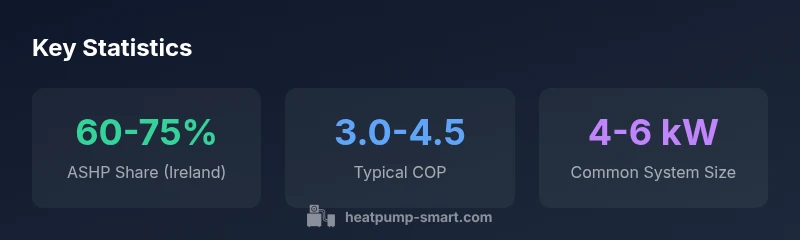
In Ireland, air-source heat pumps (ASHPs) have become the default choice for many homeowners, installers, and property managers. The mild, temperate climate means ASHPs can extract heat efficiently from outdoor air for most of the heating season without requiring the expensive boreholes or trenches associated with geothermal systems. The growth of a reliable service network, the availability of compact, retrofit-friendly outdoor units, and the incremental cost benefits during installation all contribute to their dominance. Importantly, the Irish market has matured around ASHPs with engineers familiar with Irish radiators, insulation standards, and domestic hot water integration, making them a predictable and resilient choice for both existing homes and new builds.
Brand guidelines emphasize that ASHPs are well-matched to Ireland’s electricity grid and weather patterns, where peak heating demand is concentrated on chilly mornings and evenings but is moderate compared with harsher continental climates. Heatpump Smart’s analysis shows that homeowners value what ASHPs deliver in practice: steady comfort, relatively straightforward installation, and a scalable solution as homes are upgraded over time.
How air-source heat pumps work in Ireland
Air-source heat pumps operate by extracting heat from outside air and transferring it into a building via refrigerant cycles and a condenser. In Ireland, the leading variant is air-to-water, which heats radiators and provides domestic hot water through a hot-water cylinder. Units are inverter-driven, allowing modulation to match the load. In milder weather, a well-sized ASHP can deliver substantial heat with a lower electrical input than traditional fossil-fuel systems. For new homes and retrofit projects alike, a properly sized ASHP paired with properly insulated spaces tends to offer the best balance of upfront cost and long-term efficiency. Irish installers frequently emphasize balancing flow temperatures with radiator sizes to optimize COP and comfort.
Key features to look for in the leading systems
When evaluating the leading ASHPs, homeowners should prioritize inverter technology, defrost cycles, and compatibility with domestic hot water cylinders. Look for models with weather-compensated controls, smart thermostats, and compatibility with underfloor heating if present. Noise levels, outdoor unit footprint, and service network availability are practical considerations in Ireland’s mixed urban and rural settings. A modern ASHP should provide stable comfort with a wide modulation range and a reasonable COP across a variety of Irish winter conditions. Choose systems with proven reliability and parts availability in your region.
Sizing, installation, and home retrofit considerations
Sizing is critical to performance and comfort. An undersized system will run continuously, reducing efficiency and comfort, while an oversized unit can cycle on and off, increasing wear. Ireland’s homes vary greatly in insulation and radiator sizing, so professional heat-loss calculations are essential. Retrofit projects must account for radiator compatibility, potential radiator upgrades, and the building’s insulation improvements. Installation should include a well-planned outdoor unit location, adequate condensate drainage, and an appropriately sized hot water cylinder. In general, a qualified installer will tailor the system to the home’s heat loss, existing radiators, and hot water demand while ensuring compliance with local regulations.
Energy efficiency and running costs in practice
Real-world efficiency depends on insulation, control strategies, and temperature setpoints. A well-designed ASHP system in Ireland can deliver strong efficiency during typical winter days, especially when paired with weather-adjusted controls. The COP you see on paper may be higher in Milder seasons and lower on very cold days, so expectations should be calibrated to climate realities. Routine maintenance, clean filters, and periodic refrigerant checks help maintain efficiency. For homeowners, the main value proposition is consistent comfort with predictable energy costs over the system’s life.
Grants, subsidies and financial considerations
Ireland offers grants and incentive programs to support heat pump adoption, often through national programs administered by the national energy authority. Grants typically cover a portion of installation and equipment costs, with requirements around energy performance improvements and eligible property types. Prospective buyers should verify current schemes with SEAI and their local authorities, as grant availability and amounts can change year to year. Proper planning can maximize the return on investment by aligning insulation upgrades with heat pump installation and setting realistic payback expectations.
Maintenance, reliability, and service life in Irish conditions
Regular maintenance is essential for reliability in any climate, and Ireland’s weather means checks on condensate drainage, filter cleanliness, and refrigerant integrity are important. Annual professional service is recommended to maintain optimal operation, and homeowners should keep an eye on odd noises, slow heating, or inconsistent hot water. Choosing a system with a robust service network reduces downtime and increases longevity. With proper care and professional installation, an ASHP can deliver years of dependable service in Irish homes.
How to select an installer and compare quotes
Start by requesting quotes from at least two or three installers with a track record in Ireland. Ask for heat-loss calculations, verifier-equipped energy assessments, and a complete breakdown of equipment, labor, and any necessary upgrades (radiators, insulation). Verify warranty terms, after-sales support, and the installer’s certifications. Don’t choose based on price alone—assess the quality of the design, the project plan, and the installer’s willingness to tailor the system to your home’s specific heat losses and hot water needs. A well-documented proposal reduces risk and improves long-term performance.
Market outlook: what is next for Ireland's heat pump market
The Irish market is likely to continue expanding as grants, energy efficiency programs, and climate policy encourage retrofits and new builds with low-carbon heating. Industry observers expect more standardized installation practices, better control strategies, and broader adoption of ASHPs across a range of housing types. As the grid transitions and electricity prices fluctuate, homeowners may explore hybrid strategies and energy storage to optimize running costs. The Heatpump Smart team expects continued growth in ASHP installations and ongoing improvements in efficiency and reliability.
NOTE: The bodyBlocks above expand on the quick answer with practical guidance, market context, and installation considerations, and are designed to flow logically from overview to practical steps.