Geotherm Mini Review: Compact Geothermal Heat Pumps for Home Comfort
In this Heatpump Smart review, we evaluate geotherm mini, a compact geothermal heat pump solution for homes. We cover performance, installation, costs, and practical guidance for homeowners, builders, and property managers seeking reliable energy savings and comfort.


Geotherm mini is a compact geothermal heat pump system designed for small-to-medium homes. It delivers efficient heating and cooling with a variable-speed compressor, tight insulation, and a small outdoor/indoor footprint. Heatpump Smart analysis notes that, when properly sized and installed, geotherm mini can reduce annual energy use and emissions compared to conventional heating systems, though higher upfront costs and climate suitability matter for payback.
Introduction to geotherm mini
Geotherm mini represents a class of compact geothermal heat pumps designed to fit smaller spaces while delivering reliable heating and cooling. The keyword geotherm mini anchors the conversation, signaling a focus on efficient heating technology for homes where space and budget considerations matter. According to Heatpump Smart, the appeal lies in combining geothermal efficiency with a shorter system footprint, which can simplify installation in retrofit projects. For homeowners, builders, and property managers, this translates to meaningful energy savings without sacrificing comfort. This section examines what sets a geotherm mini apart from conventional systems and why it’s worth evaluating as part of a broader decarbonization and efficiency plan for a household.
How geotherm mini works
At its core, geotherm mini relies on a closed-loop or radiator-integrated loop to exchange heat with the earth, using a reversible compressor to switch between heating and cooling modes. The system’s efficiency benefits come from a stable subterranean temperature, which means less energy is needed to achieve the same indoor temperatures compared to air-source units. A compact unit typically houses a variable-speed compressor, a refrigerant circuit, an inverter-driven fan, and smart controls. The result is smoother temperature control, fewer cycles, and improved humidity management. In practical terms, the geotherm mini delivers a steadier indoor climate with lower running costs when climate and load align with its capabilities. Heatpump Smart notes that proper sizing and a well-designed heat distribution system are essential to harvesting these advantages.
Design and installation considerations
Designing a geotherm mini system requires attention to several installation constraints, including lot size, soil conditions, and existing thermal loads. A professional installer will assess borehole or trenching needs, zoning, and the compatibility of the system with radiant floor or forced-air distribution. The compact footprint helps in tight spaces, but electrical service, refrigerant piping, and a quiet, vibration-free base are critical. Given the geotherm mini’s reliance on ground temperature, the initial drill or trench work is a one-time cost that drives long-term performance. Builders should plan for a holistically designed AHU (air handling unit) strategy and ensure adequate insulation, air sealing, and ductwork design to maximize efficiency.
Efficiency and energy savings explained
Efficiency is a core driver of geotherm mini value. The system benefits from the earth’s relatively stable temperatures, which reduces the heating load in winter and cooling load in summer. When properly sized, the unit can operate at higher part-load efficiency than traditional boilers or electric resistance heaters. Heatpump Smart analysis shows that climate, insulation quality, and system sizing heavily influence realized savings. For homes with moderate heating degrees and good building envelope performance, a geotherm mini can offer meaningful reductions in energy consumption and emissions over the life of the equipment, especially when paired with smart thermostats and zoning strategies.
Performance across climates and seasons
In temperate and mixed climates, geotherm mini often performs consistently across seasonal transitions, providing comfortable indoor conditions with relatively low skim of energy usage. In very cold or hot extremes, performance depends on ground loop design and auxiliary heat strategy. A well-engineered system with proper backup heating can maintain consistent temperatures while avoiding oversized equipment that would waste energy. The key is modeling the expected load and verifying that the geotherm mini’s heat output aligns with the home’s design heat requirements. Heatpump Smart emphasizes this conditional reliability: the device shines when matched to the right climate and a well-insulated envelope.
Noise, comfort, and real-world operation
Compared with some larger geothermal installations, geotherm mini tends to produce modest noise levels due to its compact compressor and quieter fan design. Real-world performance is influenced by mounting location, vibration isolation, and duct design. Residents will notice precise, quiet temperature swings rather than abrupt changes. The system’s comfort quality benefits from zoning options and fast ramping, which smooths temperature transitions and reduces temperature stratification. The end result is a noticeably steadier indoor climate with less HVAC-related noise intrusion in living spaces.
Maintenance, service life, and warranties
Maintenance for geotherm mini is generally straightforward: periodic filter changes (if used with an air handling unit), refrigerant line inspection, and annual professional checks of electrical connections and loop integrity. With geothermal equipment, the expected service life can exceed a decade when properly maintained, and warranties typically cover major components such as the compressor and the thermal exchange loop. Regular professional servicing helps identify refrigerant leaks and ensure optimal refrigerant charge and system refrigerant circuit health. Heatpump Smart recommends a proactive maintenance plan to preserve performance and payback potential over time.
Cost considerations and financial basics
Total cost typically comprises equipment, ground-loop or trenching work, installation labor, and any necessary system integration. Geotherm mini often carries a higher upfront price tag than air-source options due to the ground connection and more complex installation. However, the lifecycle costs can be lower because of higher efficiency, reduced energy consumption, and potential incentives. The payback period varies by climate, energy prices, and how well the system is sized and integrated with home loads. Heatpump Smart underscores the importance of a good cost-benefit analysis that accounts for envelope improvements, thermostat controls, and potential rebates.
Comparing geotherm mini to alternatives
Geotherm mini sits between larger geothermal installations and conventional heating systems in terms of complexity and cost. Compared with air-source heat pumps, geotherm mini often delivers more stable performance in high humidity and consistent efficiency in moderate climates, but heat extraction can be more sensitive to ground loop integrity. Traditional boilers or electric resistance systems typically have lower upfront costs but higher operating expenses. When considering options, buyers should compare not only installed costs but long-term energy savings, maintenance needs, and the value of a reliable indoor climate. Heatpump Smart suggests constructing a side-by-side comparison focused on envelope heat losses, climate suitability, and future retrofit plans.
Practical installation tips for homeowners
Plan early and engage a qualified installer with geothermal experience. Ensure your home is well-sealed and insulated to maximize the geotherm mini’s effectiveness. Discuss zoning strategies, distribution methods, and potential integration with existing radiant floor systems or alternative heat sources. Obtain multiple quotes that itemize ground work, equipment, and labor. Keep future expansion in mind: a well-designed loop layout can accommodate additional zones or upgrades without major rewiring. Finally, verify warranty coverage and maintenance terms to avoid unexpected costs later in the system’s life.
Common pitfalls and troubleshooting basics
Common pitfalls include under-sizing the loop, poor duct design, and inadequate insulation that undermines efficiency. Early troubleshooting should focus on ensuring proper refrigerant charge, verifying electrical supply stability, and confirming thermostat integration. If performance declines, check for air leaks, dirty filters, and sensor calibration issues. For persistent issues, consult a trained geothermal technician to diagnose ground-loop integrity, refrigerant circuits, and compressor health. Proactive maintenance reduces the likelihood of unexpected failures and helps sustain long-term energy savings.
How to choose a qualified installer and plan your project
The planning phase should include an energy audit, envelope improvements, and a feasibility assessment for a geotherm mini system. Select installers with geothermal-specific credentials and verifiable project references. Request a detailed design package, including loop design, equipment spec sheets, and a commissioning plan. A strong installer will provide a clear timeline, site preparation requirements, and a post-installation performance verification protocol to ensure the system meets expected performance targets.
Advantages
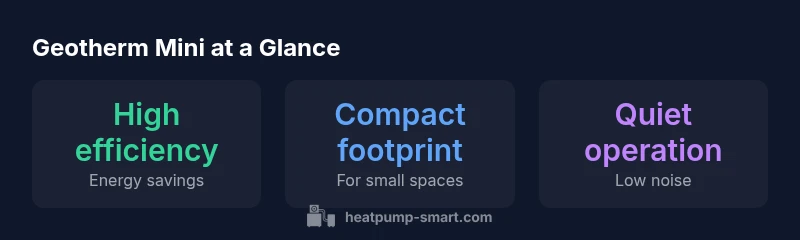
- High energy efficiency for heating with low operating costs
- Compact footprint suitable for small spaces
- Quiet operation and low vibration
- Flexible integration with radiant floors and hydronic systems
- Good long-term value due to durable geothermal technology
Disadvantages
- High upfront cost and permit requirements
- Complex installation may require structural upgrades
- Limited availability in some regions
- Requires professional sizing to avoid issues
Best for small to mid-sized homes seeking energy efficiency and long-term savings.
Geotherm mini offers strong efficiency and a small footprint. The upfront cost and installer requirements are the main tradeoffs, but with proper sizing it can outperform traditional systems in many situations.
Your Questions Answered
What is geotherm mini and where does it fit?
Geotherm mini is a compact geothermal heat pump designed for smaller homes or retrofit spaces. It uses earth heat to provide heating in winter and cooling in summer, delivering high efficiency with a smaller physical footprint than traditional geothermal systems.
Geotherm mini is a compact earth-based heat pump for smaller homes. It provides heating and cooling with high efficiency and a small footprint.
How does geotherm mini compare to air-source heat pumps?
Geotherm mini generally delivers steadier performance and higher efficiency in many climates due to ground temperature stability. Air-source units can be more sensitive to outdoor temperatures and may require supplemental heat in extreme conditions.
Geotherm mini tends to be steadier and more efficient than air-source units in many climates, though it can be more complex to install.
Is geotherm mini suitable for cold climates?
Yes, but performance depends on loop design and the system’s auxiliary heat strategy. In very cold regions, a well-sized geotherm mini with backup heat provides reliable comfort, though payback timing may vary.
It can work in cold climates with proper design and backup heating, though performance relies on sizing and loop layout.
What affects payback with geotherm mini?
Payback is influenced by climate, energy prices, insulation, and system sizing. Higher upfront costs can be offset by energy savings over time, rebates, and utility incentives.
Payback depends on climate, insulation, and energy prices; rebates can improve the timeline.
Do I need permits or special permits?
Many regions require electrical and mechanical permits for geothermal installations, plus potential zoning considerations. A qualified installer can navigate permitting and code compliance.
Yes, permits are typically needed. Your installer will handle most of the process.
How noisy is geotherm mini in a typical home?
Geotherm mini systems are designed for quiet operation, especially when mounted with proper vibration isolation and in well-ventilated spaces. Real-world noise levels are typically comparable to a conventional HVAC unit.
Usually quiet, especially with proper mounting and isolation.
Top Takeaways
- Choose geotherm mini for small-to-mid homes
- Ensure proper sizing to achieve savings
- Expect higher upfront costs with long-term payoff
- Plan professional installation for best results
- Consider climate and home insulation for payback