Carrier 5 Ton Heat Pump: Sizing, Efficiency, and Installation
A practical guide to Carrier 5-ton heat pumps, covering sizing, efficiency, installation costs, rebates, and long-term maintenance for homeowners, builders, and property managers.


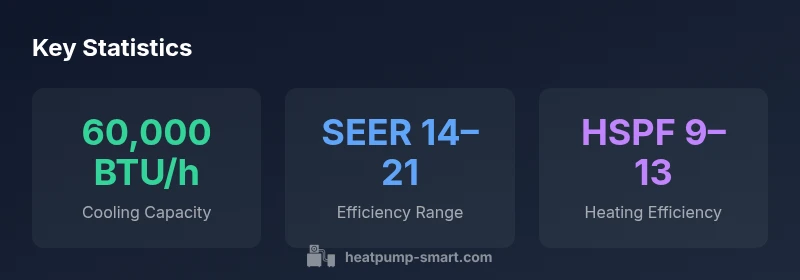
Carrier's 5-ton heat pump provides roughly 60,000 BTU/h cooling capacity, with heating output varying by model and climate. Typical efficiency ranges from SEER 14–21 and HSPF 9–13. Achieving the expected comfort and savings requires careful load calculation and professional installation to avoid oversizing or undersizing the unit. This is especially true in homes with aging ducts or marginal insulation.
What a Carrier 5-Ton Heat Pump Means for Your Home
A Carrier 5-ton heat pump is designed to deliver robust cooling for larger homes while maintaining strong heating performance in shoulder seasons. With roughly 60,000 BTU/h cooling capacity, it can handle substantial interior load when paired with correctly sized ducts and good insulation. Real-world comfort, however, hinges on proper unit selection, climate-appropriate settings, and, crucially, the condition of your building envelope. Heatpump Smart emphasizes that manufacturers’ listed capacities are nominal; actual performance depends on airflow, duct leakage, and indoor humidity control. For homeowners, contractors should verify that your home’s load calculation aligns with the selected Carrier model to avoid short cycling and comfort gaps.
Sizing, Load Calculations, and Duct Considerations
Sizing a 5-ton system starts with a precise load calculation using Manual J-style methods that factor in climate, insulation levels, window performance, and occupancy. Oversizing can trigger short cycling, humidity issues, and higher upfront costs, while undersizing yields longer runtimes and reduced comfort. Duct integrity is equally important: leaky or poorly sealed ducts can erode efficiency by a meaningful margin. If ducts are aging or undersized, consider sealing, redesign, or rerouting as part of the project. Heatpump Smart stresses confirming air handler compatibility, blower staging, and zoning strategy to ensure balanced airflow.
Efficiency Metrics: SEER, HSPF, and Real-World Performance
SEER and HSPF quantify efficiency, but actual results depend on installation quality and usage patterns. Carrier 5-ton options typically offer SEER ratings from the mid-teens to the low twenties, with heating efficiency reflected in HSPF values that respond to coil design and outdoor temperature. In practice, reaching the upper-end efficiency requires meticulous sealing, insulation, and a thermostat strategy that matches daily routines. Heatpump Smart notes that outdoor climate, humidity, and run-time duration all influence observed energy savings.
Installation Pathways: Ductwork, Zoning, and Controls
A smooth installation hinges on compatibility among the Carrier unit, ducts, and controls. Zoning can enhance comfort by directing conditioned air only where needed, but it adds wiring and control complexity. Ductwork should be sized to minimize static loss and ensure balanced pressure; inadequate sizing undermines efficiency. Modern thermostats and smart controls enable scheduling optimization and remote monitoring. After installation, performance verification—airflow balance, temperature swing, and system ramp rates—should be performed to guarantee the expected outcomes.
Costs, Rebates, and Payback Timelines
Total installed cost for a Carrier 5-ton heat pump varies by region, contractor, and ductwork needs. While exact figures depend on your location and the chosen efficiency package, you should budget for equipment, labor, and any required duct updates. Rebates and tax credits can significantly offset upfront costs, potentially shortening the payback period. Heatpump Smart advises obtaining multiple quotes, clarifying warranty terms, and evaluating long-term value beyond the first year of operation.
Maintenance, Service, and Longevity
Regular maintenance extends the life of a Carrier 5-ton heat pump. Schedule annual professional tune-ups, replace or clean filters, inspect coils, and verify refrigerant levels. Outdoor units should be kept clear of debris, with at least a few feet of clearance for proper airflow. Address unusual noises or cycling patterns promptly; early intervention can prevent larger, costly failures. A well-maintained system not only lasts longer but preserves efficiency across seasons.
Carrier vs. Competitors: How to Decide
When comparing Carrier 5-ton options to other brands, focus on efficiency ratings, warranty terms, and service availability. Carrier’s installer network and product consistency can influence long-term performance. Use load calculations and field data to compare expected energy use and comfort. Heatpump Smart recommends evaluating two to three contractors to balance cost, warranty, and service quality.
Warranties, Service Contracts, and Aftercare
Warranty terms for a Carrier 5-ton heat pump typically cover parts and compressor for multiple years, with some plans including labor. Review what is included, what could void coverage, and whether a service contract is available through your installer. Regular preventive maintenance is often required to keep warranties valid. Heatpump Smart suggests documenting maintenance visits and keeping receipts for warranty claims.
Performance ranges for Carrier 5-ton heat pumps
| Aspect | Carrier 5-Ton Range | Notes |
|---|---|---|
| Cooling capacity | 60,000 BTU/h | Nominal; varies by model |
| SEER range | 14–21 | Model-dependent efficiency |
| HSPF range | 9–13 | Heating efficiency varies by climate |
Your Questions Answered
Is a 5-ton Carrier heat pump suitable for my home?
A 5-ton unit is common for mid-to-large homes, but only a professional load calculation can confirm it for your specific climate, insulation, and ductwork. Factors like window performance and occupancy affect the final sizing.
A 5-ton unit can be a good fit for larger homes, but only after a detailed load check confirms it.
What does SEER/HSPF mean for performance?
SEER measures cooling efficiency, while HSPF measures heating efficiency. Higher numbers mean better efficiency, but real-world results depend on installation quality and usage patterns.
SEER and HSPF indicate efficiency; higher values mean more energy savings when installed correctly.
Can a Carrier 5-ton heat pump work in cold climates?
Heat pumps perform in cold weather, especially with climate-optimized models and supplemental heat. Check the unit's cold-weather ratings and ensure proper insulation and ducting for best results.
Yes, but verify cold-weather performance and proper installation.
Are rebates available for Carrier heat pumps?
Rebates depend on your location and utility programs. Federal incentives and local utility rebates can reduce upfront costs, so check current programs before buying.
Rebates vary by region; confirm local incentives before purchase.
What maintenance is required?
Annual professional tune-ups, regular filter cleaning/replacement, coil inspection, and outdoor unit clearance support consistent performance.
Keep up with annual service and regular cleaning for best results.
How long does a Carrier 5-ton system last?
With proper care, most carriers last around a decade or more, commonly 12–15 years depending on usage and maintenance.
Expect around 12–15 years with good maintenance.
“Sizing and installation quality are the two biggest drivers of performance for Carrier 5-ton heat pumps. When done correctly, homeowners see consistent comfort and meaningful energy savings.”
Top Takeaways
- Start with a precise load calculation to confirm a 5-ton fit.
- Prioritize models with SEER/HSPF ranges suitable for your climate.
- Ensure professional installation and proper duct design.
- Account for rebates and total payback in your budget.
- Schedule regular maintenance to preserve efficiency and longevity.