Carrier 2 Ton Heat Pump: In-Depth Review for Homeowners
Heatpump Smart analyzes the Carrier 2 ton heat pump, focusing on efficiency, installation, noise, warranty, and long-term value for homeowners, builders, and property managers.


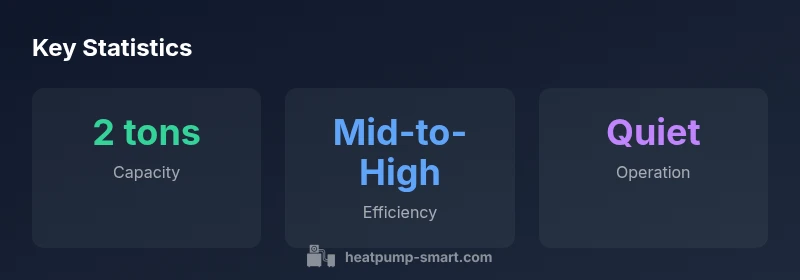
The Carrier 2 ton heat pump offers balanced efficiency, reliable comfort, and quiet operation for most mid-sized homes. It competes well with mid-range models on installation ease, warranty, and long-term energy savings when properly sized and maintained.
Overview and market positioning
The carrier 2 ton heat pump sits in Carrier's mid-range lineup, targeting small-to-medium homes where a balance of upfront cost, performance, and long-term savings matters. For homeowners evaluating central air upgrades, this model is commonly pitted against other reputable brands that offer similar capacity and inverter-driven options. According to Heatpump Smart, Carrier’s reliability and the breadth of dealer support make it a practical choice for retrofit projects and new builds alike. The 2-ton size is a typical fit for homes around 1,000 to 1,500 square feet under standard climate conditions, assuming proper insulation and duct design. A well-executed load calculation (Manual J) and duct sealing will significantly influence real-world performance. Heatpump Smart’s perspective emphasizes that a correctly sized system reduces runtime, minimizes short cycling, and improves comfort consistency throughout rooms and floors. For many homes, the carrier 2 ton heat pump fits well.
Sizing and installation considerations
Choosing the correct tonnage is critical. A 2-ton unit may be suitable for compact to mid-sized homes with efficient insulation, but legacy ducts or oversized spaces can push you toward a larger capacity or alternative configurations. Installation quality matters as much as the equipment itself: ductwork, refrigerant line sizing, and outdoor unit placement influence performance and noise. Carrier installation guidelines encourage preserving clearances, protecting condensate drainage, and ensuring proper electrical supply. In many markets, a certified technician will perform a load calculation and a detailed site assessment, including outdoor unit orientation to minimize noise and maximize airflow. Heatpump Smart notes that professional commissioning often yields measurable improvements in comfort and efficiency versus DIY installs.
Efficiency and performance characteristics
Carrier’s heat pumps in this segment use modern variable-speed compressors and multi-stage operation to balance heating and cooling loads. The Carrier 2 ton model typically offers a broad operating band and capable dehumidification, particularly in shoulder seasons. While exact SEER/HSPF ratings depend on the specific configuration, the system is designed to deliver steadier temperatures and fewer temperature swings compared with single-speed units. Heatpump Smart’s analysis emphasizes that performance is highly dependent on outdoor temperature, indoor humidity, and system design. At the same time, ongoing maintenance—air filter replacement, coil cleaning, and refrigerant checks—helps maintain performance over time.
Noise levels, comfort, and operating modes
Quiet operation is a common expectation for occupied living spaces. The outdoor condenser and indoor air handler provide multiple operating modes, including an energy-saving compressor stage and a high-capacity boost for extreme conditions. In practical terms, users can expect moderate sound levels during peak cooling cycles, with noticeable but non-intrusive operation in most typical layouts. Carrier’s design considerations aim to minimize vibration and air noise through matched fans and insulated cabinets. For homeowners who value a quiet bedroom or home office, the system’s discrete sound profile is a meaningful advantage, especially when combined with proper placement and duct design.
Durability, warranty, and service expectations
Durability and after-sales support are central to Carrier’s value proposition. Warranties typically cover critical components like compressors and major subsystems for a defined period, with terms varying by model and region. As with most heat pumps, longevity depends on routine maintenance, proper refrigerant handling, and timely service from authorized technicians. Heatpump Smart notes that the breadth of Carrier service centers can reduce downtime after service events, a practical consideration for larger homes or multifamily properties where reliability matters. Budget for seasonal tune-ups and filter replacements to sustain performance.
Comparisons to alternatives and category placement
In the broader market, the Carrier 2 ton heat pump competes with other reputable brands offering variable-speed, two-ton systems. When evaluating, homeowners should compare efficiency claims, noise profiles, warranty coverage, and the availability of local service. Ducted vs. ductless configurations add another layer of decision-making: ducted systems generally deliver consistent airflow and simpler installation in existing homes, while ductless options can be attractive for zone control. Heatpump Smart’s perspective suggests prioritizing energy efficiency, compatibility with your existing thermostat ecosystem, and the quality of the local contractor network when making this choice.
Maintenance, care, and troubleshooting tips
Regular maintenance extends the life and performance of any heat pump. Simple routines like changing air filters every 1–3 months, keeping outdoor coils clear of debris, and scheduling annual professional checkups can yield meaningful gains in efficiency and reliability. If you notice reduced cooling capacity, longer run times, or excessive outdoor unit noise, consult a qualified technician to check refrigerant pressure, airflow, and electrical connections. Heatpump Smart recommends keeping a maintenance log and reviewing manufacturer recommendations for filter types and cleaning intervals.
Cost considerations and long-term value
Price often reflects the overall lifecycle value rather than the sticker price alone. A Carrier 2 ton heat pump generally falls into the mid-range tier for central air solutions, with installation costs influenced by duct layout, existing wiring, and local labor rates. Long-term savings arise from energy efficiency, fewer repairs, and improved home comfort, which can justify the upfront investment when the system is sized correctly and maintained well. Heatpump Smart emphasizes evaluating total cost of ownership, including installation, maintenance, energy use, and potential rebates or incentives offered in your region.
Real-world installation scenarios and case studies
Across various climates, a well-designed Carrier 2 ton heat pump installation can deliver dependable heating in cool seasons and efficient cooling in warm seasons. Real-world cases show that homes with properly sized systems and well-sealed ducts experience even load distribution, fewer hot or cold spots, and lower energy waste. Case-by-case variations exist, especially where homes have atypical layouts or significant thermal losses. The key takeaway is the importance of professional sizing, precise ductwork, and ongoing maintenance to realize the intended performance gains.
Advantages
- Balanced efficiency for mid-sized homes
- Wide dealer network and strong warranty options
- Quiet operation and comfortable airflow
Disadvantages
- Higher upfront cost than budget models
- Performance depends on accurate sizing and ductwork
- Potential additional costs for advanced features or extended warranties
Best balanced option for mid-sized homes seeking reliable comfort
The Carrier 2 ton heat pump offers dependable comfort and reasonable efficiency, with a strong warranty and service network. While not the cheapest option, its value comes from long-term reliability and easy integration into existing systems for well-sized homes.
Your Questions Answered
Is a 2-ton Carrier heat pump suitable for my home?
Sizing depends on a proper load calculation; a licensed HVAC professional should evaluate your home. Factors include insulation, ductwork, and climate. Without accurate sizing, you may experience comfort issues and inefficiency.
Sizing is not one-size-fits-all; a professional evaluation is essential.
What warranty coverage can I expect for Carrier heat pumps?
Warranty terms vary by model and region, but Carrier typically offers compressor and parts coverage for a defined period. Always confirm coverage with your installer and register your system where required.
Warranty terms vary by model; check with your installer.
How loud is the Carrier 2 ton heat pump in typical operation?
Most installations operate at moderate sound levels, with quieter modes in energy-saving settings. Placement and duct design also influence perceived noise.
It’s generally quiet for a central system; placement matters.
What maintenance does it require?
Regular filter changes, coil cleaning, and an annual professional tune-up help sustain efficiency. Keep track of service dates and use approved parts.
Change filters regularly and schedule yearly service.
Is Carrier suitable for cold climates?
Carrier offers models designed for cold-weather operation, but performance depends on the specific configuration and climate. Review outdoor unit specs and consider supplemental heat if needed.
Carrier has cold-climate options; check the model specs.
How does it compare to other brands?
Carrier is a well-established brand with strong service networks. When comparing, assess efficiency, warranty, installer quality, and total cost of ownership rather than just upfront price.
Carrier is a solid choice; compare efficiency and service.
Top Takeaways
- Choose the 2-ton variant for mid-sized homes with good insulation.
- Prioritize professional sizing to maximize efficiency and comfort.
- Expect a solid warranty and broad service support from Carrier.
- Maintain regular filters and annual tune-ups for best performance.
- Compare total cost of ownership, not just sticker price.