Ductless Heat Pump Installation Near Me: A Complete How-To
Explore planning, sizing, permits, and installation of a ductless heat pump near you. Learn step-by-step, estimate costs, and find a local expert for efficient, zone-based comfort.


With a ductless heat pump installation near me, you can heat or cool individual zones with minimal ductwork. This concise plan outlines sizing, permits, and professional installation to ensure comfort and efficiency. For a complete approach, read on.
Understanding Ductless Mini-Splits and Why Install Near You
Ductless heat pumps, also known as mini-splits, provide targeted heating and cooling without ductwork. For homeowners searching for a local solution, a ductless installation near me offers flexibility, easier zoning, and fast deployment. According to Heatpump Smart, ductless systems deliver precise zone control, quiet operation, and high efficiency with inverter-driven compressors. The Heatpump Smart team found that correct sizing, proper outdoor-to-indoor clearances, and a clean refrigerant line set dramatically influence comfort and operating costs. This approach is particularly appealing in older homes or additions where ductwork would be impractical or cost-prohibitive. By selecting a system with variable-speed fans and smart controls, you can fine-tune temperatures per room and minimize energy waste. Expect a short installation window compared with traditional ducted systems, especially when local contractors are readily available. In short, a nearby ductless install can be a fast path to year-round comfort while preserving space and improving efficiency.
Sizing, Zoning, and System Design
Accurate sizing and smart zoning are the foundations of a comfortable ductless installation. A professional should perform a Manual J load calculation and guide you through selecting indoor head counts, orientations, and outdoor unit placements that balance efficiency with comfort. Ductless mini-splits excel at zone control, so plan at least one head for main living areas and additional heads for bedrooms, offices, or sunrooms as needed. Pair the indoor units with the outdoor condenser in a layout that minimizes refrigerant line length and avoids excessive electrical loads. Remember that longer line sets may require additional refrigerant adjustments by a licensed tech. Heatpump Smart emphasizes that the best design considers future adjustments—like adding a room or expanding an apartment—without reworking the entire system.
The Installation Process: What Happens On The Job
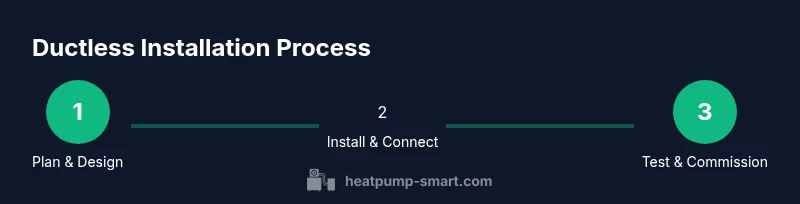
A typical ductless installation progresses through clearly defined phases. First, the space is evaluated for best unit placement, clearance, and airflow. Next, indoor mounting brackets are installed, followed by running the refrigerant lines, condensate drain, and power cables through a small wall sleeve. Outdoor units are mounted on a stable pad with appropriate clearances and vibration isolation. Finally, technicians connect wiring, charge the refrigerant according to the approved specifications, and perform comprehensive testing. Throughout, expect the team to seal penetrations, protect wall finishes, and verify both indoor and outdoor temperatures meet the design goals. A quality install results in quiet operation, precise temperatures, and reliable long-term performance.
Permits, Codes, and Choosing a Local Installer
Local permits may be required for electrical work, refrigerant handling, or outdoor unit installation. A licensed contractor will ensure wiring, disconnects, and grounding meet code requirements and that electrical panels have adequate capacity. When selecting a local installer, ask for evidence of licensing, insurance, and manufacturer certification. Check reviews for recent ductless installs in your area and request a detailed written proposal that includes equipment options, line-set routing, and a rough timeline. Heatpump Smart recommends prioritizing installers who provide load calculations, a clear warranty, and post-install support to address any issues quickly.
Costs, Rebates, and Payback
Costs for a ductless heat pump installation near you vary widely based on the number of zones, the complexity of line routing, and the efficiency of the equipment. Expect the overall investment to reflect the number of indoor heads, the outdoor condenser size, and any necessary electrical upgrades. Look for available rebates and tax credits, which can significantly reduce net costs. A well-designed system can reduce annual heating and cooling costs by improving efficiency and enabling precise temperature control. Heatpump Smart analysis shows that homeowners who invest in high-efficiency models with proper commissioning often see a favorable payback period through energy savings and comfort benefits.
Efficiency, Comfort, and Smart Controls
Ductless systems use inverter-driven compressors and multi-speed fans to maintain steadier temperatures with less energy waste. Look for higher SEER (seasonal energy efficiency ratio) and HSPF (heating seasonal performance factor) ratings, which translate to lower operating costs over time. Pair your system with smart thermostats or app-based controls to schedule temperatures by room, occupancy, or time of day. These features reduce waste and support comfort in spaces that previously suffered from uneven heating or cooling. When comparing models, prioritize units with quiet operation and durable fan assemblies for long-term reliability.
Maintenance, Troubleshooting, and Lifespan
Maintenance for ductless mini-splits is relatively simple but important. Regularly clean or replace air filters, inspect the condensate drain for clogs, and check the outdoor unit for debris or vegetation that could impede airflow. Schedule professional inspections at least once a year to confirm refrigerant charge, electrical connections, and sensor calibration. With proper maintenance and quality components, a ductless system can last 12–15 years or more, depending on usage and climate. Addressing issues early—like unusual noises or rapid cycling—helps prevent costly repairs and keeps the system operating efficiently.
Common Mistakes and How to Avoid Them
Common mistakes include under-sizing units, routing lines through tight spaces, and neglecting electrical readiness in older homes. Avoid DIY refrigerant work or attempting to charge a system without proper scales and safety training. Always verify permits and code compliance and prefer installers who provide a clear scope of work and warranty coverage. Finally, don’t overlook indoor air quality; choose models with good filtration and consider adding humidity control or smart zoning for maximum comfort.
Next Steps: Getting a Quote Near You
Ready to move forward? Gather your home measurements, room-by-room comfort goals, and any existing electrical constraints before requesting quotes. Ask installers to provide a design plan, expected performance metrics, and a timeline for installation. Compare multiple proposals, focusing on equipment quality, documentation of the load calculation, and the level of post-install support. A local, licensed pro will tailor the plan to your home’s architecture, climate, and budget, ensuring you receive the best possible comfort and efficiency.
Tools & Materials
- Drill/impact driver(With masonry bit for wall sleeves where needed)
- Masonry bit set(For mounting brackets on concrete or brick)
- Copper line set (3/8 in and 1/4 in)(Pre-charged or field-charged as required)
- Refrigerant manifold/charging scale(For accurate refrigerant charge)
- Insulation sleeves for line sets(Prevents heat gain and condensation)
- Electrical supplies (disconnect, conduit, breakers)(Ensure panel capacity and proper grounding)
- Condensate drain tubing and fittings(Prevent water intrusion and mold risk)
- Wall sleeve for line set pass-through(Optional in new walls; helps seal entry)
- Level and measuring tape(Accurate mounting height and alignment)
- Vacuum pump and leak detector(Ensures refrigerant integrity)
- Personal protective equipment (gloves, eye protection)(Safety first)
- Safety goggles(Protect eyes during drilling and cutting)
Steps
Estimated time: 1-2 days
- 1
Plan and design layout
Assess the home layout, choose cabinet heights and wall locations for indoor heads, and determine outdoor condenser placement with airflow clearance. The goal is even comfort and minimal line length. A professional will confirm load requirements and head counts.
Tip: Have a rough list of rooms to prioritize for zoning and note any future expansion plans. - 2
Prepare electrical and permit readiness
Confirm electrical panel capacity and run dedicated circuits as needed. Check local permitting requirements and ensure plan approvals are in place before physical work begins.
Tip: Ask your installer for a permit checklist and a site-specific safety plan. - 3
Mount indoor units
Secure mounting brackets at the chosen locations, ensuring level alignment and unobstructed airflow. Leave space for service access and future filter changes.
Tip: Use a laser level to guarantee perfectly level units for optimal performance. - 4
Route refrigerant lines and condensate drain
Carefully route line sets between indoor and outdoor units, protect with insulation, and install the condensate drain with proper slope to promote drainage.
Tip: Keep line sets as straight as possible to minimize pressure loss. - 5
Mount outdoor condenser and connect services
Place the condenser on a stable pad with proper clearances, connect line sets, electrical, and communication wiring. Verify outdoor unit mounting tolerances to avoid vibration.
Tip: Position away from high-traffic areas and ensure adequate drainage nearby. - 6
Charge refrigerant and seal system
Charge the system per manufacturer instructions using a scales-based measurement, and verify leak integrity with a vacuum test. Seal all penetrations to prevent moisture intrusion.
Tip: Only trained technicians should perform refrigerant charging. - 7
Test, balance, and finalize
Test all zones for correct temperatures, airflow, and noise. Balance the system, program controls, and provide user training on operation and maintenance.
Tip: Document system settings for future reference and warranty benefits.
Your Questions Answered
What is a ductless heat pump installation near me and why is it advantageous?
A ductless installation near you uses mini-split units to heat and cool specific zones without ductwork. Advantages include precise zoning, faster installation, and better efficiency in targeted spaces.
A nearby ductless installation uses mini-splits to heat and cool zones without ducts, offering zone control and quicker installation.
Do I need permits for a ductless installation?
Permits may be required for electrical work, refrigerant handling, and outdoor condenser installation. A licensed contractor will determine local requirements and handle permit submission.
Permits may be required for electrical and outdoor work. Your installer can manage the process for you.
Can I install a ductless system myself?
DIY installation is not recommended due to electrical, refrigerant, and warranty considerations. Hire a certified technician to ensure safety and proper performance.
It's not recommended to install a ductless system yourself; hire a licensed pro instead.
How long does installation typically take?
Most installations take 1-2 days, depending on the number of zones and complexity of line routing. A clear plan can help avoid delays.
Most installations finish within one to two days with a clear plan.
What affects the overall cost?
Costs depend on the number of indoor heads, outdoor unit size, line-set routing, electrical upgrades, and local labor rates. Ask for a detailed written proposal.
Costs vary by zones, equipment, and local labor rates; get a detailed written proposal.
What maintenance is required after installation?
Regular filter cleaning, condensate drain checks, and an annual professional inspection keep the system efficient and prolong life.
Clean filters regularly and schedule annual professional checks.
Watch Video
Top Takeaways
- Plan zones and sizing before installation
- Obtain permits and hire licensed pros
- Expect 1-2 days for typical ductless installs
- Prioritize high-efficiency models with smart controls
- Maintain the system annually for longevity