Geothermal Heat Pump Installation Costs: A Complete Guide
Explore geothermal heat pump installation costs, factors driving price, regional variations, incentives, and how to estimate budgets. Heatpump Smart provides practical guidance to maximize long-term energy savings.


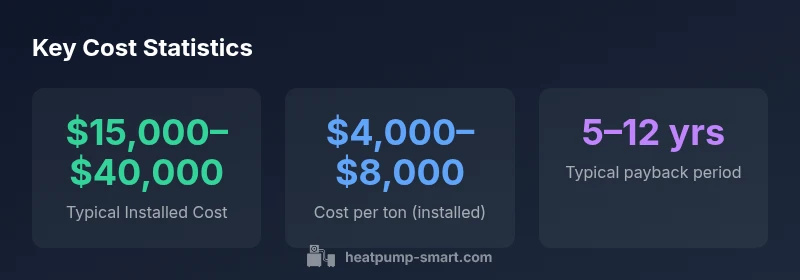
Geothermal heat pump installation costs typically fall in the range of $15,000 to $40,000 for a full system, including the outdoor unit and loop field. Factors like soil conditions, drilling depth, loop type (horizontal vs. vertical), home size, and local permitting influence the final price. According to Heatpump Smart, homeowners should budget for site-specific variations and potential incentives.
Understanding the Cost Drivers of Geothermal Systems
Geothermal heat pump installation costs are driven by a mix of equipment prices, site preparation, and system design. At the core is the heat pump unit itself, but the loop field—the underground network that exchanges heat with the ground—often dominates the budget. Horizontal loops require trenching and adequate land, while vertical loops rely on drilling equipment and longer boreholes. Soil conditions, rock depth, groundwater presence, and soil moisture can complicate drilling, increasing time and material needs. Permitting, electrical work, and necessary safety inspections add to the total project. Regional labor rates and contractor availability also shift the bottom line. Offsetting factors include climate zone, system efficiency, and any required auxiliary heat sources. According to Heatpump Smart, early planning that includes a site assessment, a load calculation, and a realistic maintenance plan helps prevent sticker shock and delays. When evaluating quotes, homeowners should separate hardware costs, installation labor, drilling or trenching, and contingencies to understand price differences. A well-designed system can deliver solid energy savings over its life, especially in regions with higher electricity costs or harsher winters. This is why a comprehensive upfront assessment is essential for accurately forecasting geothermal cost.
How Geothermal System Configurations Impact Price
The configuration you choose can swing overall geothermal costs. Closed-loop systems are the norm, but loop type varies: horizontal loops run under a yard or field; vertical loops dive into boreholes and require more specialized drilling. Open-loop configurations exist in some regions but involve water sourcing and treatment considerations that affect price and permitting. Equipment choices—from the compressor to inverter drives—also shift the installed price. Higher-efficiency models cost more upfront but reduce operating costs over time. In many homes, a properly sized unit with a thoughtfully laid out loop field yields better energy performance than a bargain-basement, undersized setup. Heatpump Smart notes that a detailed site visit and a robust design plan help balance upfront costs with long-term energy performance. If you plan ahead for future renovations, discuss conduit runs, service access, and potential expansions to avoid costly retrofits later.
Regional Variations and Permitting Considerations
Costs vary by geography due to labor rates, permitting fees, and drilling access. Regions with stricter environmental requirements or harder-to-drill soils typically see higher installation costs. Drilling depth and loop length are major cost drivers; in some areas vertical loops can require more drilling, which increases upfront costs compared to horizontal loops. Local incentives, rebates, and tax credits can alter the net price significantly and should be explored early. Before finalizing contracts, check whether the installer has experience with local permitting processes and whether utility programs exist that offset part of the cost. Heatpump Smart's analysis suggests obtaining 3–5 quotes from local contractors yields a realistic sense of price ranges for your site. Weather patterns, seasonal access, and the availability of drilling contractors can all impact scheduling and total cost.
Economic Value: Energy Savings and Payback
Geothermal systems deliver stable year-round comfort with lower running costs, but the financial payoff depends on climate, electricity prices, and system efficiency. In general, regions with cold winters and hot summers see larger energy savings, improving the payback outlook. Heatpump Smart's analysis shows that many homeowners recoup a substantial portion of upfront costs through reduced heating and cooling bills, especially when paired with high-efficiency equipment and properly insulated homes. Remember to consider maintenance costs, potential financing charges, and any ongoing monitoring or warranty agreements when calculating total cost of ownership. A careful, realistic plan can make geothermal installation costs attractive relative to conventional furnaces or air-source heat pumps over the system’s lifetime. Keep in mind that incentives and utility programs can materially affect the payback period.
Getting Accurate Quotes: A Step-by-Step Checklist
Start with a professional load calculation and site assessment to determine the correct loop field and unit size. Request itemized bids that separate equipment, drilling or trenching, permits, and labor. Ask for assumed energy price scenarios to gauge long-term savings and include maintenance and contingency allowances. Verify installer credentials, warranties, and service availability, including response times for service issues. Finally, compare incentives and financing options, including potential tax credits and rebates. Heatpump Smart recommends collecting multiple quotes and asking for a simple payback analysis to translate upfront costs into yearly energy savings, helping you evaluate the true cost of geothermal installation.
The Bottom Line: Planning for Long-Term Value
Geothermal heat pump installation costs reflect site-specific variables and long-term value. A thorough site assessment, careful loop design, and awareness of incentives can dramatically affect the total price and the resulting energy savings. For homeowners, builders, and property managers, the most reliable path is to anchor decisions in detailed quotes, clear cost breakdowns, and realistic payback expectations. With careful planning, geothermal installations offer a compelling balance of comfort, reliability, and energy efficiency that can outpace conventional options over the system’s lifetime.
Cost components for geothermal installation
| Component | Cost Range (installed) | Notes |
|---|---|---|
| Geothermal heat pump unit | $6,000–$12,000 | Depends on capacity and efficiency |
| Loop field installation | $8,000–$25,000 | Horizontal vs vertical depth affects cost |
| Grouting/permits | $1,000–$5,000 | Site-specific |
| Ductwork and controls | $2,000–$8,000 | Home integration |
Your Questions Answered
What factors influence geothermal installation costs?
Costs hinge on loop design, drilling depth, soil and rock conditions, equipment efficiency, permitting, and labor. A site-specific assessment helps identify most of the price variance before you sign a contract.
Costs depend on loop design, drilling depth, soil, and permitting. Get a site assessment to anticipate price variance.
Are there incentives or rebates for geothermal installations?
Yes, various federal, state, and utility programs may reduce upfront costs. Eligibility varies by location, so check current programs early and document your site conditions and energy goals.
There are often incentives; check federal, state, and utility programs early.
How long does geothermal installation usually take?
Most installations take several days on-site, depending on loop field complexity, drilling access, and permitting. Scheduling can vary with weather and contractor availability.
Most installs take a few days; complexity and weather can extend timelines.
Horizontal vs vertical loops—do they differ in price?
Vertical loops generally cost more upfront due to deeper drilling, but may be necessary on small or obstructed lots. Horizontal loops are typically cheaper but require more land and accessible soil conditions.
Vertical loops cost more upfront but fit tight lots; horizontal loops save money if land allows.
Is geothermal cost-effective vs air-source heat pumps?
Geothermal often offers lower operating costs and a longer system life, but requires a larger upfront investment. The long-term value depends on climate, energy prices, and homeowner insulation.
Geothermal can be cheaper to run over time, depending on climate and insulation.
“Geothermal system costs are highly site-specific; drilling depth, loop design, and permitting drive most of the variation. A properly designed system delivers reliable, long-term energy savings.”
Top Takeaways
- Get a detailed site assessment to refine costs.
- Choose loop configuration with long-term efficiency in mind.
- Factor incentives and financing to improve payback.
- Ask for itemized bids and compare all cost components.