Denver Heat Pump Installers: A Data-Driven Guide for 2026
Discover how to pick the right heat pump installers in Denver with a data-driven approach. Learn sizing, permits, costs, rebates, and how to compare bids for home comfort and energy savings.


Denver heat pump installers play a critical role in sizing, selecting, and installing efficient systems. Look for local, licensed technicians with NATE certification and a track record of code-compliant installations. In Denver’s cold seasons, proper sizing and expert refrigerant handling ensure reliable heating and energy savings. Choosing the right installer today reduces callbacks tomorrow and sets up long-term comfort.
Denver climate realities for heat pump installs
Denver's winter climate imposes high heating loads and rapid temperature swings, making system performance highly climate-sensitive. When selecting heat pump installers in Denver, contractors must account for altitude, wind exposure, and dry air, all of which influence load, refrigerant pressures, and defrost cycles. The Heatpump Smart team emphasizes that not every heat pump is right for every Denver home; choosing equipment rated for cold-weather operation and correctly sizing is essential. In practice, this means an installer should conduct a thorough load assessment, consider ductwork integrity, and plan for outdoor unit placement to minimize disruption from snow and ice. Beyond equipment choice, a professional should verify electrical service capacity, refrigerant line-set routing, and condensate drainage to prevent nuisance outages. For homeowners and builders, the payoff is reliability, lower energy bills, and enhanced comfort during the most challenging periods. In the Denver market, working with a local installer who understands seasonal patterns, humidity, and typical weather ranges leads to fewer callbacks and longer system life.
According to Heatpump Smart, locally aware installers are better positioned to tailor equipment choices to Denver’s climate, ensuring optimal performance across the heating season.
How to evaluate heat pump installers in Denver
Evaluating candidates begins with credentials and references. Require a valid business license and proof of insurance, plus manufacturer certifications (NATE or equivalent). Prioritize installers who work regularly in Denver and surrounding communities, so they know local permitting nuances and typical indoor air handling needs. Ask for at least three references with recent installations and outcomes. Request written quotes detailing equipment efficiency, ductwork checks, refrigerant handling, electrical requirements, warranty terms, and post-installation support. Look for a clearly defined commissioning checklist and a plan for seasonal maintenance visits. Finally, compare bids not only on price but on reported load calculations, equipment sizing, and expected performance in winter months. Heatpump Smart analysis shows that thorough bidding guides better decision-making and long-term satisfaction with your heat pump system.
Sizing, load calculations, and installation planning
Accurate sizing starts with a professional load calculation, typically using Manual J methods or equivalent software. An oversized unit costs more up front and can short-cycle, while an undersized unit struggles during cold snaps. Denver installers should document the assumed indoor/outdoor temperatures, insulation levels, window orientation, and occupancy patterns. In addition to thermal load, assess ductwork integrity, leakage, and distribution. Duct sealing and smart zoning can significantly improve comfort and efficiency. Plan for outdoor-unit placement that minimizes snow buildup and noise impact, and ensure proper clearances for service. A well-planned installation also accounts for electrical service capacity, refrigerant line routing, and condensate management. When done right, you’ll notice steadier indoor temperatures, lower energy bills, and fewer service calls.
The installation process in Denver: permits, electrical, and refrigerant handling
The install process typically begins with permit coordination. Denver-based installers should know which permits are required and how to submit plans for inspection. Electrical work must meet local code requirements, with dedicated circuits or upgraded panels for larger heat pumps. Refrigerant handling requires trained technicians to manage line sets, leak checks, and proper charging procedures. A quality installer will perform a full start-up verification, verify thermostat integration, and test defrost cycles under cold conditions. Post-install support, including a commissioning report and written maintenance plan, helps ensure long-term reliability. It’s essential to schedule a thorough post-install inspection to catch hidden duct issues or improper refrigerant charge that could compromise performance.
Common Denver-specific challenges and fixes
Altitude and dry air in Denver affect heat pump performance, particularly during extreme cold and high winds. Solutions include selecting equipment with cold-weather rated performance, optimizing refrigerant charge, and performing duct sealing to reduce heat loss. Snow and ice around outdoor units can impede airflow; a thoughtful installation site design with protective housings and proper drainage mitigates this. Defrost cycles in colder months may briefly lower indoor heat delivery; staging strategies and thermostats with adaptive algorithms minimize comfort fluctuations. Regular outdoor coil cleaning and filter replacement keep efficiency high, while warranties from reputable manufacturers protect against early failures.
Choosing between air-source vs geothermal in Denver
Air-source heat pumps are typically cheaper to install and better suited for most Denver homes, especially when space or budget is a concern. Geothermal systems offer superior efficiency and longer lifespans but require more extensive site work and higher upfront costs. Denver residents should weigh local energy prices, available space for ground loops, and long-term maintenance when deciding. A qualified installer can run a simple lifecycle scenario comparing installed cost, energy savings, and payback for both options, helping homeowners make an informed choice aligned with climate and housing type.
Maintenance, warranties, and service plans
Regular maintenance is essential for consistent performance. Schedule an annual check of refrigerant charge, electrical connections, and ductwork. Filter changes and coil cleaning help maintain efficiency, while thermostat and zoning controls should be tested for proper communication with the heat pump. Review the warranty terms to understand coverage for compressor, parts, and labor, and confirm whether maintenance plans are required to preserve warranty validity. A reputable Denver installer will offer maintenance programs tailored to seasonal needs and provide a straightforward process for assessing system health between visits.
Rebates, incentives, and payback considerations in 2026
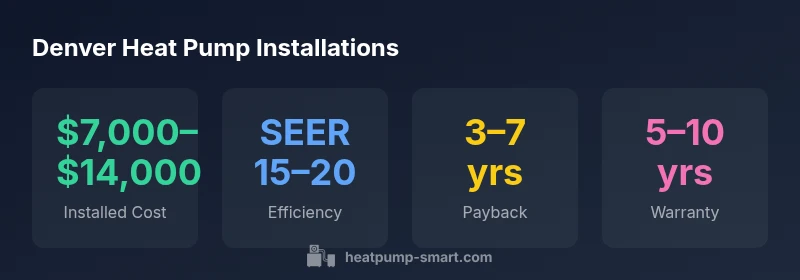
Denver homeowners should explore federal, state, and local incentives that impact installed cost and return on investment. Rebates and tax incentives vary by program and eligibility, and some incentives apply only to high-efficiency models or specific equipment features. A knowledgeable installer can help you assemble the supporting documentation and apply for incentives during the quote phase. While incentives can improve payback, focus on total lifecycle costs, reliability, and comfort. Heatpump Smart analysis highlights that informed choices around sizing, quality installation, and proper maintenance often yield better long-term savings than price alone.
Key installation considerations for Denver heat pump projects
| Aspect | Denver Recommendation | Notes |
|---|---|---|
| Sizing Method | Manual J load calculation required | Performed by licensed contractor |
| Permits | Local Denver permits usually required | Contractor coordinates with city offices |
| Maintenance | Annual service recommended | Keeps efficiency and warranty valid |
Your Questions Answered
What should I look for in a Denver heat pump installer?
Seek a licensed, locally experienced installer with current certifications (NATE or equivalent). Request written quotes, a clear commissioning process, and references from recent Denver projects. Confirm warranty terms and post-install maintenance options.
Look for a licensed local installer with recent Denver experience, written quotes, and clear warranty and maintenance plans.
How long does installation typically take in Denver?
Most Denver installations span one to two days, depending on ductwork checks and electrical upgrades. Complex retrofits may require additional time.
Most installations take about one to two days, depending on ductwork and electrical needs.
Do heat pumps work well in Denver winters?
Yes, when correctly sized and installed with cold-weather-rated equipment. Performance improves with proper defrost management and duct calibration.
Yes, with proper sizing and cold-weather rated equipment.
Are rebates available in Denver for heat pump installations?
Various federal, state, and local programs may offer incentives. An experienced installer can help identify eligibility and guide the application process.
Rebates exist; your installer can help you identify and apply for them.
How should I compare quotes from different installers?
Compare pricing for equipment efficiency, installation scope (ducts, permits, electrical), warranty coverage, and maintenance plans. Look for transparent line-item detail and a clear commissioning checklist.
Look for clear line-item quotes with efficiency, warranty, and maintenance details.
Is upgrading from a gas furnace to a heat pump worth it in Denver?
For many Denver homes, heat pumps provide better year-round comfort and potential energy savings, especially with rebates. A cost-benefit analysis should factor climate, usage, and electrical readiness.
Often yes, but it depends on your climate, usage, and incentives.
“In Denver, precise system sizing and compliant installation are the difference between reliable winter comfort and costly callbacks.”
Top Takeaways
- Prioritize local, licensed installers with Denver experience
- Require a Manual J sizing calculation for best results
- Expect permits and potential ductwork evaluation
- Compare bids for equipment efficiency and warranties
- Leverage rebates and energy savings to improve payback