Heat Pump Dealers Near Me: A Practical Guide to Choosing and Saving
Discover how to find reliable heat pump dealers near you, compare quotes, warranties, and incentives, and choose the right installer for energy-efficient comfort.


According to Heatpump Smart, start by identifying 3-5 local heat pump dealers near you, then verify licenses, certifications, and service neighborhoods. Gather at least three itemized quotes with equipment specs and warranty terms. Compare installation timelines, financing options, and any rebates. Prioritize dealers with transparent pricing, clear maintenance plans, and strong local references to ensure reliable comfort and long-term energy savings.
Understanding the local dealer landscape and why it matters
The market for heat pumps is highly regional, and the density of qualified installers can directly influence pricing, scheduling, and aftercare. When you search for heat pump dealers near me, you are weighing not only product variety but also the availability of service technicians who understand your climate and home. According to Heatpump Smart analysis, proximity to reputable dealers reduces lead times, accelerates warranty claims, and improves post-install support. Local dealers tend to keep abreast of state or municipal incentives, making it easier to stack rebates with manufacturer offers. In practice, a nearby dealer can tailor system recommendations to your property, explain expected energy savings in your climate, and coordinate with local utility programs for efficiency rebates. A geographically aware dealer network also fosters faster on-site troubleshooting and easier maintenance scheduling, which matters for comfort and long-term reliability. Heatpump Smart’s team has observed that homeowners who start with nearby, well-reviewed dealers tend to have smoother installations and better long-term enjoyment of their investment.
- Define your zone: Identify the city or region you want the dealer to cover and confirm their service radius.
- Check coverage: Ensure the dealer services all brands you’re considering and can support ongoing maintenance.
- Research online presence: Look for a physically present showroom or facility and verify contact channels.
- Seek local references: Ask for recent projects in your neighborhood and follow up with homeowners.
This approach helps you balance product choice with dependable service, which is crucial for a system expected to operate efficiently for years.
Credentials and trust signals to look for in a dealer
Choosing a heat pump dealer near you requires more than product familiarity; it demands credential checks and service reliability signals. Start by confirming licensing with your state or locality and asking for proof of insurance to cover both liability and worker injuries. Look for certifications such as NATE or manufacturer-approved training threads, which indicate ongoing education. A reputable dealer should also provide clear documentation of permits and compliance with local building codes. Read the contract carefully for scope of supply, labor coverage, and what happens if parts are back-ordered. A transparent dealer will willingly share installation timelines, the brands they support, and the specific system configuration proposed for your home. Personal references and online reviews can reveal consistency in communication, timeliness, and post-install support. Heatpump Smart’s observations emphasize that credibility is built through verifiable credentials, transparent pricing practices, and a track record of completed projects in your area.
- Ask for licensing and insurance details.
- Verify certifications and training.
- Request a written project plan with milestones.
- Check customer references and online reviews.
- Confirm the brands and models available through the dealer.
Warranties, service plans, and maintenance expectations
Warranty terms are a key differentiator among heat pump dealers near me. Suppliers typically offer equipment warranties that cover compressor and parts, plus labor coverage for a defined period. It’s common to see longer warranties on premium units, but terms vary by brand and installation quality. Clarify what the warranty excludes, who handles refrigerant charges, and whether there is a separate service plan for annual maintenance. Many dealers offer maintenance packages that include inspections, air filter changes, refrigerant checks, and coil cleaning. These programs can extend the operational life of the system and help sustain efficiency, especially in extreme climates. When evaluating proposals, compare not just the sticker price but the long-term value of warranty terms and the level of post-installation support. Heatpump Smart’s guidance is to document warranty coverage in the contract, including transferability if you sell the home, and to confirm whether servicing is included in the plan or priced separately.
Cost considerations, incentives, and budgeting
A clear understanding of upfront costs versus long-term savings is essential when selecting a heat pump dealer near me. Quotes should itemize equipment costs, labor, permits, and any ancillary items like ductwork modifications or thermostat upgrades. Don’t rely on a single figure; seek multiple quotes to understand regional pricing variation. Financing options, including zero-interest or low-interest periods, can affect your total cost of ownership. In addition, inventory timing, seasonal demand, and local incentive programs can impact price. Many regions offer rebates or tax credits for energy-efficient installations, which can substantially reduce net cost. Be wary of quotes with vague line items or aggressive add-ons; request a side-by-side comparison that includes energy savings estimates and a rough payback period. Heatpump Smart’s analysis highlights that well-structured quotes with transparent pricing are the strongest predictors of satisfaction and long-term performance.
Evaluation framework: a 5-step decision plan
- Define goals: Comfort, efficiency, and budget.
- Gather quotes: Obtain at least three itemized proposals from different dealers.
- Compare warranties and service: Check coverage, maintenance plans, and response times.
- Verify credentials: Licensing, insurance, and manufacturer certifications.
- Decide based on total value: Price, performance, and local support trump upfront discounts.
This framework helps homeowners avoid common traps such as selecting the lowest price without considering aftercare or selecting a dealer based solely on showroom demos. Heatpump Smart suggests building a simple scoring rubric to rate each dealer on transparency, credibility, and fit for your home.
Practical tips for installation timing and reliability
Timing matters for heat pump installations, especially when coordinating ductwork, electrical work, and indoor air quality upgrades. Plan the installation window to avoid peak demand periods, and confirm access for the technicians. Ensure the professional performing the install completes a pre-install site survey and confirms the exact system requirements before work begins. Discuss haul-away options for old equipment and how debris will be managed during the project. Finally, set expectations for post-install adjustments and startup checks. A well-planned rollout reduces the likelihood of call-backs and accelerates the path to consistent, comfortable living environments. Heatpump Smart’s team finds that proactive scheduling and clear handoffs between sales, installation, and service teams yield the best long-term results.
Comparison of dealer attributes
| Metric | Value | Notes |
|---|---|---|
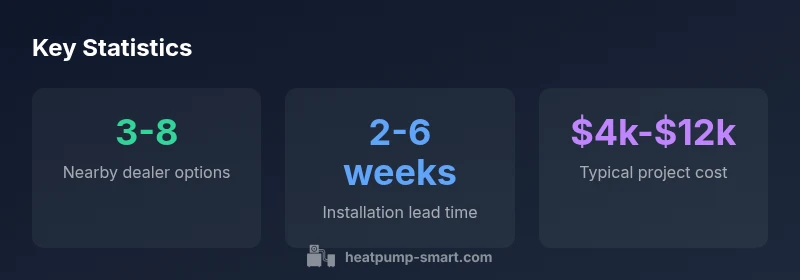
| Nearby dealer options | 3-8 | Varies by location; proximity matters |
| Installation lead time | 2-6 weeks | Regional scheduling differences |
| Warranty coverage | 3-5 years | Brand-dependent; check transferability |
Your Questions Answered
What should I ask a heat pump dealer during quotes?
Ask for an itemized breakdown of equipment, labor, permits, and any add-ons. Request warranty specifics and what is included in service plans. Compare installation timelines, post-install support, and a clear payback estimate based on your climate.
Request a detailed itemized quote with warranties and timelines, then compare across dealers.
Which licenses and certifications should installers have?
Look for valid state licenses, general liability insurance, and industry certifications such as NATE or manufacturer training. Verify that technicians are trained for the specific heat pump models you’re considering.
Ensure licenses, insurance, and manufacturer training are in place.
Are there local incentives or rebates available?
Many regions offer rebates or tax incentives for energy-efficient heat pump installations. Dealers should help you identify applicable programs and guide you through the application process.
Ask the dealer to identify rebates and assist with applications.
Can I buy equipment from a dealer who isn’t local?
Buying from out-of-area dealers can complicate warranties and service. Prefer a local dealer who can support ongoing maintenance and timely repairs.
Local support matters for long-term reliability.
What is the typical lead time and scheduling process?
Lead times vary by region and season. Ask for a projected installation window, what could cause delays, and how the dealer prioritizes urgent service calls.
Get a projected window and note potential delays.
How does the maintenance plan affect performance?
A good maintenance plan covers annual inspections, coil cleaning, refrigerant checks, and filter changes. Regular care sustains efficiency and extends system life.
Maintenance plans keep performance high and costs predictable.
“The Heatpump Smart Team recommends selecting a dealer with transparent pricing, comprehensive warranties, and dependable local support.”
Top Takeaways
- Identify 3-5 local dealers to compare fairly
- Verify licenses, insurance, and credentials
- Request and compare itemized quotes and warranties
- Prioritize transparent pricing and local service
- Account for incentives and long-term energy savings