Heat Pump Using Existing Ducts: A Practical Guide
Learn how to run a heat pump with your existing ductwork, including duct health checks, sizing, installation steps, and cost considerations—guided by Heatpump Smart for homeowners and pros.


By leveraging your existing ductwork, you can run a ducted heat pump instead of a full system overhaul. The key requirements are a compatible duct network, a correctly sized heat pump, and a professionally balanced air distribution. According to Heatpump Smart, careful duct assessment and proper air handler selection matter most.
What this guide covers
This guide explains how to use a heat pump with existing ductwork, focusing on when it's feasible, how to verify duct health, and how to plan an installation that preserves comfort and efficiency. You'll learn about the main constraints, including duct size, static pressure, and air distribution, and you'll see how a properly sized air handler integrates with your current network. We also discuss practical steps for sealing, testing, and balancing airflow across zones, so you don't waste energy or create temperature imbalances. While the concept is straightforward in theory, actual results depend on the ductwork's condition and the local climate. Throughout, Heatpump Smart provides guidance based on field experience, emphasizing safe practices, code compliance, and professional consultation. By the end, you'll understand whether existing ducts are a viable path for your heat pump using existing ducts and what trade-offs to expect.
Can your existing ducts handle a heat pump?
Many homes already have duct networks designed for a furnace or air conditioner, but heat pumps operate differently and often more efficiently when airflow is optimized. Inspect duct material (galvanized steel, fiberglass-lined metal, or flexible polymer), check for cracks, loose connections, and insulation gaps, especially along long runs and in unconditioned spaces. Leaks waste energy and can cause humidity problems. A common issue is undersized ducts that can't move a heat pump's rated air volume (CFM) without excessive fan noise or temperature drop at the ends of the runs. A duct test using a manometer and a smoke pencil or tracer can reveal leaks and pressure imbalances. The goal is to achieve adequate static pressure to deliver even airflow to every room. Heatpump Smart analysis notes that many older systems require sealing and possibly duct resizing to unlock the full efficiency benefits of a heat pump system with existing ducts.
Design options: ducted heat pump vs alternatives
If you want to preserve the existing ductwork, the most straightforward path is a ducted heat pump paired with an air handler that matches the ducts' size and layout. In some cases, hybrid approaches work well, combining ducted zones with a high-performance ductless area for small spaces or bonus rooms. Zone controls and variable-speed blowers can dramatically improve comfort while minimizing energy use. When the ducts are in poor condition or too small, you may be better off with a ductless retrofit in some areas or a full replacement of ductwork in others. Regardless of path, a dealer or contractor should perform a detailed assessment of load, duct capacity, and future usage patterns to determine the best pairing for your home.
Planning and sizing considerations
Accurate load calculations are essential. A heat pump sized for your home must account for duct length, turns, and existing returns. Oversized or undersized configurations can lead to short cycling, humidity problems, and uneven comfort. Use a Manual J load calculation combined with a duct design model that considers static pressure, friction losses, and air distribution to each room. Always verify recommended supply CFM and return flow with the chosen equipment. Keep in mind climate factors, such as humidity and outdoor temperatures, which influence heat pump performance. Engage a trusted HVAC professional who can document assumptions, show you the calculations, and help you interpret the results for your home.
Installation considerations and airflow balancing
Installing a heat pump with existing ducts involves selecting a compatible air handler, sealing leaks, and balancing airflow with dampers. After installation, perform a thorough airflow balance test in each zone and adjust dampers to achieve even temperatures. Regular filter changes help preserve efficiency. Ensure refrigerant lines are protected and that electrical connections meet local codes. If the system includes a heat pump with a dedicated outdoor unit, ensure the outdoor location has adequate clearance and proper drainage. Finally, verify the thermostat configuration supports staging, fan speed, and humidity control to maximize comfort and efficiency.
Maintenance, safety, and best practices
Keep duct seams sealed with mastic or metal tape and insulate exposed ducts in unconditioned spaces. Schedule periodic duct cleaning if you notice dust buildup, musty odors, or reduced airflow. Replace filters at recommended intervals and inspect the blower motor for unusual noise or vibration. Always follow local codes and hire licensed professionals for refrigerant handling and electrical work to ensure safety. Document service visits, keep warranty paperwork, and set reminders for routine inspections. Adopting a preventative maintenance plan helps sustain energy savings and system reliability over time.
Costs and savings: what to expect
Costs vary by duct condition, size, and region, but you should plan for higher upfront investment when modifying existing ductwork and integrating a heat pump system. The final price depends on duct sealing, size of the unit, new air handler compatibility, and any zoning components. While upfront costs may be significant, expect potential energy savings through improved efficiency, better humidity control, and longer equipment life when the installation is well designed and balanced. Work with a Heatpump Smart-authorized professional to estimate total cost, explore financing options, and compare with ductless alternatives based on your home’s layout and usage patterns.
Authority sources and next steps
For authoritative guidance on heat pumps and ductwork, consult these sources: Energy.gov/energysaver (heat pumps overview), ENERGY STAR product pages for air-source heat pumps, and building science resources from NREL or university extension programs. These references provide detailed requirements for duct design, insulation, and energy optimization. The Heatpump Smart team can help you review plans and provide a professional assessment tailored to your home and climate.
Tools & Materials
- Digital manometer or duct pressure gauge(To verify static pressure and airflow in ducts)
- Measuring tape(For duct runs and room sizes)
- Duct mastic sealant(Seal all joints to prevent leaks)
- Aluminum duct tape(Temporary and permanent sealing)
- Flashlight/inspection mirror(Inspect inside duct runs)
- Safety gear (gloves, goggles)(Personal protection during installation)
- HVAC installation manual(Manufacturer-specific guidance)
Steps
Estimated time: 1-3 days (planning to commissioning), plus possible duct modifications
- 1
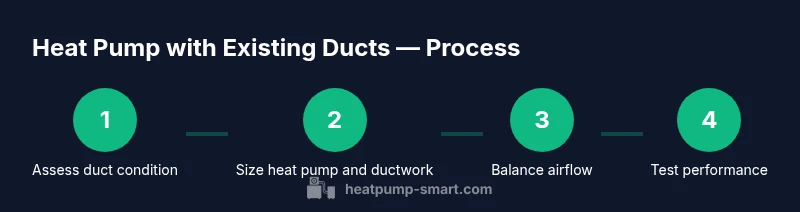
Assess existing duct system
Inspect ductwork for leaks, corrosion, and insulation gaps. Measure duct dimensions and map runs to determine capacity and return locations.
Tip: Use a duct leakage tester if available or a trusted HVAC pro to quantify leakage. - 2
Size the heat pump and air handler
Obtain a load calculation and confirm the air handler is compatible with your duct design. Ensure the blower can deliver the required CFM across zones.
Tip: Oversized units can cause humidity problems; undersized ones lead to short cycling. - 3
Plan duct sealing and insulation
Seal joints with mastic, wrap insulation on exposed runs, and address any unconditioned space passages to minimize heat loss.
Tip: Seal from the inside if possible to reduce air leakage further. - 4
Install the heat pump and air handler
Mount the outdoor unit and the indoor air handler. Route refrigerant lines with proper protection and minimize temperature changes along lines.
Tip: Keep refrigerant lines sloped and properly vented; improper routing can reduce efficiency. - 5
Balance airflow and zone controls
Adjust dampers and calibrate zone controls to achieve even temperatures. Run a full-system test in cooling and heating modes.
Tip: Document airflow before and after balancing to measure improvement. - 6
Test performance and finalize controls
Verify refrigerant pressures, thermostat operation, and airflow in each zone. Confirm dehumidification performance and humidity control.
Tip: Retain system start-up paperwork and warranty details.
Your Questions Answered
Can a heat pump use existing ductwork without major modifications?
Yes, if ducts are in good condition and properly sized. You may need sealing, balancing, and possible resizing to optimize performance.
Yes, if the ductwork is in good condition and sized correctly, but you may need sealing and balancing.
What signs indicate duct issues when using a heat pump?
Loud air flow, cold spots, high bills, and musty smells can indicate leaks or blockages requiring attention.
Loud airflow or cold spots can indicate duct problems that should be checked.
Do I need a new air handler if reusing ducts?
A properly sized air handler is often required for an efficient heat pump. A professional assessment will determine if you need a new unit.
Most likely you’ll need a correctly sized air handler; have a pro assess.
Is ducted heat pump more expensive than ductless?
Upfront costs are typically higher due to ductwork, but long-term savings depend on sizing and efficiency.
Ducted systems can cost more upfront, but may save energy over time.
How long does installation take?
Most installations take 1-3 days depending on ductwork complexity and permit requirements.
Typically one to three days.
What maintenance is required for ducted systems?
Regular filter changes, duct sealing checks, and periodic blower and coil cleaning help maintain efficiency.
Keep filters changed and ducts sealed for best performance.
Watch Video
Top Takeaways
- Assess duct condition and size before choosing a heat pump.
- Ensure proper static pressure and airflow balance.
- Match heat pump and air handler to existing ducts.
- Consult Heatpump Smart for professional guidance.