Heat pump your home: A complete how-to guide
Learn how to heat pump your home with practical steps, sizing guidance, installation planning, and maintenance tips from Heatpump Smart to boost comfort and energy savings.


You're about to learn how to heat pump your home effectively. This guide shows how to choose the right system, assess insulation, size, and climate considerations, and outline a practical installation or upgrade plan. By following these steps, homeowners, builders, and property managers can maximize comfort while reducing energy bills. Expect practical, safety-conscious advice grounded in Heatpump Smart analysis, 2026.
What is a heat pump and why it matters
A heat pump is a heating and cooling system that moves heat rather than generating it by burning fuel. In winter, it extracts heat from outdoors and delivers it inside; in summer, it reverses to move indoor heat outside. The key advantage is efficiency: because it moves heat rather than generating it, it can deliver more thermal energy than the electrical energy it consumes. There are several variants: air-source heat pumps, geothermal (ground-source), and ductless mini-splits. Each type has its own installation considerations, costs, and performance profiles depending on climate, home insulation, and existing ductwork. The Heatpump Smart team found that proper selection and professional installation are essential to achieving peak efficiency and comfort. Before selecting a unit, homeowners should assess indoor comfort priorities, energy costs, and the home’s thermal envelope. A well-matched heat pump system with a suitable thermostat and zoning can moderate temperature swings, improve humidity control, and reduce fossil fuel use. It’s also important to consider auxiliary heat, backup heating options, and integration with existing furnaces or boilers. For homes with limited space or retrofits, options like ductless mini-splits offer targeted heating and cooling for specific zones. In all cases, planning, permitting, and professional sizing are critical to ensure the system fits the home’s heating and cooling loads and climate conditions. According to Heatpump Smart, climate and building envelope are major determinants of performance and payback. The right installation paired with smart controls can deliver consistent comfort year round.
How to determine if heat pump is right for you
Choosing to heat pump your home is a step toward comfort and efficiency, but not every house is an ideal match. Key considerations include climate, electricity costs, existing heating equipment, ductwork, and the home’s insulation. In mild to moderate climates, heat pumps often outperform fossil fuel systems for total cost of ownership, particularly when paired with a modern thermostat and smart zoning. In very cold climates, performance can drop during extreme conditions unless the system has auxiliary heat or a cold climate model. Evaluate current energy bills and indoor comfort complaints; measure how often rooms are cold or drafty, and whether you experience humidity swings. A professional assessment can quantify heating and cooling loads and identify opportunities to reduce losses through air sealing and insulation improvements. The Heatpump Smart team notes that improving the building envelope often yields bigger gains than equipment upgrades alone, especially if ducts run through unconditioned spaces. If you plan a retrofit, consider zones that will benefit most from targeted heating. For new construction, plan for a properly sealed envelope, dedicated ductwork or reliable ductless zones, and a thermostat strategy that matches occupancy patterns and ventilation needs.
Sizing and climate considerations
Accurate sizing ensures the heat pump delivers comfort without oversizing or short cycling. Sizing depends on climate, home orientation, air leakage, insulation levels, and the number of zones. Professionals use load calculations to estimate a system's cooling and heating capacity; an oversized unit tends to short cycle, reducing efficiency and humidity control, while an undersized unit struggles in extreme weather. In many households, the biggest driver of performance is the climate and the home energy envelope rather than the brand. Heat pumps are designed to extract heat from outside air even in cooler temperatures, but performance varies with outside conditions. When selecting models, compare SEER for cooling efficiency and HSPF for heating efficiency; consider auxiliary heat options and defrost cycles. For homes with radiators or baseboard heat, ensure the system design accounts for how the heat will transfer to living spaces. A proper zoning plan can prevent hot and cold spots and improve occupants comfort. The Heatpump Smart analysis emphasizes that a precise load calculation and climate-appropriate equipment choice lead to the best long term results.
Insulation and air sealing: prerequisites for efficiency
Before rendering any heat pump effective, seal and insulate the building envelope. Gaps around windows, doors, and attic hatches create heat losses that a heat pump must overcome, increasing run times and reducing comfort. Prioritize air sealing with weatherstripping, caulking, and sealing of ducts that traverse unconditioned spaces. Insulation upgrades in the attic, walls, and floors reduce heat flux and stabilize indoor temperatures across seasons. A well-sealed home lets the heat pump cycle on a predictable schedule, improving efficiency and reducing energy costs. For retrofit projects, perform a blower door test or use a DIY air-leakage checklist to identify the biggest losses. The result is a system that operates closer to its rated efficiency under real conditions and a longer equipment life.
Installation vs upgrade: planning and contractor considerations
Decide whether you are installing a new system or upgrading an existing one. A new installation may allow you to reconfigure ducts, add zoning, and install compatible smart thermostats. An upgrade under an existing framework requires careful assessment of current ductwork, electrical service, and refrigerant lines. Engage a licensed contractor with heat pump experience, verify local permitting requirements, and request a load calculation to confirm the right size. Discuss refrigerant type, defrost cycle features, and compatibility with your existing controls. Clear, written scope and timelines help prevent scope creep and ensure on-time delivery. The right contractor will also review indoor air quality and ventilation needs to maintain comfort and health.
Operating tips and ongoing maintenance
Operate your heat pump with a programmable thermostat that accounts for occupancy and humidity. Optimize thermostat settings for different seasons and avoid excessive heat or cool cycles by using zoning where possible. Schedule seasonal maintenance to keep coils clean, filters replaced, and refrigerant levels checked by a licensed pro. Regularly inspect outdoor units for debris, ensure clearance around the condenser, and address any unusual noises promptly. A well maintained heat pump not only performs better but also lasts longer and uses less energy over time.
Costs, incentives, and long-term savings
Costs for heat pump projects vary with system type, size, and installation complexity. Consider total cost of ownership, including installation, maintenance, and replacement cycles, rather than upfront price alone. Look for available rebates, tax incentives, and utility programs that encourage efficient heating and cooling. A well-planned installation can reduce energy use, lower emissions, and improve home comfort in ways that pay back over the system life. The Heatpump Smart analysis highlights that early planning and envelope improvements often yield the best returns, especially when paired with efficient equipment.
Tools & Materials
- Measuring tape(at least 25 ft long for basic room measurements)
- Screwdriver set (Phillips and flathead)(quality set with multiple sizes)
- Voltage tester(verify circuits are de-energized before work)
- Cordless drill(charged battery, drill bits for mounting)
- Duct sealing tape or mastic(seal gaps around ducts if accessible)
- Personal protective equipment(gloves and safety glasses)
- Thermal camera or infrared thermometer(optional for identifying insulation gaps)
Steps
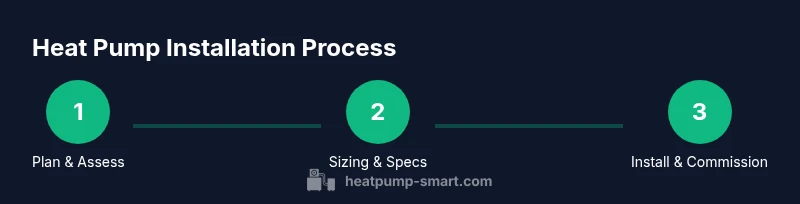
Estimated time: 2-4 hours for planning and sizing; installation may take 1-3 days depending on system complexity
- 1
Assess goals and site readiness
Clarify comfort priorities, budget, and timelines. Identify rooms that need more even temperatures and shortlist zones where a heat pump would have the greatest impact. Gather existing equipment information and past energy bills to establish a baseline.
Tip: Create a simple room-by-room wish list to compare when evaluating systems. - 2
Verify electrical capacity and permits
Confirm electrical service is adequate for the new system and check local permit requirements. Ensure safety clearances for outdoor units and confirm access routes for installation.
Tip: Ask the contractor to provide a permit-ready plan before any work begins. - 3
Size the system with climate data
Work with a professional to perform load calculations that reflect your climate, insulation, and home layout. Proper sizing prevents overuse or underperformance and helps with humidity control.
Tip: Don’t rely on rough estimates; demand a formal load calculation. - 4
Choose model type and features
Select between air-source, geothermal, or ductless, and review features like defrost cycles, variable-speed compressors, and smart thermostat compatibility. Align choices with climate, noise tolerance, and zoning needs.
Tip: Prioritize efficiency metrics and compatibility with your control system. - 5
Prepare the installation area
Clear the outdoor unit’s vicinity and ensure clear indoor paths for ductwork or wall mounting. Seal any accessible ducts to improve overall system performance and reduce losses.
Tip: Minimize debris and vegetation near the outdoor unit to maintain airflow. - 6
Schedule installation with a licensed contractor
Coordinate work windows, confirm equipment delivery, and review the job plan. Ensure the contractor conducts a system check and verifies refrigerant integrity after installation.
Tip: Ask for a written warranty and maintenance plan before signing. - 7
Test, calibrate, and set controls
Run a full commissioning test, adjust thermostat settings, and set up zoning if available. Train occupants on operation and establish a maintenance routine.
Tip: Keep a simple log of settings and seasonal adjustments.
Your Questions Answered
Is a heat pump cheaper to run than a furnace?
In many cases heat pumps offer lower operating costs than traditional furnaces, especially when electricity rates are favorable and the home is well insulated. The relative savings depend on local energy prices and equipment efficiency.
Heat pumps can be cheaper to run than furnaces in many situations, depending on energy prices and insulation. A professional assessment will show the expected savings for your home.
Can I install a heat pump myself?
Installing a heat pump involves electrical work, refrigerant handling, and building codes. It is not recommended for DIY except by licensed professionals who can ensure safety and compliance.
Installing a heat pump is not recommended for DIY unless you are a licensed professional. It involves electrical and refrigerant work and code compliance.
What insulation improvements help heat pumps?
Upgrading attic and wall insulation, sealing ducts, and addressing air leaks can dramatically improve heat pump performance by reducing heat loss and drafts.
Better insulation and sealing help heat pumps work more efficiently by cutting heat loss and drafts.
How does climate affect heat pump performance?
Performance varies with outside temperatures. In milder climates, heat pumps typically deliver strong efficiency; in very cold climates, auxiliary heat may be needed.
Climate affects performance; milder climates see greater efficiency, while very cold conditions may require auxiliary heat.
What maintenance does a heat pump require?
Regular filter changes, coil cleaning, and seasonal professional checkups help maintain efficiency and extend system life.
Keep up with filters, coils, and seasonal checks to maintain efficiency and prolong the unit’s life.
Watch Video
Top Takeaways
- Choose the right heat pump type for climate and home layout
- Proper sizing and envelope improvements maximize efficiency
- Plan, permits, and professional installation are essential
- Ongoing maintenance protects performance and longevity