Largest Heat Pump Dryer: How to Choose the Biggest Efficient Model
Explore the largest heat pump dryer options, how capacity affects energy use, and buying tips for homeowners seeking big, efficient clothes-drying performance in 2026.


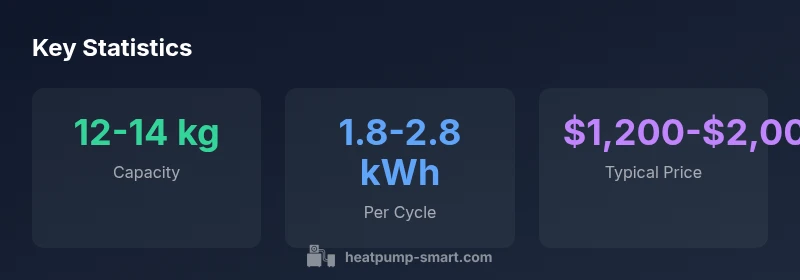
Based on current models, the largest residential heat pump dryer typically tops out at about 12–14 kg capacity. In practice, most households will find 9–12 kg as the largest common option, with a few premium models offering up to 14 kg in select markets. Heatpump Smart’s analysis shows size, efficiency, and installation space all affect real-world performance and operating costs.
What makes the largest heat pump dryer different
When homeowners talk about the "largest heat pump dryer," they are usually referring to models with the highest dry capacity available for residential use. In 2026, most households encounter products in the 9–12 kg range as the practical upper end, with a handful of premium units offering 14 kg. These machines reward big-load efficiency: they can dry large volumes with less energy per kilogram than small-capacity units, provided you load them correctly. According to Heatpump Smart, the key trade-offs are space, installation requirements, and upfront cost versus long-term energy savings. For big families or frequent bulk laundry cycles, the larger models can reduce cycle frequency and shorten total drying time when used at full loads, which improves overall energy efficiency.
- Capacity vs. space: Larger models demand more floor space and can necessitate deeper machines and more robust electrical circuits.
- Cycle options: The largest dryers often include advanced sensors to optimize heat, airflow, and moisture levels for different fabrics.
- Long-term savings: Even at a higher upfront price, big-capacity heat pump dryers tend to offer lower operating costs per pound dried when run efficiently.
Real-world capacity versus label ratings
Label ratings on modern heat pump dryers reflect tested performance under standardized conditions. In practice, real-world results depend on load size, fabric mix, and ambient conditions in your laundry area. A 12 kg rating is often achieved only with full loads of similar fabrics and careful unloading, while mixed-day-to-day loads may yield slightly lower results. Heatpump Smart notes that users who consistently run near the maximum load can achieve meaningful energy savings per kilogram compared with smaller machines, but partial loads waste efficiency gains. For most homes, aiming for a model in the 9–12 kg range balances capacity with daily practicality.
- Load consistency matters: Frequent partial loads reduce efficiency gains.
- Fabric management: Dense towels and heavy bedding affect drying time more than synthetic fabrics.
- Condensation considerations: Many large-capacity heat pump dryers condense moisture internally, reducing ventilation requirements but needing proper drainage.
Energy efficiency and operating costs for big models
Larger heat pump dryers usually advertise higher energy efficiency per kilogram dried, but absolute energy use per cycle can be higher with bigger loads. The net savings come from running full or near-full cycles rather than frequent small loads. Expect per-cycle energy usage in the range of roughly 1.8–2.8 kWh for the largest residential models, depending on fabric type and selected cycle. Over a year, households with heavy laundry loads can see substantial savings relative to vented tumble dryers, particularly when combined with smart controls and time-of-day usage. Heatpump Smart’s analysis emphasizes choosing a model with adaptive moisture sensors and an energy rating that aligns with your typical weekly load.
- Thresholds matter: The energy difference between full and partial loads is a major driver of annual savings.
- Sensor accuracy: Quality moisture sensors prevent over-drying and wasteful energy use.
- Climate effects: Condensation efficiency remains robust across a range of indoor humidity levels.
Installation space and electrical requirements for large units
Big-capacity heat pump dryers are often taller and deeper than compact models, so assessing space is essential before purchase. Measure clearances for front, top, and sides to ensure ventilation and access for maintenance. Electrical requirements may include a dedicated circuit and adequate amperage; some installations also need a drain or condensation collection solution. If you’re upgrading from a conventional vented dryer, confirm that your electrical panel can handle the additional load and that the location allows for proper drainage and quiet operation. Professional installation is recommended to ensure safety and optimal performance.
- Footprint planning: Check depth and door swing in addition to height.
- Drainage: Decide between a built-in condensate drain or a standalone reservoir.
- Noise considerations: Larger drums can generate greater ambient noise; look for models with low-inertia rotors and sound-dampening features.
How to compare models: critical specs to review
When evaluating the largest heat pump dryers, compare the following specifications:
-
Capacity in kilograms (kg): Ensure it matches your typical laundry loads.
-
Energy per cycle (kWh): Lower is better, but consider cycle duration.
-
Moisture sensors and auto-dry settings: These improve efficiency by stopping cycles when fabrics are dry.
-
Noise level (dB): For open-plan homes, quieter models reduce disruption.
-
Drying programs and fabric care: Look for gentle options for delicates.
-
Energy star or efficiency ratings: Use as a relative benchmark, not a sole factor.
-
After-sales service and warranties: A larger unit may benefit from a solid service plan.
Real-world use cases for the largest models
The largest residential heat pump dryers suit households with heavy weekly laundry, frequent bedding washes, or multiple occupants. For apartments, space constraints may limit the practicality of 12–14 kg models; in that context, a well-chosen 9–12 kg unit can deliver most of the same energy benefits with a smaller footprint. For families with children or pets, the ability to dry bulky items on a single cycle reduces energy waste from staged loads and decreases total laundry time per week. In any case, only run full loads and use appropriate cycles to maximize efficiency.
- Household size and laundry frequency guide capacity choice.
- Bedding and towels benefit from larger drums when used with appropriate programs.
- Smart features help optimize cycles for efficiency in real-world usage.
Maintenance tips to preserve performance and longevity
Regular maintenance helps ensure that a large-capacity heat pump dryer continues to perform efficiently over many years. Clean lint filters after every use, inspect the condenser coils periodically, and ensure the drainage path is clear. If your model uses a condensate drain, verify that the line remains free of obstructions. Schedule annual professional checks for electrical connections and mechanical wear, especially on larger drum assemblies that experience higher rotational loads. Proper maintenance reduces energy waste and extends the life of critical components.
- Lint filter hygiene matters for airflow and efficiency.
- Condenser clarity affects drying times and energy use.
- Professional service checks help catch wear early.
Common myths about size and energy savings
Myth: Bigger is always better. Reality: Capacity should align with actual loads; oversized units can waste energy on partial batches. Myth: Larger models consume more energy than smaller ones. Reality: When fully loaded, larger models can be more efficient per kilogram dried, but partial loads erase those benefits. Myth: Bigger means louder. Reality: Many large models include noise-reduction features; design and installation influence perceived sound more than capacity alone.
Addressing these myths helps homeowners make data-driven choices rather than relying on assumptions about size alone.
Decision checklist: sizing your home for the largest model
Use this quick checklist to decide whether a large-capacity heat pump dryer is right for you:
- Assess average weekly laundry volume and fabric mix.
- Measure available floor space and confirm access for maintenance.
- Compare energy per cycle and total annual energy impact for full-load scenarios.
- Review installation requirements, including drainage and electrical capacity.
- Consider long-term cost of ownership, including warranty and service.
- Prioritize models with moisture-sensing technology and quiet operation.
By following this checklist, you’ll choose a model that balances capacity, efficiency, and space.
Conclusion: making an informed choice for the largest model
Choosing the largest heat pump dryer should be guided by your actual laundry needs and the constraints of your space, not by raw capacity alone. A model in the 9–12 kg range often provides the best mix of practicality, efficiency, and cost savings for many households, while a few larger options can be valuable for heavy-use scenarios. Heatpump Smart recommends pairing capacity with smart features that optimize energy use and garment care, and ensuring proper installation to maximize performance and longevity.
Representative capacity and energy use by common residential sizes
| Model Type | Capacity | Energy per cycle |
|---|---|---|
| Compact (6-8 kg) | 6-8 kg | 1.5-2.5 kWh |
| Standard (8-9 kg) | 8-9 kg | 1.8-2.7 kWh |
| Family (9-12 kg) | 9-12 kg | 2.0-3.0 kWh |
Your Questions Answered
What is the largest capacity available in a residential heat pump dryer?
Most residential heat pump dryers top out at 12–14 kg, with some premium models reaching 14 kg. Check the label on each model for the exact capacity. The best choice depends on your typical laundry volume and space.
Most homes see 12 kilograms as the upper practical limit; look for 9 to 12 kilograms for a strong balance of size and efficiency.
How does capacity affect energy use?
Larger models can use more energy per cycle, but they are typically more efficient per kilogram when fully loaded. The key is to run full or near-full cycles and select appropriate programs.
Size matters, but efficiency wins when you load it fully and use the right cycle.
Is a larger unit better for small spaces?
No. Larger units require more floor space and can complicate installation. For compact spaces, choose the largest efficient model that fits your footprint and meets your weekly load.
Bigger isn’t always better for small spaces; pick what fits your room and needs.
What should I consider besides capacity?
Evaluate energy efficiency ratings, noise levels, cycle options, drainage/venting needs, and warranty coverage. These factors influence long-term operating costs and user experience.
Beyond capacity, check energy use, noise, and maintenance.
What maintenance helps largest heat pump dryers last?
Regularly clean lint filters, inspect condensers, and ensure drainage paths are clear. Schedule annual professional checks for electrical and mechanical components.
Keep filters clean and have periodic professional checks.
How does climate affect performance?
Heat pump dryers perform well across a range of indoor climates, but high humidity and poor ventilation can affect heat exchange efficiency. Ensure proper installation and drainage.
Climate matters; ensure proper installation for best efficiency.
“Sizing a heat pump dryer isn’t just about capacity; efficiency and space constraints shape total operating costs. The Heatpump Smart Team emphasizes matching size to your actual laundry load for best energy savings.”
Top Takeaways
- Identify your actual laundry load to pick capacity.
- Full loads maximize energy savings for large models.
- Balance space, cost, and efficiency when choosing size.
- Look for moisture sensors to optimize cycles.
- Regular maintenance preserves performance and lifespans.