Pool Heat Pump Installation: A Step-by-Step Guide
Learn how to plan, size, install, and optimize a pool heat pump for year-round comfort and energy savings with practical steps, safety guidance, and maintenance tips.


This guide helps you complete a safe pool heat pump installation that improves comfort and energy efficiency. You’ll plan the site, verify unit sizing, and install electrical and plumbing connections to code. You’ll also manage permits, choose a location with airflow, and learn ongoing maintenance for long-term savings and reliability.
Why pool heat pump installation matters
pool heat pump installation is a smart upgrade for any residential pool. It transforms seasonal swimming into year-round enjoyment by converting ambient heat into pool warmth with high efficiency. The Heatpump Smart team notes that a properly planned installation can deliver steady comfort while reducing running costs compared with electric resistance heaters. In practice, this means maintaining a comfortable water temperature for longer periods, extending the swimming season, and avoiding sudden temperature swings that frustrate users. When evaluating options, homeowners should consider climate, pool size, usage patterns, and electrical infrastructure. The goal is a system that operates quietly, with minimal energy waste and consistent performance. A well-executed installation also adds value to a property by showcasing proactive energy management. For property managers, reliable outdoor equipment that can withstand seasonal weather is a key factor in tenant satisfaction and long-term maintenance planning. In short, pool heat pump installation is a balance between performance, efficiency, and durability, designed to deliver warm water without breaking the bank.
Understanding how pool heat pumps work
A pool heat pump uses electricity to move heat from the outside air into your pool water. Inside the cabinet, a compressor, evaporator coil, and condenser transfer heat from the air to the pool circuit. The unit runs a refrigerant cycle that requires less energy than directly heating the water. When the outdoor air is relatively warm, the COP (coefficient of performance) rises, making the system very efficient. In practice, a heat pump behaves like an air conditioner in reverse: it extracts heat from the air, concentrates it, and rejects less heat elsewhere. Because the system only moves heat rather than generates it, electricity consumption stays comparatively low for the same water temperature rise. The outdoor fan and coil are designed to withstand poolside conditions, and many units include built-in defrost controls for cold weather. It’s important to note that efficiency depends on water temperature, air temperature, and humidity, so performance will vary with the season. Sanitation and water chemistry should also be considered, as improper chemistry can affect heat transfer and corrosion. In short, pool heat pumps maximize energy savings by leveraging ambient heat rather than burning fuel.
Sizing and climate considerations
Sizing a pool heat pump correctly is essential for comfort and efficiency. An undersized unit will run constantly, struggle to reach target temperatures, and wear out faster; an oversized model short-cycles and wastes energy. The optimal approach uses pool volume, desired water temperature, and local climate as inputs. Heatpump Smart analysis shows that local climate affects the ambient air temperature the unit can extract heat from, which in turn influences the COP and running costs. In practice, you’ll match the unit’s heating capacity to the pool’s surface area, volume, and typical usage hours. Consider seasonal temperature variations and humidity, since these factors influence heat transfer and efficiency. For very cold climates, you may need supplemental strategies or a hybrid system. The goal is a comfortable, consistent water temperature with predictable energy use. Remember that a well-sized system will also operate more quietly and have a longer service life. Planning ahead saves time and avoids expensive retrofits later.
Choosing the right location and mounting options
Location is a key determinant of performance and longevity. Outdoor heat pumps should be placed on a stable, level pad with at least 12–24 inches of clearance on all sides for airflow and service access, and away from true water spray that could cause corrosion. Wind exposure can affect performance and noise, so consider shielding or situating the unit on the sheltered side of the pool equipment area. Wall-mounted units may require structural reinforcement and proper mounting brackets, while freestanding pads should use anti-vibration pads to reduce noise and vibration. Ensure good drainage and prevent pooling water around the base. Access to the electrical disconnect, service panel, and a nearby GFCI-protected outlet is essential. Finally, position the heat pump to maximize airflow while minimizing the chance of debris entering the condenser coil. Good location simplifies future maintenance and reduces the risk of accidental damage.
Electrical, permits, and safety considerations
Electrical work and safety compliance are critical. Most pool heat pump installations require a dedicated circuit, appropriately rated breaker, and weatherproof, outdoor-rated wiring. A licensed electrician should install a disconnect within sight of the unit and run conduit to the pool equipment pad. Local permits may be required, so check with your city or county building department before starting. Always verify that the electrical service can handle the heat pump’s load and that wiring practices meet code requirements. Grounding, moisture protection, and proper bonding of pool equipment are essential for safety and equipment longevity. Do not bypass safety features or attempt DIY electrical work beyond your training. The combination of correct wiring, proper clearances, and code-compliant installation protects your investment and ensures warranty validity.
Plumb-and-pipe connections and refrigerant loop basics
Connecting the pool side plumbing to a heat pump involves water inlet and outlet connections, isolation valves, and a secure, leak-free loop. Use rigid or flexible PVC piping with appropriate fittings and clamps, and apply primer and solvent cement following manufacturer guidelines. Install check valves to prevent backflow, and ensure backwash options or bypasses are correctly configured for serviceability. Since pool heat pumps operate on a sealed refrigerant loop, ensure that refrigerant lines are insulated and protected from physical damage. Although some steps can be performed by a skilled DIYer, refrigerant handling, high-pressure systems, and factory sealed loops typically require a licensed technician. Test all water and air connections for leaks and verify proper flow rates. A careful approach reduces service calls and keeps the system running efficiently.
Energy efficiency and running costs optimization
To maximize efficiency, pair pool heat pump installation with smart operational practices. Use a high-quality pool cover when the pool is not in use to reduce heat loss and reduce energy demand. Set target temperatures that balance comfort with energy use, and schedule operation during milder parts of the day if possible. Regular maintenance, including cleaning the condenser fins and checking refrigerant pressures (performed by a pro), helps maintain performance. Consider integrating a timer, automation, or a weather-based controller that runs the unit during cooler nights and off-peak electricity hours. A well-tuned system reduces running costs and extends equipment life, providing reliable year-round swimming.
Common installation mistakes and how to avoid them
Common missteps include undersizing or oversizing the unit, inadequate airflow, poor drainage around the unit, and wiring that does not meet local codes. Failing to install a proper disconnect or to bond the system can create safety risks and warranty complications. Skipping permits or misinterpreting climate impacts can lead to performance problems or fines. Poor location choices—near high-traffic areas, unsheltered from wind, or in polluted environments—can shorten the unit’s life. Finally, neglecting routine maintenance will reduce efficiency and reliability. A careful planning and adherence to manufacturer guidelines minimize these risks.
Seasonal use and integration with pool covers
Seasonal operation hinges on climate and pool usage. In shoulder seasons, a heat pump can maintain comfort with modest energy use, while during winter months, you may need a different strategy or supplemental heating. Pairing the heat pump with a pool cover dramatically reduces heat loss and can shorten warm-up times when reopening after a period of inactivity. Regularly inspect the cover for tears and ensure the pool water chemistry stays balanced to protect the equipment. With proper winterization and seasonal scheduling, you’ll enjoy a comfortable pool for a longer portion of the year.
Tools & Materials
- Pool heat pump unit (outdoor-rated)(Sized for pool volume and local climate; consult a pro for final sizing)
- Dedicated electrical circuit and breaker(Four-wire supply; GFCI protected; ensure panel capacity)
- Electrical disconnect(Within sight of the unit for safety and service access)
- Weatherproof mounting pad or mounting brackets(Level, stable surface; use anti-vibration pads if freestanding)
- Insulated refrigerant line set( professionally sized and insulated to minimize heat loss)
- PVC piping and fittings(For water in/out connections; include clamps and primer/cement)
- Isolation valves and check valves(Backflow prevention and serviceability are essential)
- Conduit, connectors, and weatherproof fittings(Protect wiring from moisture and physical damage)
- Leak detection and testing materials(Soapy water solution or electronic leak detector; pressure testing equipment)
- Tools: wrenches, screwdrivers, torque wrench(Include pipe wrenches and adjustable wrenches; torque to spec)
- Sealants and tapes(Teflon tape, silicone sealant rated for outdoor use)
- Basic safety gear(Gloves, eye protection, and hearing protection as needed)
- Pool test kit and water balance supplies(Not essential to install but recommended for post-install tuning)
Steps
Estimated time: 4-8 hours
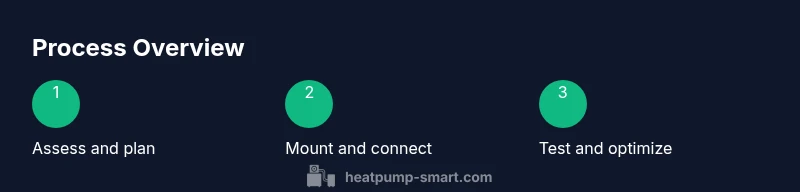
- 1
Assess site and plan
Evaluate pool size, local climate, and electrical availability. Confirm that the planned location has adequate airflow, drainage, and clearance for maintenance access. Create a rough layout showing water connections, electrical routing, and venting paths.
Tip: Document measurements and take photos for reference during installation and future maintenance. - 2
Prepare electrical supply
Coordinate with a licensed electrician to install a dedicated GFCI-protected circuit and outdoor-rated disconnect. Verify panel capacity and run conduit to the installation area, avoiding interference with pool equipment or water features.
Tip: Schedule a pre-install electrical inspection if required by local code. - 3
Mount the heat pump
Place the unit on a level pad or sturdy mounting surface. Ensure sufficient clearance for airflow and service access, and install anti-vibration pads if placed on a solid ground surface.
Tip: Keep the unit away from direct spray or overhanging structures to prevent corrosion. - 4
Connect water piping
Attach the water inlet and outlet to the pool return line using insulated PVC fittings. Include isolation and check valves to enable servicing without draining the pool. Check alignment to avoid stress on joints.
Tip: Use primer and cement on PVC joints and pressure-test the line after assembly. - 5
Install controls and safety devices
Connect thermostat, any integrated controls, and a properly located high/low temperature safety switch. Ensure wiring is protected and weatherproof, with motor protection and proper bonding to the pool system.
Tip: Label all connections for future service and maintenance checks. - 6
Pressure test and leak check
Seal joints, pressurize the water loop, and inspect for leaks. Use soap test on water connections and electronic detection on refrigerant lines if applicable. Repair any leaks before proceeding.
Tip: Do not skip the leak check; leaks undermine efficiency and warranty coverage. - 7
Commission and test run
Power up the system, verify start-up sequence, observe refrigerant pressures (performed by a pro if required), and confirm that water temperature rises as expected. Document readings and set the target pool temperature.
Tip: Run the pump with the pool cover on after initial stabilization to minimize heat loss.
Your Questions Answered
Do I need a professional to install a pool heat pump?
Yes. Electrical work and refrigerant handling require licensed professionals and adherence to local codes. A pro also helps ensure warranty coverage.
Electrical work and refrigerant handling require licensed professionals and proper code compliance.
Is pool heat pump installation suitable for all climates?
Heat pumps work best in moderate to warm climates; efficiency can drop in very cold conditions, so plan accordingly.
They work best in mild to warm climates and may be less efficient in colder weather.
What permits are typically required?
Permit requirements vary by locality; check with your city or county building department before starting.
Check with your local building department for permit requirements.
Can I install the heat pump myself?
For safety and warranty reasons, electrical and refrigerant work is usually performed by a licensed technician.
It's best to hire a licensed professional for installation.
What maintenance is needed?
Regular checks of electrical connections, filter cleanliness, and annual service help sustain performance.
Regular checks and yearly service help keep the system running well.
Will a heat pump heat my pool quickly?
Heat pumps heat at a steady pace; speed depends on pool size, water temperature, and ambient conditions.
They heat steadily; time depends on pool size and starting temperature.
Watch Video
Top Takeaways
- Plan sizing and climate before buying.
- Prioritize code-compliant electrical work and safety.
- Choose a location with good airflow and accessible maintenance.
- Pair with a pool cover to maximize efficiency.
- Commit to regular maintenance for longevity.