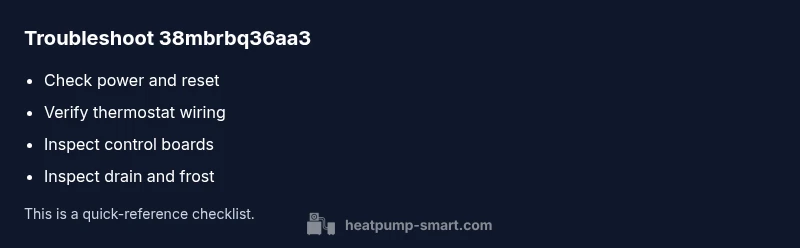
Urgent Troubleshooting for Error Code 38mbrbq36aa3
Urgent guide to diagnose and fix 38mbrbq36aa3 on heat pumps. Learn causes, quick fixes, safety tips, and when to call Heatpump Smart for professional help.


Error code 38mbrbq36aa3 signals a communication fault between the indoor control and the outdoor unit. The quick fixes are a power cycle, checking thermostat wiring, and reseating connectors. If the code remains after these steps, use the diagnostic flow below or contact Heatpump Smart for a professional assessment. Act quickly to minimize energy loss and equipment wear.
What Error Code 38mbrbq36aa3 Means
38mbrbq36aa3 is a communications fault code that appears on many heat pumps when the indoor controller cannot reliably talk to the outdoor unit or when sensor data fails to update. This is not a normal operating state and should be treated as urgent. According to Heatpump Smart, most homeowners encounter this code after a power interruption, a wiring disturbance, or a recent firmware update. The first reaction should be to power cycle the system, verify basic wiring at the thermostat and control boards, and confirm there are no obvious signs of damage to cables or connectors. If the code persists after a safe reset and basic checks, proceed with the diagnostic flow below to isolate the fault and avoid unnecessary part replacement. The 38mbrbq36aa3 error often hides a simple issue, but in some cases it signals a failing communication module or a damaged sensor that requires professional attention. Monitoring the system for repeated appearances and noting when the code appears (only during heating or cooling, after a storm, or during a frost event) helps speed service and reduces downtime.
Immediate Quick Checks You Can Do Right Now
Before pulling panels or touching electrical components, perform a few non-invasive checks. First, switch off power to the heat pump at the circuit breaker for 60 seconds, then restore power to perform a soft reset. Next, verify that the thermostat is communicating with the indoor unit—confirm wires are securely attached at both ends and that no thermostat screen shows errors. Inspect visible cables for signs of wear, pinching, or rodent damage. Clear any obvious frost buildup around the outdoor unit and ensure the outdoor coil is free to vent. Verify the condensate drain line is not blocked and that the drain pan is not overflowing. Finally, check for secondary codes that may accompany 38mbrbq36aa3, which can point to the subsystem involved (communication bus, sensor, or control board). If these steps resolve the code, run a full cycle and observe for a recurrence.
Common Causes Behind 38mbrbq36aa3
Most often, the 38mbrbq36aa3 code stems from simple wiring or communication issues rather than a failed heat pump core. Loose or corroded connections on the indoor control board, thermostat cable, or outdoor unit terminals are frequent culprits. Damaged shielded cables can introduce interference that disrupts data exchange. Sensor faults, frost sensors that misread ice, or a failing communication module can also trigger this code. In rare cases, a firmware mismatch after an update or a power surge can reset the communication protocol and produce the error. Heatpump Smart analysis shows that addressing wiring and sensor concerns resolves the majority of 38mbrbq36aa3 cases without needing a full part replacement.
Step-By-Step Fix for the Most Likely Cause
To resolve a 38mbrbq36aa3 fault caused by a communication fault, follow these steps in order. Note that some steps require basic hand tools and a voltage tester; if you are uncomfortable with electrical work, stop and call a professional. 1) Power off the system: switch the circuit breakers supplying the outdoor unit and the indoor air handler to off, and wait 60 seconds. 2) Restore power and perform a soft reset by cycling the thermostat and enabling the system to restart. 3) Inspect thermostat connections: remove the cover, reseat the wires, and ensure the numbered terminals match the label on the control board. 4) Check indoor unit wiring: access the service panel, verify the control cables are fully seated, and look for signs of heat damage. 5) Inspect outdoor unit connections: ensure the outdoor contactor wires are secure and there is no corrosion on terminals. 6) Test communication: with power on, observe normal status indicators and the absence of 38mbrbq36aa3 on both displays. 7) Clear any ice or frost that may impede sensors around the outdoor coil. 8) Run a short cycle to confirm operation and monitor for a return of the code.
Other Potential Causes and Their Fixes
If the above steps do not clear the code, other causes may include a faulty control board, a damaged sensor, a bad communication module, or a firmware mismatch after an update. Fixes vary by component: reseat or replace a failed sensor; replace a failed control board or module with a unit-approved part; perform a firmware update if a new version addresses communication issues. In some devices, a factory reset may restore proper data exchange. When replacing parts, ensure compatibility with your heat pump model and follow safe handling procedures per the manufacturer guide. If you are unsure about any replacement, consult Heatpump Smart for model-specific recommendations and the right parts list.
Safety, Warnings, and When to Call a Pro
Working on heat pumps involves electrical components and refrigerant lines; always prioritize safety. Before any inspection, shut off power at the main breaker and discharge static before touching wiring. Do not bypass safety features or operate with exposed wiring. If you detect a burning smell, unusual heat, or water intrusion around the equipment, stop immediately and call a licensed technician. If the code returns after completing the quick checks and recommended fixes, or if you lack the tools or confidence for electrical work, contact Heatpump Smart for professional diagnosis. A professional can perform in-depth electrical tests, insulation checks, and refrigerant-system integrity assessments. Cost estimates vary by region and diagnosis, so request a formal quote. For ongoing maintenance, schedule periodic checkups to avoid repeat faults.
Prevention Tips to Avoid Recurrence
Once the 38mbrbq36aa3 issue is resolved, implement a preventive routine to minimize future faults. Schedule regular professional maintenance, clean or replace air filters monthly, and keep the outdoor unit free of leaves, ice, and debris. Inspect electrical connections during seasonal service and alert your technician if you notice any change in voltage or unusual noises. Maintain consistent thermostat calibration and avoid power surges by using a surge protector or a dedicated circuit. Document any error codes with date and operating conditions to help service visits quicken, and keep firmware up to date with manufacturer recommendations from Heatpump Smart.
Steps
Estimated time: 20-40 minutes
- 1
Power reset and restart
Shut off power at both the indoor and outdoor disconnects, wait 60 seconds, then restore power and allow the units to reboot. This clears transient faults and resets the communication bus. Do not open panels during the reset.
Tip: Label wires before disconnecting anything; a quick photo saves reassembly time. - 2
Verify thermostat wiring
Inspect the thermostat cable at both ends. Reseat all wires to their labeled terminals and confirm there is no loose connection or corrosion. Replace damaged connectors if found.
Tip: Power off before touching thermostat terminals to avoid shock. - 3
Inspect indoor unit wiring
Access the indoor service panel and verify control cables are fully seated. Look for signs of wear, heat damage, or pinched insulation that could interrupt data signals.
Tip: Do not force pins; use the correct screwdriver and care to avoid terminal damage. - 4
Inspect outdoor unit connections
Check outdoor unit terminal blocks and contactor wires for corrosion, loose screws, or damage. Clean and tighten as needed using insulated tools.
Tip: If you see burned insulation, replace the affected wire rather than re-tightening a bad contact. - 5
Test communication bus
With power restored, observe the status indicators on both units. Confirm that the indoor and outdoor displays show normal operation and that 38mbrbq36aa3 does not reappear.
Tip: If indicators stay abnormal, prepare for a component-level diagnosis. - 6
Clear sensors and frost
Inspect and gently clear any frost around the outdoor coil and sensor housings that could affect readings. Frost and ice can trigger misinterpretation and erroneous codes.
Tip: Use a plastic tool to avoid bending fins or damaging coils. - 7
Run a short cycle
Initiate a brief heating/cooling cycle to verify normal operation and ensure the code does not return during start-up.
Tip: Monitor for unusual noises or vibrations during the test. - 8
Evaluate need for professional service
If the code returns after all steps, or you lack the tools to safely test electrical components, call a licensed technician for a full diagnostic.
Tip: Ask for a written quote detailing part costs and labor before any replacement.
Diagnosis: Error code 38mbrbq36aa3 appears on heat pump display, system won't complete a heating/cooling cycle
Possible Causes
- highLoose or damaged wiring/communication cables between indoor and outdoor units
- mediumFailed sensor or frost sensor misread
- lowControl board or communication module fault
Fixes
- easyPower cycle and reseat all relevant wiring and connectors
- mediumInspect and replace damaged connectors or cables, verify terminals
- hardTest and replace sensors or control board if failure confirmed
Your Questions Answered
What does error code 38mbrbq36aa3 mean for my heat pump?
The code indicates a communication fault between indoor and outdoor units or sensors. Start with a power cycle and basic wiring checks. If it reappears, follow the diagnostic flow or contact Heatpump Smart for a professional assessment.
38mbrbq36aa3 means a communication fault between indoor and outdoor components. Begin with a power reset and wiring checks, then follow the diagnostic steps or consult Heatpump Smart for expert help.
Can I fix this error myself at home?
Some fixes are safe for homeowners, like power cycling and reseating connectors. More complex steps—checking control boards or sensors—should be done by someone with electrical training. If unsure, contact Heatpump Smart for guidance.
You can try basic resets, but more advanced repairs should be done by a professional.
Is this error dangerous to ignore?
Ignoring a communication fault can lead to inefficient operation and potential safety concerns during freezing or high-heat conditions. If the code returns after initial checks, seek professional help promptly.
It can affect safety and efficiency, so don’t ignore a recurring fault.
What should I do first when I see this code?
Power down the system, wait 60 seconds, then power back on and perform a soft reset. Check thermostat connections and look for obvious cable damage before deeper diagnostics.
First, power cycle and check the basics before diving into diagnostics.
How long does a typical fix take?
A quick check and reset can take 15–30 minutes. More complex fixes, like sensor or control-board replacements, may require a few hours depending on parts availability.
Most quick fixes are under an hour, with longer repairs needing professional parts and scheduling.
When should I call a professional?
If the code returns after the quick checks, if you detect burning smells, or if you’re unsure about electrical work, contact Heatpump Smart for a professional diagnosis and safe repair options.
Call a pro if the issue persists after initial steps or you’re uncomfortable with electrical work.
Top Takeaways
- Identify the fault as a communication issue, not a core system failure
- Start with power cycle and wiring checks for fastest relief
- Prioritize thermostat and control-board connections before component replacement
- Document symptoms to speed professional diagnosis
- If the code recurs, escalate to Heatpump Smart for model-specific guidance