Error Code rxtq60tavju Troubleshooting Guide
Urgent guide for diagnosing and fixing error code rxtq60tavju in heat pump systems. Learn fast fixes, a diagnostic flow, step-by-step repairs, safety tips, and cost ranges to restore reliability.


Error code rxtq60tavju indicates a fault detected by the heat pump's control system, typically related to sensor input or communication with the main controller. The immediate priority is to reset the system and verify wiring, sensors, and connections. If the code persists, power cycle, inspect harnesses for damage, and prepare for a professional diagnostic if needed.
What Error rxtq60tavju Really Means
rxtq60tavju is a fault code reported by the heat pump's control system. It usually points to a sensor input mismatch or a communication fault between the control board and the IO module. According to Heatpump Smart, this error is most often triggered when a sensor value falls outside the expected range or when a connector is loose, corroded, or damaged. The immediate risk is degraded efficiency, abnormal cycling, or a costly breakdown if ignored. The good news: in most cases you can diagnose and fix the issue without specialized tools by following a structured approach. Before you begin, ensure you have safe access to the unit, know your breaker status, and have a few basic tools on hand. This article will guide you through the fault with an urgent, methodical tone to minimize downtime.
In addition to surface checks, treat rxtq60tavju as a multi-layer problem: sensors, wiring, and the control interface. Many modern heat pumps rely on digital sensors for temperature, pressure, and humidity data; when any one of these readings is off, the system can trigger the fault code. The intent here is not panic but a quick triage to identify simple fixes first, then escalate if needed. Stay organized, document each step, and maintain safety as your top priority throughout the process.
Immediate Actions to Take Now (Fast Fixes)
When you see rxtq60tavju, start with these fast, safe actions to rule out common culprits and buy time for deeper diagnostics. These steps are designed to be completed with the system de-energized and in a controlled, repeatable sequence.
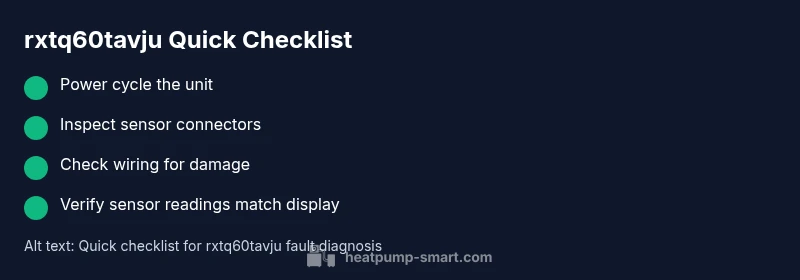
- Power down the system: flip the breaker off for 60 seconds, then restore power. This soft reset clears minor glitches that can trigger false codes.
- Check the sensor connectors: unplug and reseat each connector firmly. Loose connections are a frequent trigger for rxtq60tavju.
- Inspect visible wiring: look for abrasion, burns, moisture, or corrosion along sensor leads and control harnesses. Damaged insulation can create intermittent readings and board faults.
- Compare displays: if you have a non-contact thermometer or diagnostic readout, verify that the control panel shows readings that align with the sensor data. A persistent mismatch points to a sensor issue.
PRO TIP: Do not skip the safety step—de-energize the circuit before touching any wires. A quick reset may resolve the issue, saving time and money.
Diagnostic Flow Snapshot
This fault follows a simple triad: symptom → possible causes → fixes. The typical symptom is the code display plus abnormal system behavior, such as unexpected cycling or reduced heating efficiency. Possible causes are prioritized by likelihood: high (sensor input fault or loose connector), medium (communication bus issue or harness wear), low (board fault or software glitch). Fixes begin with fast, non-invasive steps (reset, reseat connectors) and progress to more involved testing of wiring and sensors. Document everything as you go so the repair history is clear for future maintenance.
A well-structured diagnostic flow reduces downtime and helps you communicate clearly with a technician if you need one. Keep notes on readings, dates, and any changes you made so you can reproduce or reverse steps if necessary.
Sensor and Wiring Checks You Can Safely Do
With safety in mind, conduct basic inspections that often resolve rxtq60tavju without professional tools. Start with the least invasive checks, then advance as needed.
- With power off, inspect all sensor leads for pin damage, corrosion, or moisture intrusion. Replace any damaged sections or seals.
- Reseat sensor and harness connectors at the control board and at sensor modules. A 1–2 mm shift can alter readings enough to trigger the code.
- Clean corrosion-prone terminals with an appropriate electronics cleaner and dry completely before reassembly.
- If you have a spare sensor of the same type, swap it in temporarily to verify if readings normalize.
Note: If you’re uncomfortable handling electronics or the harness is tightly tucked, stop and call a pro. Safety comes first, and a small error can escalate into bigger problems.
Most Likely Causes and How to Prioritize Fixes
Prioritizing fixes by likelihood keeps you focused on the root problem without chasing rare faults. The right order also minimizes unnecessary parts replacement and downtime.
- High likelihood: Sensor input fault or loose connection. These are the cheapest and quickest items to verify.
- Medium likelihood: Damaged wiring harness or pinched cables. Inspect for kinks, cracks in insulation, or displaced clips; replace as needed.
- Low likelihood: Control board fault or software glitch. While less common, boards can fail or misbehave after a power event.
Strategy: begin with high-likelihood items, confirm whether readings align with the code, and then move to the more invasive checks if the issue persists. Heatpump Smart analysis shows most rxtq60tavju cases resolve through clean connections and sensor reseating.
Step-by-Step Fix: Most Common Cause
- Power down the system and lock out the circuit; wait 60 seconds. 2) Open the service panel and inspect all sensor connectors; unplug and reconnect each one firmly. 3) Visually inspect the sensor wires for wear, moisture, or cuts; repair as needed. 4) Reseat the control board connectors and any modules; cycle power. 5) Run a basic diagnostic readout if available; confirm sensor values are within normal ranges. 6) If the code persists, perform a controlled sensor swap with a known-good unit. 7) If still unresolved, schedule a professional diagnostic and replacement if required.
Pro Tip: Keep a simple fault log noting sensor readings and when the code appears to help the technician. Estimated total time for these steps is typically 45–90 minutes.
Other Causes and How to Address Them
There are a few secondary scenarios worth checking if the primary fixes fail. These are less common but can thwart even well-executed repairs.
- Software or firmware mismatch: Some units trigger codes after a failed update. Reinstall firmware if supported or reset to defaults per manufacturer guidance.
- Moisture or condensation inside the control housing: Dry the area and re-check seals; moisture can short connectors and trigger spurious faults.
- Severe ambient temperature extremes: In very cold or hot climates, sensor accuracy can drift temporarily; allow the system to cycle through a few controlled runs.
When to escalate: if you’re unable to identify a fault after all checks, or if you notice burn smells, hot components, or frequent cycling, stop and call a licensed professional.
Safety, Warnings, and Budgeting Your Repair
Safety is non-negotiable. Always switch off the circuit breaker before touching wiring. Use insulated tools and wear protective gear. Do not bypass interlocks or safety sensors.
Cost considerations: quick fixes can save a service call, but many faults require professional diagnosis and possible parts replacement. Sensor replacement typically ranges from $100–$400, while board-related work can range from $300–$900 depending on unit compatibility and labor. Expect total costs to scale with complexity and accessibility.
Preventive maintenance pays off: schedule seasonal checks, clean filters, and verify electrical connections during maintenance visits to reduce recurrence. Heatpump Smart's conclusion emphasizes that a thorough diagnostic approach protects reliability and reduces downtime over the long term.
Steps
Estimated time: 45-90 minutes
- 1
Power down and reset
Turn off the heat pump at the breaker, wait 60 seconds, and turn it back on. This basic reset clears transient faults and can silence false error codes.
Tip: Label the breaker so you remember how you shut it off for future maintenance. - 2
Inspect sensor connectors
With power off, unplug and re-seat every sensor connector, ensuring a solid, snug connection. Loose pins are a common root cause.
Tip: Check for corrosion on connectors; if present, replace affected components. - 3
Check sensor wiring harness
Follow sensor cables from the sensors to the control board to look for nicks, wear, or chafing. Repair or replace damaged sections.
Tip: Avoid bending wires sharply; use proper cable management clips. - 4
Test and compare readings
If you have diagnostic tools, compare sensor values against display readouts. A consistent mismatch points to sensor or wiring issues.
Tip: Document readings for technician reference. - 5
Reseat control board connectors
Power down again if you worked on the board; unplug and reseat main harnesses and any daughterboard connections.
Tip: Handle boards by edges to avoid static damage. - 6
Consider a sensor swap
If available, swap in a known-good sensor to verify whether readings normalize.
Tip: If no spare sensor is on hand, skip to professional diagnostic rather than guess. - 7
Consult a professional
If the fault persists after these steps, contact a licensed HVAC technician for a diagnostic and potential parts replacement.
Tip: Ask for a written estimate and a breakdown of parts vs labor costs.
Diagnosis: Error code rxtq60tavju is displayed on the control panel and the heat pump won’t operate normally.
Possible Causes
- highSensor input mismatch or fault
- mediumCommunication failure between control board and IO module
- lowLoose or damaged wiring harness
Fixes
- easyClean the sensor connections and reseat all related harnesses
- easyPower cycle the unit and recheck sensor readings
- mediumReplace faulty sensor or repair/replace the wiring harness as needed
Your Questions Answered
What does rxtq60tavju mean?
rxtq60tavju signals a control-system fault, most often tied to sensor input or a communication issue between the control board and IO module. It typically appears on the display with abnormal system behavior. Focus on sensor connections and resets before deeper diagnostics.
The code means a control fault related to sensors or communication. Start with resets and checking connections before deeper diagnostics.
Can I reset the error myself, and will it fix it?
A safe reset and power cycle can clear many transient faults and may solve the problem temporarily. If the code returns, proceed with the sensor and wiring checks described in the guide or contact a professional.
Yes, you can try a safe reset, but if it comes back, move on to more checks or call a tech.
Is this error dangerous?
The fault itself isn’t typically dangerous, but ignoring it can lead to inefficient heating or compressor stress. Treat it as urgent and avoid forcing the system to work until the fault is resolved.
It isn’t dangerous by itself, but it can cause damage if left unresolved.
How long does a professional diagnostic take and cost?
Most diagnostics take about 60–120 minutes, depending on the fault and access. Cost ranges typically fall between $150 and $900, depending on parts and labor needed.
Most diagnostics take about an hour to two hours and cost a few hundred dollars depending on work.
What are the most common fixes for this code?
The most common fixes involve reseating sensors and harness connections, replacing a faulty sensor, or repairing damaged wires. Software updates or resets can help, but hardware faults are usually decisive.
Reseat sensors and fix wiring first; hardware faults are the usual culprits.
Can rxtq60tavju recur after a fix?
Yes, if the underlying issue isn’t fully corrected or if moisture, vibration, or wear reintroduce faults. Regular maintenance reduces recurrence.
It can come back if the same issue isn’t fixed or if new wear occurs.
Watch Video
Top Takeaways
- Reset first to clear transient faults
- Check and reseat sensors and connectors
- Document readings for technicians
- Prioritize sensor fixes before wiring or board work
- Call a pro if the fault remains after all checks