Heat Pump Error 03 E: Comprehensive Troubleshooting Guide
Learn how to diagnose and fix heat pump error 03 e quickly. This expert guide covers meaning, quick fixes, diagnostic flow, step-by-step repairs, safety, and prevention tips.


heat pump error 03 e signals a sensor or communication fault between the outdoor unit and the control board. Start with a power reset, check outdoor wiring and sensor connections, and verify sensor plug alignment. If the fault persists, contact a qualified technician to avoid safety risks.
What heat pump error 03 e means
heat pump error 03 e indicates a sensor or communication fault between the outdoor unit and the control board. It commonly appears when safety interlocks detect a mismatch, a loose connection, or a failing sensor. This error halts normal operation to protect components and prevent unsafe compressor or fan activity. Recognizing the code early helps you act quickly without risking damage. The term heat pump error 03 e should be treated as a signaling code that prompts targeted checks rather than random button-mashing. A staged response—power cycle, connection checks, and sensor verification—often resolves non-hardware faults. If you have to reset multiple times or the error reappears after a reset, plan for deeper diagnostics.
Typical root causes and how to identify them
Several common culprits can trigger heat pump error 03 e. A faulty sensor or thermistor is the most frequent reason, followed by loose or corroded wiring between the outdoor unit and the control board. Firmware glitches and a tripped safety interlock can also produce the code. Environmental factors, like extreme cold or flash power dips, may temporarily confuse sensors. To identify the cause, compare recent changes (new thermostat settings, service visits) with observed symptoms. Always correlate the error code with physical signs—humming relays, fan motor stalls, or unusual odors. Remember, heat pump error 03 e is a diagnostic flag, not a guarantee of a single failed part.
Safe checks you can perform safely
You can perform a few non-invasive checks that often clear false alarms. Begin with a full power cycle: turn off the unit at the breaker for 60 seconds, then restore power and watch the system reboot. Inspect visible wiring at the outdoor unit for loose connectors or damaged insulation (do not touch live conductors). Check that sensor plugs are fully seated and that you did not dislodge any temperature sensors during maintenance. If you notice burned smells, melted insulation, or exposed wiring, stop and call a pro immediately. For performance diagnostics, review the control board display for error codes that appear after the reset.
Quick fixes you can attempt before calling a pro
First, power cycle the system to clear transient faults. Next, reseat all connectors on the outdoor unit and confirm sensor connections are snug. If your unit has a smart thermostat, try re-pairing it to restore reliable communication. Verify that the outdoor condenser is free of debris and has unobstructed airflow. After these steps, run a test cycle with demand for heat or cooling to see if the code reappears. If the error returns, prepare for a professional diagnostic, as deeper issues involve control circuitry.
What a professional diagnosis looks like and cost considerations
A certified HVAC technician will typically verify sensor health, test the control board communication, and inspect the outdoor wiring harness. They may replace a failing sensor or repair a damaged harness, and in stubborn cases, the control board or safety interlocks may be evaluated. Costs vary by region and part; expect ranges for labor and parts, often higher if outdoor access or complicated wiring is involved. A proactive service visit might include firmware checks and thermostat integration review to prevent future faults.
Prevention and ongoing maintenance to avoid heat pump error 03 e
Regular maintenance reduces sensor and wiring faults. Schedule annual professional inspections, clean outdoor coils, check wiring insulation, and verify thermostat communication. Replacing aging sensors at recommended intervals can prevent false alarms. Keep the outdoor unit free of debris and ensure airflow is unobstructed. Document any fault codes and time of occurrence to help future diagnostics.
Safety and next steps
If at any point you are unsure or encounter voltages beyond your comfort level, stop and call a licensed HVAC professional. Working with high-voltage components can cause severe injury or fire risk. Use this guide as a starting point for diagnosis, but rely on professional evaluation for parts replacement or refrigerant handling. Regular maintenance reduces the likelihood of heat pump error 03 e recurring.
Steps
Estimated time: 45-60 minutes
- 1
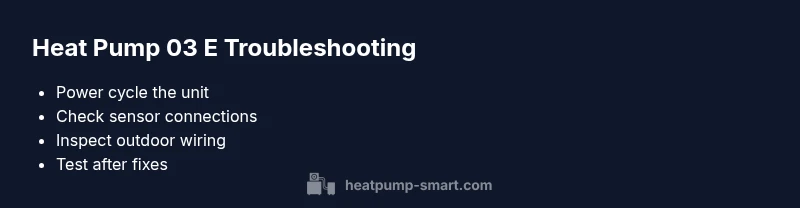
Power cycle the heat pump
Turn off the outdoor unit at the main breaker. Wait 60 seconds, then restore power and observe the system as it reboots. This simple reset clears many false 03 e signals.
Tip: Mark the breaker switch to ensure you can locate it quickly next time - 2
Check sensor connections
Open the outdoor unit access panel and inspect sensor wires and thermistor connections. Reseat any loose plugs firmly, ensuring no bent pins or damaged insulation.
Tip: Only touch connectors; avoid touching metal terminals - 3
Inspect outdoor wiring
Look for damaged insulation, loose terminals, or crushed cables between the outdoor unit and the control board. Replace damaged conductors or have a pro repair the harness if you cannot access both ends safely.
Tip: Do not attempt to strip or splice live wires - 4
Test after step-by-step actions
Power the unit back on and run a short heat or cool call to confirm whether the 03 e code clears. If it reappears, move to professional evaluation.
Tip: Document any error codes and time of occurrence - 5
Consider firmware or thermostat sync
If your system uses a smart thermostat, re-pair it and check for firmware updates that could affect communication. Some updates fix sensor timing issues.
Tip: Check app logs for communication errors
Diagnosis: Error code E03 appears on the heat pump display and system stops heating or cooling
Possible Causes
- highFaulty outdoor sensor or thermistor
- mediumLoose, damaged, or corroded wiring between outdoor unit and control board
- lowControl board firmware glitch or corrupted communication
Fixes
- easyPower cycle the system by turning off at the breaker for 60 seconds, then restart
- easyInspect outdoor wiring and reseat all sensor plugs (do not touch live parts)
- easyIf using a smart thermostat, re-pair or update firmware to restore communication
- hardSchedule professional diagnostic and possible sensor/board replacement
Your Questions Answered
What does heat pump error 03 e mean?
The 03 e code typically signals a sensor or communication fault between the outdoor unit and the control board, prompting a safety shutdown. It’s most often caused by loose connections, a faulty sensor, or a firmware glitch.
The 03 e code signals a sensor or communication fault. Check connections and reset, then call a pro if it persists.
Can I fix heat pump error 03 e myself?
Basic resets and visual inspections of wiring are safe if you disconnect power first. Most fixes beyond that require professional tools and knowledge.
You can try resets and safe checks, but deeper repairs need a pro.
Will resetting the system clear the error permanently?
Resetting can clear transient fault signals, but if the fault remains, the code will reappear. Ongoing 03 e faults require inspection of sensors, wiring, and board health.
Resetting may clear it temporarily; if it returns, don’t ignore it.
What are typical costs to repair 03 e faults?
Costs vary by region and part; expect ranges for labor and parts, often higher if outdoor access or complicated wiring is involved.
Costs depend on parts and labor; expect variation by job complexity.
When should I call a professional?
If reset fails, if you smell burning insulation, or if wires are damaged, stop and call a licensed HVAC technician immediately.
Call a pro if the code returns or if you see damaged wiring.
Is heat pump error 03 e related to refrigerant?
03 e is usually sensor or communication-related, not refrigerant charge. A quick check can rule out wiring issues before calling a pro for refrigerant advice.
Usually not refrigerant-related, but a pro can confirm.
Watch Video
Top Takeaways
- Act quickly but safely to clear transient 03 e faults
- Most 03 e issues are sensor/wiring related, not core compressor failures
- If the code reappears after a reset, plan for professional diagnostic
- Regular maintenance reduces recurrence of sensor/wiring faults