Heat Pump Freezing in Winter: Troubleshooting Guide for Homes
Diagnose and fix a heat pump freezing in winter with practical, step-by-step guidance, safety tips, and criteria for when to call a pro and get deeper insights.


If your outdoor unit frost or ice forms during cold weather, start with the simplest fixes: clear any snow or debris from the outdoor unit, ensure there is adequate clearance for airflow, and verify the thermostat is set to a reasonable winter temperature. If icing persists after these checks, switch to defrost mode or contact a licensed technician to inspect defrost cycles and refrigerant health.
Understanding heat pump freezing in winter
When outdoor temperatures drop, a well-functioning heat pump should briefly develop a light frost on the outdoor coil during normal cycles. This is part of the heat pump's defrost process and is usually managed automatically. However, heavy or persistent icing, especially on days with high humidity or wind, can signal an issue with airflow, the defrost mechanism, or refrigerant health. For homeowners, recognizing the difference between a routine frost and a problematic frost is critical. A frost pattern that grows or sticks around for long periods can reduce efficiency, raise energy bills, and in extreme cases, cause heat transfer problems inside the home. By understanding common frost behavior, you can prioritize quick checks and prevent unnecessary discomfort during winter operation while protecting system longevity. Heatpump Smart analyses indicate that most winter icing stems from airflow blockages, dirty coils, or a malfunctioning defrost cycle.
Quick pre-checks you can perform safely
Before you call a technician, perform a few low-risk checks:
- Ensure the outdoor unit is free of snow, leaves, or debris. Obstructions reduce airflow and worsen icing.
- Check that nearby vegetation or fencing isn’t leaning into the unit. A clearance zone of at least 2 feet around the unit is recommended for efficient operation.
- Look at indoor air filters and the indoor blower; restricted airflow can cause temperature imbalances that show up as frost on the outdoor coil.
- Verify the thermostat is within a reasonable winter setpoint (not extremely low) and that auxiliary heat isn’t kicking in constantly due to a thermostat fault. If any of these checks reveal an obvious issue, address it and monitor the system for improved cycling.
Common causes of freezing and frost buildup
Here are the typical culprits behind icing in winter:
- Blocked airflow: Snow, ice, or debris reducing airflow to the outdoor coil.
- Dirty condenser coils or dirty outdoor cabinet: Dirt acts like insulation, trapping moisture and freezing.
- Defrost cycle problems: A failing defrost sensor, timer, or control board can prevent proper frost removal.
- Thermostat or sensor misread: A miscalibrated thermostat can keep the system in a cooling mode or prevent proper frost melt.
- Extremely cold outdoor temperatures: On very cold days, some systems struggle to shed frost quickly enough, especially if maintenance is overdue.
- Refrigerant issues (rare): A leak or low refrigerant charge can cause abnormal icing patterns and reduced heat transfer.
If you notice continuous heavy ice despite clean outdoor coils and clear airflow, this usually points to a defrost or refrigerant issue and warrants a professional inspection.
Diagnostic flow: symptoms, causes, and immediate actions
When frost forms, start at the simplest checks and work toward professional help if needed. This approach minimizes downtime and expense. If icing occurs only during extreme cold but disappears during milder periods, basic maintenance may suffice. If icing persists after grooming the outdoor unit and adjusting the thermostat, the defrost cycle or refrigerant system likely requires inspection by a licensed technician. Always prioritize safety: power down before inspecting electrical components and never attempt refrigerant handling yourself.
Immediate steps you can take now (safe and practical)
- Power off and inspect the outdoor unit for snow or ice accumulation. Use a plastic brush to gently loosen ice and remove loose debris.
- Clear a 2-foot radius around the unit to ensure unobstructed airflow. Keep snow away from the cabinet to prevent re-freezing.
- Check indoor airflow by inspecting and replacing dirty or clogged air filters; ensure the fan runs smoothly when the system is on.
- Confirm thermostat settings are reasonable for winter (not extremely low) and that the system is not stuck in cooling mode due to a sensor fault.
- If frost reappears after a safe defrost cycle, switch to the emergency heat setting and arrange a professional check of defrost controls and refrigerant levels.
- Do not attempt refrigerant work yourself. If frost persists after the above steps, call a licensed technician promptly.
How to prevent freezing in winter: longer-term strategies
Proactive maintenance reduces the chance of winter icing significantly. Schedule a seasonal check before winter arrives and ensure the following:
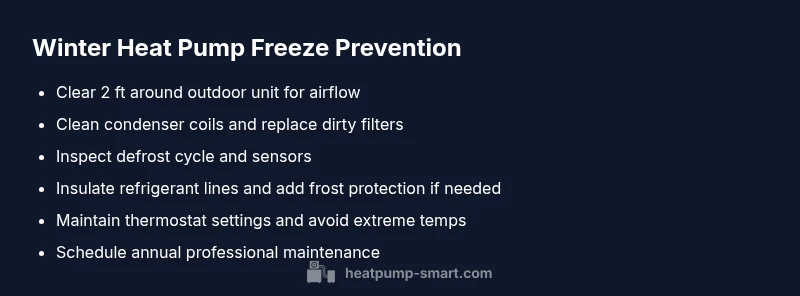
- Regular coil and surface cleaning and filter maintenance every 1–3 months during heavy use seasons.
- Ensure adequate airflow around the outdoor unit year-round; trim nearby vegetation and remove snow promptly.
- Inspect and test the defrost cycle periodically. A technician should verify defrost sensor operation, timer settings, and control electronics.
- Insulate refrigerant lines and consider heat tracing on frost-prone lines in very cold climates.
- Consider upgrading to a heat pump with a robust defrost strategy suitable for cold climates and ensure installation is performed by a qualified professional to meet your climate needs.
When to call a professional: red flags and safety
If ice buildup is persistent, there are odd noises, or you notice a refrigerant odor or hissing sounds, contact a licensed HVAC technician immediately. Signs of refrigerant issues can be dangerous and require proper handling. Delaying professional help can lead to compressor damage and higher energy costs. Keep a record of frost patterns, outside temperatures, and any codes or LEDs shown on the unit to speed up diagnosis.
Maintenance and safety notes you should never ignore
- Schedule annual professional maintenance and rely on seasonal checks to prevent winter icing.
- Replace indoor filters regularly and ensure the ductwork is sealed to maintain balanced airflow.
- Do not use sharp tools on ice around electrical components; water and electricity can be dangerous when mixed.
- Keep emergency and service numbers handy in case of rapid icing or performance loss.
- Heat pump freezing in winter is often a signal that routine maintenance is due; timely action saves energy and prolongs equipment life.
Steps
Estimated time: 45-60 minutes
- 1
Power down and inspect outdoor unit
Turn off the system at the disconnect and visually inspect the outdoor unit for snow, ice, and debris. Remove loose material carefully with a plastic brush. Ensure the surrounding area is clear.
Tip: Always start with safety; wait for the unit to be cold before touching any components. - 2
Clear obstruction and improve airflow
Remove any snow or vegetation around the unit to achieve a safe 2-foot clearance. This ensures proper airflow for efficient defrosting and operation.
Tip: Maintain clearance year-round to reduce future icing. - 3
Check indoor airflow and filters
Replace dirty air filters and verify indoor blower is circulating air correctly. Poor airflow indoors can translate to improper heat transfer outdoors.
Tip: Clean or replace filters every 1–3 months during heavy use. - 4
Inspect thermostat and mode
Confirm the thermostat isn’t stuck in cooling mode and is set to a winter-appropriate temperature. Ensure the system is calling for heat when appropriate.
Tip: If unsure, reset to a known-good baseline temperature and monitor. - 5
Test defrost cycle and monitor
If frost keeps forming, observe the defrost cycle; it should melt ice within a few minutes. If it sticks, the control or sensor may need service.
Tip: Document any error codes or LED indicators to share with a tech. - 6
Call a professional if needed
If icing persists after basic checks, schedule a professional inspection to verify defrost controls and refrigerant health.
Tip: Avoid refrigerant work yourself; refrigerant handling requires licensing.
Diagnosis: Heat pump outdoor unit shows frost/ice buildup during winter operating conditions
Possible Causes
- highBlocked airflow due to snow, ice, or debris around the outdoor unit
- highDirty condenser coils or restricted cabinet airflow
- highMalfunctioning defrost cycle or sensor/timer issue
- mediumThermostat misread or sensor calibration error
- lowVery low outdoor temperatures beyond unit design
- lowRefrigerant leak or low charge (less common)
Fixes
- easyClear snow/ice and ensure at least 2 feet of clearance around the outdoor unit; remove debris
- easyGently clean coils and ensure unobstructed airflow; replace dirty filters and inspect for obstructions
- mediumInspect/adjust defrost cycle or timer; verify sensor operation with a licensed tech
- easyCheck thermostat settings and calibration; ensure proper mode and temperature range
- hardIf icing persists, have a licensed technician check refrigerant charge and connections
- mediumInstall or replace frost protection measures if required by climate and system design
Your Questions Answered
Why does a heat pump freeze in winter even when it's running?
Frost can form when outdoor temperatures are cold and airflow is restricted, or when the defrost cycle isn’t removing ice efficiently. Dirty coils, blocked air intakes, or thermostat/sensor faults can also contribute. A professional check helps determine the exact cause.
Frost on a heat pump happens when it's cold outside and airflow is blocked or the defrost cycle isn’t working, so a quick inspection helps identify the exact cause.
Can I manually defrost the outdoor unit?
Yes, you can remove light frost with a plastic brush and ensure safety by turning off power first. Do not use sharp tools or metal surfaces. If heavy icing returns, it’s best to have a tech inspect the defrost system.
You can gently brush off light frost after turning off power. If ice keeps forming, call a pro to check the defrost system.
Is frost always a problem, or is some frost normal?
A small amount of frost during defrost cycles is normal. Persistent or growing icing indicates a problem with airflow, defrost function, or refrigerant health that should be evaluated.
A little frost during defrost is normal, but ongoing icing means you should investigate further.
When should I call a professional for freezing issues?
Call a professional if ice persists after basic checks, if you hear unusual noises, or if you detect refrigerant smells. Early professional help prevents compressor damage and reduces energy waste.
If icing continues after basic checks or you hear odd noises, call a licensed HVAC tech right away.
How often should I service my heat pump to prevent freezing?
Aim for annual professional maintenance and regular indoor filter checks. Seasonal coil cleaning and airflow checks help prevent icing and maintain efficiency.
Have it serviced yearly and clean coils and filters regularly to prevent frost buildup.
Watch Video
Top Takeaways
- Act early on frost buildup to protect efficiency
- Clear airflow is the first line of defense against freezing
- Defrost cycle issues are a common cause of persistent icing
- Call a pro for refrigerant checks or complex defrost problems
- Maintain annual maintenance for consistent winter performance