How to Fix Heat Pump Freezing Up in Winter: A Practical Guide
A practical, step-by-step guide to diagnosing and fixing heat pump freezing problems in winter, with Reddit-style scenarios, safety tips, and maintenance routines.


This guide helps you diagnose and fix a heat pump that freezes up in winter, focusing on safe, practical steps you can take before calling a pro. You’ll inspect airflow, filters, outdoor unit clearance, and basic defrost controls, then follow a clear 6-step repair workflow. The guidance targets homeowners, builders, and property managers dealing with cold-climate setups and common Reddit scenarios.
Why heat pumps freeze up in winter
In cold climates, heat pumps can develop frost on the outdoor coil. Frost can impede heat transfer and lead to short cycling or reduced efficiency. Reddit threads often describe scenarios where a low outdoor temperature combined with high humidity causes rapid ice formation on the outdoor coil. According to Heatpump Smart, frost buildup is frequently tied to airflow restrictions, dirty filters, or debris on the outdoor unit, which reduce heat exchange and trigger the defrost cycle more aggressively. Debris can also hold moisture that freezes, creating a cycle that worsens over repeated start-stops. Understanding these triggers helps you prioritize checks that have the biggest impact.
Weather and humidity influence frost formation, but the main culprits remain airflow and outdoor coil cleanliness. Regular checks and timely maintenance can dramatically reduce freezing events. This section lays the groundwork for practical fixes you can implement safely.
Safety and initial checks
Before touching equipment, power down the system at the thermostat and the service panel. Wear gloves and eye protection if you’re handling ice or sharp edges. Many issues can be resolved with simple, safe checks: ensure the thermostat is set to “auto” defrost or heat mode; verify that indoor registers are open and unobstructed; confirm that the outdoor unit has adequate clearance (at least 2–3 feet around) to allow airflow. Never poke refrigerant lines or openings; refrigerant leaks are hazardous and require a licensed tech. If ice is thick, allow it to melt naturally before performing any inspection to avoid injuring components. By following these precautions, you protect yourself while you diagnose potential causes.
Diagnosing the problem: symptoms and tests
Start with the simplest checks: is the air filter dirty? Is the outdoor coil obstructed by ice, snow, or debris? Check for uneven airflow across indoor vents; listen for unusual noises from the outdoor unit. Use a flashlight to inspect the fins for bent blades. If the system runs in cooling mode during winter, look for misconfigured thermostat stages. If the defrost cycle runs but ice reforms quickly, the problem may be refrigerant-related or a faulty defrost control. Document symptoms and times of day for your records, which helps a technician. A methodical approach saves time and ensures you address the root cause rather than just the symptom.
Actions you can take now (narrative)
Inspect and replace the air filter if needed. Clear any obvious debris around the outdoor unit and confirm there’s ample clearance. Check that indoor vents are unobstructed and that the thermostat is configured for winter operation. If you notice frost on the outdoor coil after a few cycles, note the outdoor temperature and humidity. Do not attempt to recharge refrigerant or bypass safety interlocks. If frost persists after these checks, the issue may require professional service and possibly refrigerant work or control repairs.
Winter maintenance checklist to prevent freezing
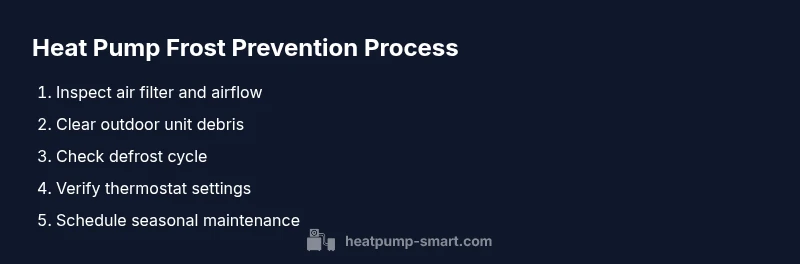
Create a seasonal routine that includes: (1) monthly filter inspection and replacement during winter, (2) clearing around the outdoor unit and ensuring 2–3 feet of clearance, (3) evaluating thermostat defrost settings and program schedules, (4) cleaning the indoor blower and checking for air leaks in ductwork, and (5) scheduling an annual HVAC tune-up before severe weather. Keeping the system well-tuned reduces the likelihood of frost buildup and improves efficiency. Consistency is the key to preventing repeated freezes.
Tools & Materials
- Air filter(MERV 8 or higher; replace monthly during winter for optimal airflow)
- Screwdriver set (Phillips & flat-head)(Sizes #1-3 Phillips, 3/16" flat-head common for HVAC panels)
- Gloves and safety glasses(Protect hands and eyes when handling ice or sharp components)
- Coil cleaning brush / soft brush(Gently remove debris from outdoor coil without bending fins)
- Non-contact infrared thermometer(Optional for quick coil temperature checks)
Steps
Estimated time: 45-60 minutes
- 1
Power down and secure safety
Turn off the thermostat and switch off the outdoor unit at the service disconnect. This prevents electrical shocks while you inspect components.
Tip: Always verify power is cut at both points before touching wiring. - 2
Check and replace the air filter
Inspect the indoor air filter; if dirty, replace with a filter of appropriate size. A clogged filter reduces airflow and can cause frost buildup.
Tip: Replace monthly during winter to maintain optimal airflow. - 3
Clear debris around the outdoor unit
Remove snow, leaves, and vegetation from the outdoor coil to restore airflow and heat exchange efficiency.
Tip: Maintain a 2–3 ft clearance around the unit for proper airflow. - 4
Inspect indoor vents and coil access
Check that supply vents are open and unobstructed; look for ice or frost forming on indoor coils or plenums.
Tip: Ice on indoor components can indicate low refrigerant or insufficient airflow. - 5
Check defrost controls and thermostat settings
Ensure the defrost control is engaging and that the thermostat is set for heat mode in winter. Misconfigured controls can cause persistent frost.
Tip: If your thermostat is programmable, verify winter schedules align with heating needs. - 6
Run system and monitor for frost
Restore power and listen for the defrost cycle; observe the outdoor coil for ice buildup over the next cycle.
Tip: If frost returns quickly, stop and call a professional – it may be refrigerant-related.
Your Questions Answered
What causes heat pump freezing in winter?
Frost forms when airflow is restricted, the outdoor coil is dirty or blocked, or defrost controls misbehave. Humidity and cold temperatures worsen the issue.
Frost happens when airflow is blocked or the outdoor coil gets iced up, often worsened by humidity.
Can I fix a frozen heat pump myself?
Some safe checks like changing filters and clearing debris are doable. Avoid refrigerant work or opening sealed joints without training.
You can do basic maintenance, but refrigerant work requires a pro.
When should I call a professional?
If frost returns after checks, if you suspect a refrigerant leak, or if you hear unusual noises from the outdoor unit, contact a licensed HVAC tech.
Call a professional if frost remains after checks or you suspect a leak.
How can I prevent freezing in the future?
Keep filters clean, maintain outdoor clearance, schedule seasonal inspections, and ensure thermostat and defrost settings are appropriate for winter.
Regular maintenance and correct settings prevent most freezes.
Is a frozen heat pump dangerous to operate?
Running a unit with ice buildup can strain components and reduce efficiency, but it is generally not immediately dangerous. Turn off and check safety steps before restarting.
Ice can stress the system, so power down and inspect safely.
What if defrost cycles don't resolve the frost?
Defrost cycles that fail may indicate a control or refrigerant issue; a professional inspection is advised.
If defrost doesn't fix frost, get a pro to check controls and refrigerant.
Watch Video
Top Takeaways
- Identify airflow issues first: clean filters, clear vents.
- Clear the outdoor unit of debris to restore heat exchange.
- Only perform safe checks; call a pro for refrigerant or electrical faults.