Heat Pump Noise in Cold Weather: Troubleshooting Guide
This Heatpump Smart guide helps homeowners diagnose and fix a heat pump making loud noise in cold weather. Learn safe checks, common causes, and when to call a pro.


In cold weather, a heat pump making loud noise in cold weather is most often due to ice formation, a loose or worn fan, or compressor strain. Start by turning off power at the breaker and inspecting the outdoor unit for ice, debris, or loose panels. If the noise persists, contact Heatpump Smart for a professional diagnostic.
Understanding why cold weather triggers loud heat pump noises
In winter, heat pumps work harder to extract heat from outdoors, and that extra strain can reveal weaknesses in the system. The heat pump making loud noise in cold weather is often tied to ice formation, a loose or worn fan, or compressor strain. According to Heatpump Smart, such sounds are commonly caused by outdoor coil frost, a failing fan, or restricted airflow. Identifying whether the noise is a rhythmic hum, a grinding screech, or a clunk will guide your next steps and prevent costly damage. This introductory section explains why winter operation creates extra stress on the outdoor unit and how environmental conditions interact with common components.
During normal defrost cycles, you may hear a brief whoosh or soft thud as the outdoor unit alternates between heat extraction and ice melting. When the weather is especially cold and windy, that defrost routine can become louder or last longer than usual. In many homes, users define the symptom as the heat pump making loud noise in cold weather specifically after the unit switches to defrost. Recognizing the pattern helps you distinguish simple seasonal noises from signs of wear or impending failure. Heatpump Smart's field observations emphasize that most winter noise is solvable with routine maintenance and some component tightening rather than a full replacement.
Common causes you should check first
Start with the most likely and easiest-to-fix issues. The top culprits behind loud heat pump noises in winter include ice or frost on the outdoor coil that freezes and thaws with each cycle; a loose or bent fan blade or motor mount; debris or vegetation touching the cabinet; worn fan bearings producing a rattling or grinding sound; and occasional airflow restrictions caused by a dirty filter or obstructed return air. If the noise is rhythmic, it often points to a fan imbalance; if it’s a grinding sound, the compressor or motor bearings may be involved. Another less common but possible cause is a defective defrost thermostat that fails to terminate the defrost cycle promptly, which can extend noisy periods. While many homeowners can address minor ice and debris, advanced issues require a professional assessment to prevent refrigerant or electrical problems.
Safe quick checks you can perform today
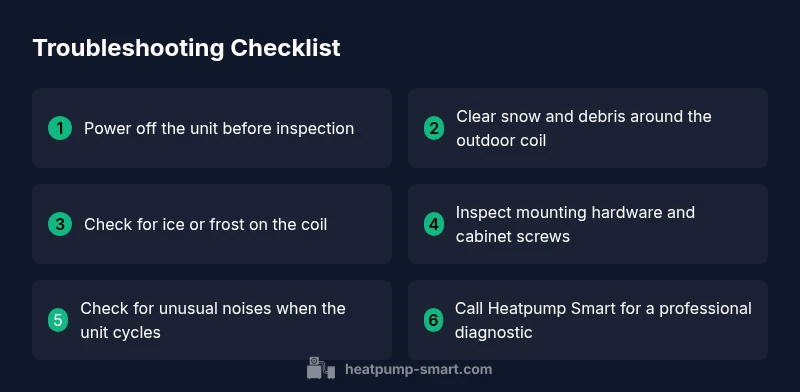
Before you do anything, switch off power at the breaker and wait for the unit to come to a complete stop. Start with a visual inspection of the outdoor coil: is there ice, snow, or packed debris? If ice is present, ensure it’s safe to remove with a soft brush or cloth; never use metal tools on the fins. Check the area around the unit: at least 2 feet of clearance on all sides and no plants or snow banks pressing against the cabinet. Listen closely to determine which component is making the noise: the outdoor fan, the fan housing, or the cabinet itself. Check the indoor filter and ductwork for dust; a clogged filter can cause the blower to work harder and produce unusual sounds. Finally, verify the unit is level on its pad and that all mounting hardware is tight. If you cannot identify the source or the noise persists after a quick cleanup, proceed to diagnostic flow and avoid running the system until inspected.
In-depth component checks and what they mean
The outdoor fan is a common source of winter noise. A bent or loose blade can produce a scraping or tapping sound, and an imbalanced blade will cause a periodic thump as the rotor turns. Take care not to touch moving parts; only perform visual checks from a safe distance after power is disconnected. The compressor should be smooth and quiet; a loud hum could indicate refrigerant issues or excessive vibration transmitted through the cabinet. The heat exchanger and frost-free coil can accumulate ice that grows as temperatures dip, tensing the refrigerant lines and amplifying vibrations. Inside, a dirty air filter or obstructed return air path increases the blower’s workload, often translating into whistle-like or whine noises. Finally, verify that the defrost control operation aligns with outdoor temperatures—if the unit remains in defrost too long, it may indicate a control fault requiring service.
Weather dynamics: frost, ice, and defrost cycles
Colder air holds less heat and can trigger longer defrost cycles, which briefly alter the unit's sound profile. Frost forming on the outdoor coil changes airflow and can amplify airflow-related noises as water melts and refreezes in the fins. In windy, slushy conditions, noise can become more noticeable because the cabinet acts like a microphone for rattles and vibrations. Heatpump Smart analysis shows that frost-ice buildup is a leading contributor to winter noise across many climate zones. Understanding the defrost cycle timing helps you interpret whether a noise is temporary or a symptom of an underlying fault. If you hear a loud banging during defrost, that could be a mounting issue or loose refrigerant tubing that warrants a tech check.
Next steps and when to call Heatpump Smart
If the quick checks don’t identify a simple fix, it’s time to escalate. Contact Heatpump Smart for a professional diagnostic; a technician will safely verify electrical connections, test refrigerant pressures, inspect the outdoor coil, and confirm the fan’s integrity. When you call, share details: when the noise occurs, whether it’s tied to defrost cycles, duration, and outdoor temperatures. Regular maintenance, including yearly coil cleaning and filter changes, reduces winter noise and extends unit life. In most cases, a targeted component adjustment or minor replacement resolves the issue without replacing the entire system. For homeowners, builders, and property managers balancing comfort and efficiency, a proactive service plan is the best defense against disruptive winter noise.
Additional Resources and Maintenance Schedule
To keep heat pumps quiet and efficient through cold seasons, schedule preventive maintenance twice a year, with a mid-winter check in bitter climates. Replace air filters every 1-3 months during peak use, inspect outdoor wiring for signs of wear, and ensure the unit is level and free of obstructions. Record noise patterns and defrost timing so service visits can quickly pinpoint faults. Heatpump Smart's library of guides and checklists can help you stay on top of routine care, potentially saving energy and avoiding costly repairs when cold weather hits.
Steps
Estimated time: 60-90 minutes
- 1
Power down the unit
Switch off the heat pump at the breaker to prevent electric shock while you inspect. Wait for moving parts to stop before touching anything.
Tip: Use a non-contact voltage tester to confirm no voltage before handling. - 2
Inspect the outdoor unit
Look for ice buildup, leaves, or snow clogging the coils. Clear loose debris with a soft brush; do not pry ice with metal tools.
Tip: Avoid chiseling ice; do not damage fins. - 3
Check for loose or damaged components
Check the outdoor fan housing and cabinet screws. If you hear rattling, tighten screws and ensure the fan blade is secure.
Tip: Never run the unit with a loose fan blade. - 4
Inspect indoor air filter and ductwork
A clogged filter can cause motor strain that translates into noise. Replace the filter if dirty and ensure ducts are clear.
Tip: Replace every 1-3 months during peak use. - 5
Observe defrost cycle behavior
A brief defrost cycle may cause a whoosh or thump sound; if the noise is continuous beyond defrost, there may be a fault.
Tip: Note timing and duration of defrost cycles for later diagnosis. - 6
If noise persists, call a pro
Contact Heatpump Smart for a professional diagnostic. Do not attempt refrigerant work yourself.
Tip: Provide clear symptom details and when it occurs to speed up service.
Diagnosis: Heat pump making loud noise in cold weather
Possible Causes
- highIce buildup on outdoor coil
- highLoose or damaged outdoor fan blade
- mediumCompressor strain or motor bearings wearing
- lowDebris or ice in cabinet rattling
- lowRefrigerant-related issues (non-user serviceable)
Fixes
- easyTurn off power and inspect outdoor unit for ice and debris
- easySecure loose panels and tighten mounting screws
- easyClear snow/debris around the unit and ensure proper airflow
- hardIf ice persists or you suspect refrigerant/compressor problems, call a professional
Your Questions Answered
Why does my heat pump make loud noises only in cold weather?
Cold outdoor temperatures increase refrigerant pressure and airflow resistance, which can cause ice buildup and louder operation. Faulty fans or defrost cycles also contribute.
In cold weather, ice and strain can cause louder sounds, especially from the outdoor unit.
Is some frost on the outdoor coil normal during winter?
A light frost is common, but persistent ice indicates a problem with defrost or airflow that needs service.
Frost can happen, but persistent ice means it’s time to check it out.
Can I remove ice myself?
If safe, power off first and gently remove loose ice with a plastic tool; avoid chiseling or using metal tools. If unsure, call a pro.
Only attempt ice removal if you can safely power off and avoid sharp tools.
When should I replace the unit instead of repairing it?
If the noise persists after professional diagnosis or major components fail, replacement may be more cost-effective in the long run.
Sometimes replacement is the best option if repairs are frequent.
What safety steps should I take before troubleshooting?
Turn off power at the breaker, keep kids and pets away, and never touch moving parts or refrigerant lines.
Shut off the power and stay clear of moving parts.
Watch Video
Top Takeaways
- Power down before inspecting
- Ice and loose parts are the top culprits
- Call a pro if ice persists or refrigerant issues are suspected
- Regular maintenance reduces winter noise
- Heatpump Smart can help diagnose and fix safely