Why Heat Pumps Freeze Up in Winter: Troubleshooting Guide
Heatpump Smart's expert guide explains why heat pumps freeze up in winter, with quick checks, a diagnostic flow, and practical steps to restore comfort and efficiency.


According to Heatpump Smart, frost on a heat pump in winter is usually caused by restricted airflow to the outdoor coil or a failing defrost cycle. Quick checks include clearing debris around the unit, replacing a dirty filter, and ensuring the outdoor fan spins freely. If frost persists, switch to emergency heat and call Heatpump Smart for a full diagnostic. See the full step-by-step guide below.
Understanding why heat pumps freeze up in winter\n\nHeat pumps are designed to move heat from outdoors to indoors, not to create warmth on the outside. In cold conditions, moisture on the outdoor coil can freeze, forming an insulating layer that blocks heat transfer. The most common culprits are restricted airflow, a dirty coil, and a malfunctioning defrost cycle. According to Heatpump Smart, these issues often stem from basic maintenance gaps or environmental factors. Recognizing the signs early helps homeowners prevent efficiency loss and avoid temperature swings in the home.
Common causes of freezing and their signs\n\n- Restricted airflow: blocked outdoor space, dirty filters, or a dirty outdoor coil reduces heat extraction and promotes frosting. You may notice longer defrost cycles or reduced heating performance. \n- Defrost cycle problems: the system should periodically melt frost; if sensors or control boards fail, frost accumulates. \n- Refrigerant issues: low refrigerant or leaks can alter pressure and dew point, promoting frosting on the coil. \n- Environmental moisture: high humidity and freezing rain around the unit can accelerate frosting. \n- Thermostat or sensor faults: incorrect readings lead to improper defrost timing.
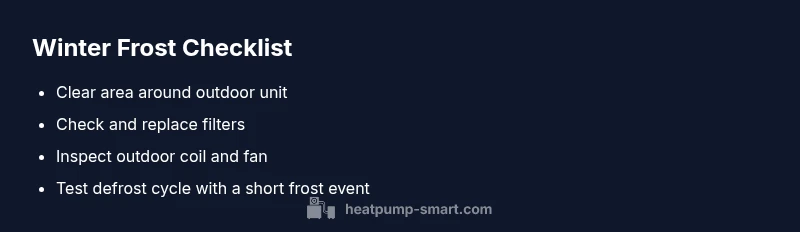
Diagnostic checks you can perform safely\n\nBefore touching electrical components, turn off the unit at the breaker. Check the outdoor space for at least 2 feet of clearance and remove leaves, snow, or debris. Inspect interior air filters and replace if dirty. Look at the outdoor coil through the grille; if you see heavy dirt, gently rinse with a low-pressure hose. Listen for the outdoor fan running smoothly—if it’s noisy or seized, this points to airflow issues.
Step-by-step fix for the most common cause: restricted airflow\n\n1) Power down and unplug the unit. 2) Clear a wide radius around the outdoor unit and remove any snow buildup. 3) Clean or replace filters on the indoor air handler. 4) Vacuum or brush off the outdoor coil gently, then rinse with a gentle spray. 5) Inspect the outdoor fan and verify it spins freely when powered on. 6) Reassemble and test; if frost recurs, proceed to the next fixes or call a professional.
Prevention: maintenance habits to stop frost forming\n\n- Schedule proactive winter maintenance twice a year. A technician should check refrigerant levels, sensors, and defrost controls. - Ensure outdoor unit has sufficient clearance and is protected from snow build-up without restricting airflow. - Replace indoor filters regularly and keep thermostat settings stable to avoid rapid cycling. - Consider a programmable thermostat with frost protection settings if your climate is extremely cold.
When to call a professional and safety notes\n\nIf frost keeps returning after you’ve cleared area and cleaned the coil, or you notice ice buildup on refrigerant lines, stop and call a licensed HVAC technician. Refrigerant work is dangerous and illegal to perform without proper certification. Also, do not bypass the defrost cycle by manually warming the coil; this can damage the compressor.
Realistic expectations: efficiency impact and seasonal considerations\n\nFrost on the outdoor coil reduces efficiency, increases energy use, and can shorten equipment life if not addressed. Regular defrost operation and proper airflow help maintain COP (coefficient of performance) and comfort. In milder winters, frost is less likely; in cold climates, preemptive maintenance and proper airflow are essential.
Quick recap: how to monitor and respond during cold snaps\n\nKeep the area around the outdoor unit clear, check filters monthly, and test the defrost cycle by watching for occasional melts. If you notice constant frosting or a warm room despite a running system, switch to auxiliary heat and call Heatpump Smart.
Steps
Estimated time: 60-90 minutes
- 1
Power down and safety
Turn off the system at the breaker and at the thermostat. Wait for any moving parts to stop before touching the unit.
Tip: Never service electrical components with power on. - 2
Clear the outdoor area
Remove snow and debris; provide at least 2 ft of clearance and keep the coil grille unobstructed.
Tip: Keep a dedicated snow shovel for around the unit. - 3
Check indoor air filters
Inspect the indoor filter and replace if clogged. A dirty filter reduces airflow and worsens frosting.
Tip: Use the exact filter type recommended by the manufacturer. - 4
Inspect the outdoor coil
Gently brush or vacuum away dirt from the coil fins; avoid bending fins. Rinse with a low-pressure spray if needed.
Tip: Keep the fins straight to maximize heat transfer. - 5
Test the outdoor fan
With power restored, listen for smooth operation and verify the fan spins freely. A seized fan indicates airflow problems.
Tip: Do not run the unit if the fan doesn’t spin freely. - 6
Evaluate the defrost cycle
Observe whether frost melts periodically. If defrost cycles are irregular, note the timing and contact a professional.
Tip: Document occurrences for the technician.
Diagnosis: Heat pump outdoor unit frosting over during winter
Possible Causes
- highRestricted airflow due to debris, dirty filters, or obstructed coil
- highDefrost cycle malfunction or sensor fault
- mediumLow refrigerant or refrigerant leak
- lowThermostat or control errors delaying defrost
Fixes
- easyClear around the outdoor unit, clean/replace indoor air filter, and verify outdoor fan operates normally
- easyGently clean the outdoor coil and ensure fins are straight; improve airflow clearance
- mediumHave a licensed technician check refrigerant levels and seals
- easyCheck defrost control settings and thermostat operation; reset if applicable
Your Questions Answered
Why does my heat pump frost up more when it's windy outside?
Windy, humid conditions can accelerate frost formation and impair defrost efficiency. Ensure airflow around the outdoor unit is unobstructed and that the defrost cycle is functioning correctly.
Frost builds faster in wind and humidity; keep the area clear and verify the defrost cycle.
Is frost on the heat pump always a refrigerant leak?
No. Frost often results from airflow issues or defrost problems. Refrigerant leaks are a separate issue and require a licensed technician to diagnose and repair.
Frost isn't always a refrigerant leak; get a professional check if it keeps recurring.
Can I safely melt frost myself?
Yes, but avoid heat guns or hot water directly on coils. Increase indoor temperature slightly and let the defrost cycle run, while keeping the unit clear of ice buildup.
Don’t use risky methods; let the system manage defrost and use safe temps indoors.
When should I call Heatpump Smart for frost issues?
If frost recurs after basic checks, or you notice signs of refrigerant issues, contact Heatpump Smart for a professional assessment and safe repair.
If frost keeps returning, reach out to Heatpump Smart for a thorough check.
Watch Video
Top Takeaways
- Identify airflow or defrost issues first
- Clear the area and check filters before calling a tech
- Never interfere with refrigerant systems
- Use emergency heat if frost persists
- Schedule seasonal maintenance to prevent frost