Heat Pump Outdoor Unit Freezing Up: Urgent Troubleshooting Guide
Urgent guide to stop heat pump outdoor unit freezing up. Diagnose airflow, defrost, and refrigerant issues; learn safe fixes and when to call Heatpump Smart for expert service.


Most often the outdoor unit freezes up due to poor airflow, dirty filters, or a malfunctioning defrost cycle. Start by turning off the system, check and clean the air filter, clear debris from the outdoor coil fins, and ensure there is ample clearance around the unit. If ice persists after a short thaw, reset the thermostat and run a defrost cycle; if not resolved, call Heatpump Smart for expert help.
Why the Heat Pump Outdoor Unit Freezing Up Happens
When outdoor temperatures drop and humidity is high, the heat pump outdoor unit can frost over. The most visible sign is ice forming on the coil and grille, which blocks airflow and drives the system into a cycle of repeated defrosts. The phrase heat pump outdoor unit freezing up describes a common winter ailment that reduces efficiency and comfort. According to Heatpump Smart, many ice-up incidents start with something simple: a restriction in airflow around the outdoor unit or a clogged air path inside the home. A clogged filter or debris near the unit can cause the coil to overcool, inviting frost even when temperatures are above freezing. In addition, a malfunctioning defrost cycle or an aging thermostat sensor can let ice accumulate, especially during prolonged cold snaps. The key takeaway is that frost is rarely caused by one factor; it’s usually a combination of environmental conditions and system setup. Understanding these triggers helps homeowners act quickly and safely.
Common Causes of Ice Build-Up in Outdoor Units
Ice buildup on the heat pump outdoor unit is a symptom, not a standalone problem. The first culprit is restricted airflow. A dirty air filter, blocked grille, or nearby vegetation can choke the outdoor coil, making it harder for the system to shed heat. The second frequent cause is dirty or bent fins on the condenser, which hinder heat transfer and encourage icing. A third potential factor is a nonfunctional defrost cycle or a faulty inside thermostat sensor that fails to trigger proper defrost timing. Lastly, refrigerant issues such as a slow leak can cause the coil to become too cold, inviting ice formation. Heatpump Smart analysis shows that ensuring clean airflow and clean fins often resolves most early-stage ice-up events. By diagnosing these primary causes, homeowners can distinguish between a quick fix and a problem that requires professional service.
Safety First: Immediate Steps When Ice Appears
Before touching the unit, shut power at the disconnect switch or breaker. Ice on the outdoor unit can be slippery and sharp, and improper handling can damage wiring or controls. Do not chisel or hit the ice; rapid change or impact can cause refrigerant line stress. Once powered down, wait for a thaw period if safe to do so, then recheck the unit for solid airflow and visible ice on the coil. From a safety perspective, keep children and pets away from the outdoor area during inspection. When in doubt, call Heatpump Smart for guidance or schedule a technician visit. Safety and proper procedure save time and prevent dangerous mistakes in the moment of urgency.
Diagnostic Flow: Quick Checks You Can Do
This flow helps you determine whether you’re facing a simple airflow problem or a deeper component failure. Start with the easy checks: ensure the thermostat is set to heat, and that the system is powered on. Check the indoor air filter and replace if dirty. Inspect the outdoor unit for obstructions or debris, and ensure at least 2 feet of clearance around the coil. Look for visible ice on the coil or fins, and if you can safely do so, gently brush away light ice. If the unit continues to ice up, note whether the defrost cycle sounds like it’s cycling and whether the fan is running smoothly. If you identify a likely airflow issue but ice persists after thaw, proceed to Step-BY-STEP fixes or consult Heatpump Smart for professional service.
Inspect and Clear Airflow: Coils, Fins, and Surroundings
A clean airflow path is the backbone of a healthy heat pump in winter. Start with the air filter: replace or clean if reusable, following the manufacturer’s instructions. Clear debris, leaves, or snow from around the outdoor unit to maintain airflow. Inspect the condenser fins for bending or damage; use a soft brush or fin comb to straighten bent fins carefully. Ensure the unit sits on a solid pad that keeps it level and away from vegetation. If there is visible ice on the coil, allow it to melt naturally in a safe environment or contact a technician; removing ice without addressing underlying airflow can cause re-icing. Maintaining clean airflow reduces energy waste and extends system life.
Defrost System Deep Dive: Is It Working as Intended?
Defrost systems are designed to periodically melt frost on outdoor coils. If the defrost timer or sensor malfunctions, ice can accumulate faster than it melts. Symptoms include ice forming quickly after a thaw and frequent, extended defrost cycles with little temperature rise. First, listen for the defrost cycle: the outdoor fan may slow or stop briefly during defrost; if you hear nothing, that’s a red flag. Next, check for frost on the interior coil or odd cold spots inside the home. A common cause is a faulty overload/defrost relay or a failing control board. If you suspect a defrost issue after basic checks, this is a signal to call a professional and request a defrost system inspection. A quick professional check often restores normal function without replacing major components.
Climate Considerations and Best Practices for Cold Weather
Cold climate operation brings unique challenges: humidity, wind chill, and nighttime temperature swings increase frost risk. Consider the placement of the outdoor unit; ensure it’s not shaded by buildings that trap moisture around the coil. Use a spare canopy to reduce exposure to wind-driven moisture, if allowed by manufacturer. Maintain consistent airflow year-round by scheduling regular filter changes and cleaning the outdoor coil monthly during heating season. In addition, set the thermostat to a moderate target to avoid extreme cycling that drives ice formation during warm-up. By planning around climate conditions, homeowners can reduce the frequency and intensity of heat pump outdoor unit freezing up and maintain steady comfort.
Maintenance Tips to Prevent Re-Freezing and Extend Life
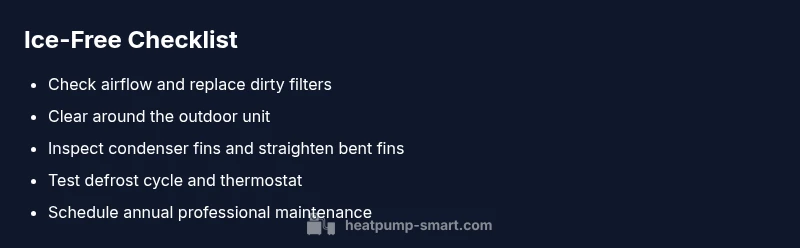
Implement a seasonal maintenance routine that focuses on airflow and coil cleanliness. Create a simple checklist: monthly filter inspection, annual outdoor coil cleaning with a soft brush, checking refrigerant lines for insulation cracks, and scheduling a pro inspection every 12 months. Keep the area around the unit clear of snow and vegetation; trim back shrubs to maintain two feet clearance. Monitor unusual noises or reduced heating capacity, which can indicate ice formation or a developing issue. A proactive maintenance mindset, recommended by Heatpump Smart, helps assure energy efficiency and reliable performance through winter and beyond.
When to Call a Professional and What to Expect
Ice buildup is not always a DIY fix. If simple airflow and defrost checks don’t resolve the issue, a licensed HVAC technician should assess refrigerant charge, electrical connections, defrost timer and sensor, and controls. Expect a diagnostic visit that includes a pressure test, refrigerant level check, electrical safety checks, and a review of frost-related performance. After service, you should notice improved defrost performance and a reduction in frost formation. The Heatpump Smart team recommends scheduling professional service if you observe persistent icing during cold weather or if the outside unit remains iced after a thaw.
Steps
Estimated time: 60-90 minutes
- 1
Power down the outdoor unit
Switch off power at the disconnect and confirm the unit is not energized before touching it. This prevents electrical shock and compressor damage. If you can, label the switch for future reference.
Tip: Use the disconnect switch and verify status with a non-contact tester. - 2
Check indoor thermostat and air filter
Set thermostat to heat and verify the filter is clean or replace if needed. A clogged filter reduces airflow and encourages icing on the outdoor coil.
Tip: Replace disposable filters every 1-3 months during heating season. - 3
Clear around the outdoor unit
Remove snow, leaves, and other debris from at least 2 feet around the unit. This ensures proper airflow and reduces heat transfer resistance.
Tip: Keep the area free of plants that could grow into the coil space. - 4
Inspect the outdoor coil and fins
Look for ice buildup on the coil and bent fins. Use a soft brush to remove light ice and a fin comb to straighten bent fins.
Tip: Do not use metal tools that could bend fins further. - 5
Test the defrost cycle
Restore power and observe whether the defrost cycle runs. If the unit stays iced or defrost does not occur, this may indicate a sensor or timer fault.
Tip: Listen for fan changes during defrost; no change may indicate a fault. - 6
Monitor for re-icing
After thaw, monitor for rapid re-icing over the next few hours. If re-icing occurs, do not continue troubleshooting alone.
Tip: Document symptoms and times for the technician. - 7
Schedule professional inspection if unresolved
If ice persists after basic checks, a licensed technician should inspect refrigerant charge, electrical connections, and defrost system.
Tip: Pro service can prevent compressor damage and efficiency loss.
Diagnosis: Outdoor heat pump unit freezes up repeatedly during cold weather
Possible Causes
- highRestricted airflow due to dirty air filter or obstructed intake
- highIce buildup from blocked condenser fins or nearby debris
- mediumDefrost cycle malfunction or faulty thermostat sensor
- lowLow refrigerant charge from a leak
Fixes
- easyClean or replace the air filter and clear obstructions around the outdoor unit to restore airflow
- easyGently clean the condenser fins and remove debris; ensure proper clearance around the unit
- mediumReset defrost controls or diagnostic check by a pro if the defrost cycle is not operating
- hardCall a licensed HVAC technician to test refrigerant pressure and seal any leaks
Your Questions Answered
Why does my heat pump outdoor unit freeze up in winter?
Ice forms when moisture condenses on a cold coil and airflow is restricted. Clear obstructions, clean the filter, and check the defrost cycle. If icing continues, seek professional help.
Ice forms when moisture condenses on a cold coil and airflow is blocked. Start with airflow and filter checks, then defrost tests; if it persists, contact a technician.
Can low refrigerant cause the outdoor unit to freeze?
Yes, a refrigerant leak can cause the coil to overcool and ice to form. This requires a licensed technician to test, repair leaks, and recharge the system.
A refrigerant leak can cause the coil to overcool and ice to form; it needs a licensed tech to fix and recharge.
Should I thaw the ice manually?
Only thaw naturally after powering down and ensuring it is safe. Do not chisel or strike ice, which can damage the coil or lines.
Thaw naturally after turning off power; avoid chiseling ice to prevent damage.
How often should I service my heat pump?
Annual professional service is recommended, plus regular filter checks and basic inspections during the heating season.
Have a pro service once a year and check filters monthly during heating season.
Is it safe to run the defrost cycle to clear ice?
Defrost cycles are designed to operate automatically. If you notice abnormal ice or no defrost, call a technician.
Defrost usually runs automatically; if it doesn’t or ice remains, get a pro.
Will blocking airflow void the warranty?
Prolonged airflow restrictions can reduce efficiency and potentially affect warranty terms. Follow the manufacturer's guidance and maintain clear space.
Blocking airflow can impact efficiency and warranties; keep space clear and follow the manual.
Watch Video
Top Takeaways
- Check airflow first and fix obstructions
- Keep the outdoor coil clean and fins straight
- Address defrost problems promptly with expert help
- Maintain clearance around the unit year-round
- Call a pro for refrigerant or electrical issues