Heat Pump Smells After Cleaning: Troubleshooting Guide
Diagnose and fix unpleasant odors from your heat pump after cleaning with a practical, step-by-step troubleshooting guide. Learn quick checks, common causes, safety tips, and when to call a pro.


Most odors after cleaning come from moisture, cleaning residues, or mildew near the air path. Start by powering off the unit, emptying any standing water, and wiping accessible surfaces. Let the system dry completely, then run a short purge cycle before resuming normal operation. If the smell persists, proceed with a deeper diagnostic flow.
Understanding Why Smells Happen After Cleaning
When a heat pump smells after cleaning, the issue is rarely caused by the cleaning itself alone. In reality, the most common culprits are moisture and residual chemicals lingering in the air path, plus mold or mildew developing in damp corners of the blower housing or condensate tray. According to Heatpump Smart, post-cleaning odors are typically a sign of moisture retention or inadequate drying. A solid maintenance routine should include thorough drying after any service, ensuring good ventilation, and confirming there is no standing water near the indoor cabinet or outdoor unit. Understanding these patterns helps you pick the right next steps without overreacting. Heatpump Smart analysis also notes that odors tend to recur if the system isn’t dried properly or if moisture finds its way into filters and coils.
Common Odors and Their Causes
Odors from a heat pump after cleaning vary. A musty, moldy smell usually points to moisture in the evaporator housing, condensate tray, or duct connections. A sharp chemical scent can come from residual cleaners that weren’t rinsed or dried, or from incompatible products used during cleaning. A faint burnt or hot-plastic odor may indicate overheating components or a clogged air path, while a sulfur-like odor can signal dirty, damp drain pans. Each odor type suggests a different line of investigation, but moisture and filtration issues underpin many cases. Regular inspection of the blower housing, drain pan, and filter area can help you catch problems early and prevent odor compounds from building up in your system.
Safety First: What You Can Check Without Risk
Always prioritize safety when inspecting a heat pump. Start by turning off power at the breaker before touching any electrical components. Inspect accessible surfaces for visible moisture or pooling water around the indoor cabinet and outdoor unit. Check the condensate drain line for clogs and ensure the drain pan is dry. Remove and inspect or replace air filters—dirty filters can harbor smells and reduce airflow. Wipe down accessible coil surfaces with a mild cleaner and dry thoroughly. Open areas should be well-ventilated during checks, and avoid mixing cleaning chemicals near the unit. If you notice any signs of wiring damage, burnt insulation, or refrigerant odor, stop immediately and contact a licensed HVAC professional.
Diagnostic Steps You Should Take
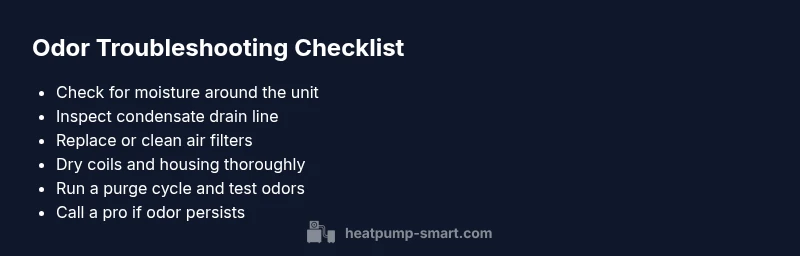
Follow a logical sequence to identify the odor source. First, ensure the unit is powered off and then verify there is no standing moisture near both the indoor and outdoor units. Next, inspect the condensate drain for clogs, clean the pan if needed, and confirm the drain line runs freely. Check and replace the air filters, and inspect the blower housing for visible mold or dampness. Run the system in a dry mode or purge cycle with minimal airflow to observe whether the odor diminishes. Finally, evaluate whether the smell is localized to the indoor air stream or the outdoor unit, which helps you differentiate between mold growth and chemical residues. If the odor persists after these steps, proceed to targeted fixes or professional service.
Step-by-Step Fixes for the Most Likely Causes
- Dry and ventilate: Power down the unit, remove moisture-prone panels, and run a dry cycle with doors/windows open if safe. 2) Clean or replace filters: Remove and replace disposable filters; wipe the housing and ensure straps and seals are dry. 3) Clean condensate line and tray: Flush the line with water, clear any debris, and dry the pan completely. 4) Rinse and dry coils: Lightly mist coils with a mild cleaning solution, rinse with water, and dry thoroughly. 5) Reassemble and test: Reinstall panels, power on, and run a quick purge cycle to verify smells are reduced. 6) If odor remains, call a pro: Persistent odors can indicate a refrigerant leak or electrical issue that requires licensed service.
Prevention and Maintenance to Avoid Future Odors
Schedule annual professional maintenance and routine checks of filters, drain lines, and coils. Maintain clear drainage surroundings and ensure adequate airflow around the outdoor unit. Use only compatible cleaners and avoid mixing products. Keep the space around the unit dry and well-ventilated, especially after servicing. Regularly inspect the condensate drain for clogs and address any moisture issues promptly. A proactive maintenance plan reduces the chance of post-cleaning smells and prolongs heat pump efficiency. Heatpump Smart recommends a simple yearly check-and-clean routine to maintain optimal air quality and system performance.
When to Call a Professional
If you detect burning, unusual electrical odors, or a strong refrigerant-like scent, shut down the unit and contact a licensed HVAC technician immediately. Odors that persist after basic cleaning, or those repeated after routine maintenance, warrant professional evaluation to rule out unsafe issues or refrigerant leaks. A pro can perform refrigerant testing, electrical inspections, and advanced coil cleaning that goes beyond household cleaning products. Even if odors fade temporarily, schedule a professional assessment to prevent recurring problems and ensure safe operation.
Steps
Estimated time: 45-60 minutes
- 1
Power down and secure access
Shut off the heat pump at the breaker, unplug if possible, and confirm there is no live power before touching any components. This protects you from shocks and prevents accidental starts. Inspect for visible moisture and remove any loose debris around the panels.
Tip: Wear protective gloves and safety glasses when handling exposed wiring or damp surfaces. - 2
Inspect and dry accessible areas
Check the indoor cabinet, blower housing, and any accessible ductwork for damp spots or standing water. Wipe surfaces with a clean, mild solution and dry completely. Good airflow during this step accelerates drying and reduces mold risk.
Tip: Use a fan or open doors to increase air exchange while drying. - 3
Check and replace filters
Remove the air filters and assess their condition. If clogged or discolored, replace them with an appropriately rated filter. Clean or wipe the surrounding housing to remove trapped odors.
Tip: Always use manufacturer-recommended filter specs for your model. - 4
Flush the condensate drain
Inspect the condensate drain line for blockages and flush with water if accessible. Clean the drain pan and ensure it drains freely to prevent future mold growth.
Tip: Pouring a small amount of vinegar or hydrogen peroxide is not recommended unless specified by the manufacturer. - 5
Dry coils and restart
Gently dry the coils with a cloth and allow a full dry cycle before reassembling. Power the system back on and run a short purge or low-speed cycle to observe odor changes.
Tip: Do not run high-speed cycles during the initial test if you notice any abnormal odors. - 6
Evaluate odor persistence
If the odor remains after these steps, document when it occurs (cooling vs. heating, indoor vs. outdoor unit) and prepare to contact a professional. Persistent odors may indicate deeper issues such as refrigerant leaks or electrical faults.
Tip: Take note of any rattling, buzzing, or overheating sounds as additional clues.
Diagnosis: Unpleasant odor from heat pump after cleaning
Possible Causes
- highMoisture-dried mold or mildew in evaporator/blower housing
- mediumResidual cleaning chemicals or improper rinsing
- mediumClogged condensate drain causing damp environment
- lowDirty air filters or ducts trapping odors
- lowElectrical components overheating or refrigerant leak (dangerous)
Fixes
- easyPower down the unit and fix moisture by drying surfaces and improving ventilation; then run a purge cycle
- easyClean or replace air filters; wipe visible coil surfaces with mild cleaner and dry thoroughly
- easyClean the condensate drain line and pan to prevent mold growth
- hardIf odor persists or you suspect refrigerant/electrical issue, contact a licensed HVAC tech immediately
Your Questions Answered
Why does my heat pump smell after cleaning?
Most post-cleaning odors come from moisture and residual cleaning chemicals trapped in the air path, sometimes with mold growth in damp components. Proper drying and ventilation usually fix this, but persistent smells may require deeper inspection.
Post-cleaning odors usually come from moisture or cleaners left behind, sometimes with mold. Drying and ventilation often fix it, but persistent smells may need a professional check.
Can a bad smell indicate a refrigerant leak?
Yes, a strong chemical or sweet odor can indicate a refrigerant leak and requires immediate professional assessment. Do not operate the unit if you suspect a leak.
A strong chemical odor can signal a refrigerant leak and needs a licensed tech to check safety and refrigerant levels.
Is it safe to run the system if it smells?
If odors persist, turn off the unit and ventilate the space. Do not run the system if you suspect electrical issues or a refrigerant leak.
If the odor stays, switch off the system and ventilate. Don’t run it if you suspect electrical or refrigerant problems.
What should I check first for a burning smell?
Shut down the unit, check for overheating or burnt wiring, and call a pro if the smell persists. Do not continue operating with a burning odor.
If you smell burning, power off and call a professional—don’t keep using it.
How often should I schedule maintenance to prevent odors?
Schedule annual professional service and regular filter changes. Regular checkups reduce the chance of mold and chemical odor buildup.
Have a yearly professional check and change filters regularly to prevent odors.
Do cleaning products cause odors in heat pumps?
Certain cleaners can leave residues that trap odors. Rinse thoroughly, dry completely, and avoid mixing incompatible chemicals near the system.
Cleaning products can leave smells if not rinsed and dried properly; use compatible products only.
Watch Video
Top Takeaways
- Identify odor source quickly and safely.
- Dry thoroughly to prevent mold growth.
- Use compatible cleaners and replace filters regularly.
- Call a pro for refrigerant or electrical odors.
- Regular maintenance reduces odors over time.