Why Does a Heat Pump Smell Musty? A Troubleshooting Guide
Discover why a heat pump smells musty and learn practical steps to diagnose, fix, and prevent odors. Quick checks, a diagnostic flow, step-by-step fixes, and expert tips from Heatpump Smart.


A musty heat pump odor usually stems from moisture and mold in the evaporator coil, condensate drain, or ductwork. Quick fixes: replace the air filter, clean the condensate drain and pan, and run the system on fan to dry. Heatpump Smart Team notes that addressing moisture sources early prevents recurring smells.
Understanding the musty heat pump odor
A musty smell from your heat pump is more than a nuisance; it signals excess moisture and potential mold growth. When the phrase 'why does heat pump smell musty' pops up, homeowners should act quickly to protect indoor air quality and system longevity. In many homes, odors start after humid months or periods of inactivity. According to Heatpump Smart, mold and mildew thrive where warmth meets moisture inside coil housings and condensate pans, especially with limited airflow. Regular moisture management and timely cleaning reduce the chance of recurring odors. This guide explains where odors originate, how they travel through the system, and what you can do today to minimize them. Heatpump Smart analysis shows that consistent moisture management reduces odor risk and extends equipment life. The path to a fresher heat pump is practical, not cosmetic.
Common causes of musty odors in heat pumps
Odors typically originate from several moisture-related sources. Here are the top culprits and how likely they are to cause a musty smell:
- Mold or mildew on the evaporator coil or inside the air handler: common when coils are dirty or the unit runs at low airflow.
- Clogged or blocked condensate drain: standing water or algae in the pan can emit a damp, musty scent.
- Dirty or blocked air filter: restricted airflow creates humidity buildup and mold-friendly conditions.
- Moisture in ducts or leaky duct joints: concealed dampness can carry odor throughout the home.
- Outdoor moisture intrusion around the unit: debris or ponding water around the outdoor unit can contribute to odors.
Quick checks you can perform today
Chances are you can identify and address several odor sources without tools. Start with the simplest steps:
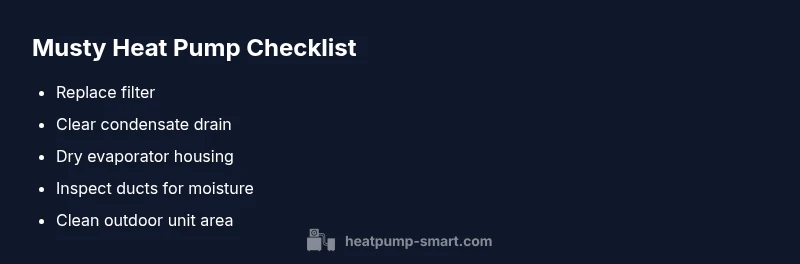
- Replace the air filter and note if the smell lessens after a few cycles.
- Inspect the condensate drain line for clogs; clear any buildup and ensure the line runs freely.
- Check the condensate pan under the indoor coil for standing water or black mold; clean and dry if needed.
- Look for moisture on the evaporator housing and clean any visible mold with a non-corrosive cleaner.
- Inspect accessible duct sections for visible mold or leaks and seal gaps as needed.
Tip: If odor persists, consider scheduling a professional inspection to verify coil cleanliness and duct integrity.
Diagnostic flow at a glance
If you notice a musty odor, follow this simple sequence to narrow the cause and determine whether you can safely fix it yourself or need a pro:
- Is there visible mold on the coil or drip pan? If yes, address moisture and clean assess to prevent recurrence.
- Is the condensate drain clear? If blocked, clear and test drainage.
- Does replacing the air filter improve airflow and odor? If not, other sources may be present.
- Do you detect dampness in ducts or around outdoor unit? Seal leaks or hire a duct cleaner.
Pro tip: Document each step with photos so a technician can quickly target the root cause if you need professional help.
Step-by-step fixes for the most common causes
- Replace air filters: Power down the unit, remove the old filter, install a new one of the correct size and type, and run the system on fan for 15-20 minutes to freshen. TIP: Use a high-quality MERV-rated filter if compatible with your system.
- Clean condensate drain and pan: Disconnect power, locate the drain line, flush with a mild cleaner, and remove standing water from the pan; ensure proper slope and drain trap. TIP: Add a small amount of white vinegar to deter algae growth.
- Sanitize the evaporator area: Lightly spray a coil-safe cleaner on accessible coils and wipe away residue after drying; never spray liquids directly into the fan motor. TIP: Do this only if you can reach the coil safely.
- Inspect and seal ducts: Check for visible moisture or mold, seal leaks with appropriate duct tape or mastic sealant, and consider professional cleaning for hidden mold. TIP: Avoid over-tightening and damaging duct joints.
- Outdoor unit maintenance: Clear debris, direct airflow, and level the pad; ensure no standing water pools near the unit. TIP: Keep the unit shaded but avoid blocking airflow.
Prevention and maintenance to keep odors away
To reduce future musty odors, implement a simple maintenance routine and address moisture sources before they cause problems. Schedule seasonal checks, especially after humid months. Keep filters clean, drain lines open, and the outdoor unit free of debris. If you notice recurring smells despite these steps, Heatpump Smart recommends a professional inspection to assess coil condition, duct integrity, and humidity control in your home. Consistent moisture management not only prevents musty odors but also improves overall energy efficiency and comfort.
Steps
Estimated time: 30-60 minutes
- 1
Power down and ensure safety
Switch off the heat pump at the thermostat and at the breaker to prevent any electrical hazards while you inspect components. Remove nearby clutter and prepare cleaning supplies. This step keeps you safe as you investigate odor sources.
Tip: Lockout-tagout the circuit if possible to prevent accidental re-energizing. - 2
Replace or clean the air filter
Remove the old filter and inspect its condition. Install a fresh filter of the correct size and rating. Run the system on fan mode for 10-15 minutes to clear residual odors from the air path.
Tip: Choose a filter with an appropriate MERV rating for your system to improve filtration without restricting airflow. - 3
Clear condensate drain and pan
Locate the condensate drain line and pan. Flush the line with a mild cleaner or vinegar solution and ensure the pan is dry and clean. Reconnect and test drainage by pouring water if you have access to safely verify flow.
Tip: Add a drain trap primer if your setup lacks one to reduce future clogs. - 4
Dry and sanitize accessible areas
If reachable, lightly sanitize the evaporator housing or coil area with a coil-safe cleaner following the product directions. Let surfaces dry completely before re-energizing the system.
Tip: Never spray cleaners directly into the blower wheel or motor housing. - 5
Test operation and monitor
Turn the unit back on and run a full cycle with the fan on. Check for odor changes over 30-60 minutes. If the smell lingers, document findings and plan a professional inspection.
Tip: Keep notes and photos to speed up any future service calls.
Diagnosis: Heat pump emits musty odor during operation
Possible Causes
- highMold or mildew on evaporator coil or filter
- highClogged condensate drain or blocked pan
- mediumMoisture buildup in ducts or humidity control issues
- lowStagnant water around outdoor unit or debris
Fixes
- easyClean or replace air filter; wipe or clean accessible coil if safe
- easyClear condensate drain line and inspect pan; ensure proper drainage
- mediumInspect ducts for moisture; seal leaks and consider duct cleaning if needed
- hardConsult a professional for mold remediation or coil replacement if needed
Your Questions Answered
Why does a heat pump smell musty?
A musty odor usually indicates moisture and mold growth in the system—often on the coil, condensate drain, or ducts. Cleaning filters, clearing drains, and improving airflow can resolve many cases. If the smell continues, a professional inspection may be needed.
A musty odor usually means moisture and mold in the system. Start by cleaning the filter and condensate drain; if it persists, call a professional.
Can outdoor unit odors affect indoor air?
Yes. Moisture and debris around the outdoor unit can contribute to odors that migrate through ducts. Keep the area clear and ensure proper drainage and airflow.
Odors from the outdoor unit can travel through the ducts, so keep the area clean and ensure good drainage.
Is it safe to clean the evaporator coil myself?
Coil cleaning can be done if you can safely access the coil without disassembling critical components. Use a coil-safe cleaner and follow the manufacturer instructions. If unsure, hire a pro.
You can clean accessible coils safely if you follow the cleaner’s instructions; otherwise, hire a pro.
How often should I maintain my heat pump to prevent odors?
Regular maintenance, including filter changes and drain checks, should be scheduled seasonally or at least twice a year to prevent odors and maintain efficiency.
Schedule maintenance seasonally, at least twice a year, to prevent odors and keep the system efficient.
If the odor comes back after cleaning, what should I do?
If odors return after cleaning, it’s likely a hidden moisture source or duct mold. Schedule a professional inspection to assess coil condition, ductwork, and humidity control.
If it comes back, call a professional to inspect ducts and coils for hidden mold or moisture.
Watch Video
Top Takeaways
- Identify moisture sources early
- Replace filter and clear drains first
- Dry components after cleaning
- Call a pro if odors persist