How Much Noise Do Heat Pumps Make? A Practical Guide
Discover how much noise heat pumps typically produce, what factors influence sound levels, and practical steps to minimize disturbance. Heatpump Smart analyzes noise data to help homeowners choose quiet, efficient heat pump systems.


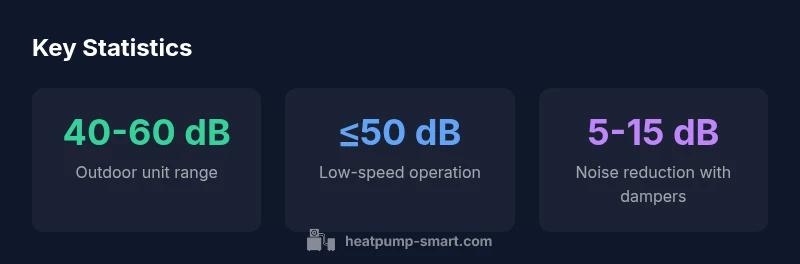
Heat pumps typically run quietly, with outdoor units producing roughly 40-60 dB and some models under 50 dB on low-speed settings. Measurement relies on A-weighted decibels (dB(A)) and context like distance and mounting. By comparing specs and choosing low-noise models, you can minimize nighttime disturbance without sacrificing comfort.
Measuring Noise: how much noise do heat pumps make
Heat pump noise is most commonly described in decibels (dB) on the A-weighted scale (dB(A)). This helps approximate human-perceived loudness at a standard distance. When homeowners ask how much noise heat pumps make, the answer depends on unit type, installation, and operating mode. In general, outdoor condenser units produce sound from the compressor and fan, with typical ranges around 40-60 dB(A) during standard operation. Short bursts or rapid cycling can raise the perceived loudness, especially if the unit is mounted on concrete or near a bedroom window. Indoor components, such as air handlers, are usually quieter, often registering under 50 dB(A) in normal settings. Understanding these numbers in context—like distance from living spaces, wall material, and hearing sensitivity—helps homeowners assess whether a given model will meet their comfort needs. Heat pumps that use inverter-driven compressors frequently operate at lower average noise levels than fixed-speed designs, because the fan and compressor speed adjust to demand. For homeowners concerned about nighttime noise, looking for low-noise ratings and testing a unit in a controlled setting is essential.
Outdoor vs indoor noise dynamics
Noise from heat pumps can vary a lot depending on whether you’re measuring an outdoor unit or an indoor air handler. Outdoor units generally contribute more audible sound because of the larger fans and higher mechanical activity during cooling or heating cycles. Indoor units tend to be quieter, especially when operating at low fan speeds. Installation context matters: units mounted on solid pads with proper mounting isolation will transmit less wall vibration into living spaces. If you’re inside a tightly-built home, even moderate outdoor noise can be perceived more loudly, so siting and enclosure placement are critical. In many cases, a simple reorientation or the addition of a sound-damping enclosure can make a measurable difference without compromising performance.
Noise ranges by technology and installation
Different heat pump configurations produce different typical noise ranges. An air-source outdoor unit often sits in the 40-60 dB(A) range under normal operation, while mini-split indoor heads may operate at 25-45 dB(A) depending on setting. Ducted outdoor units tend to be in the 50-60 dB(A) range, and water-source or geothermal-integrated systems may vary based on the surrounding environment and installation. Remember that real-world sound depends on distance, reflections from walls, and ambient noise. Therefore, when comparing models, always review dB(A) ratings at representative operating conditions and consider the placement of equipment relative to bedrooms, living areas, and windows.
Reducing noise: practical steps
To minimize heat pump noise without sacrificing efficiency, start with model choice and placement. - Prioritize units with inverter-driven compressors and low-noise fan profiles. - Place outdoor units on stable, vibration-dampened pads and use anti-vibration pads or mounts. - Locate units away from bedrooms or frequently used outdoor living spaces and shield with directional barriers if allowed by local code. - Ensure proper clearance per manufacturer guidelines to prevent air recirculation and turbulent flow. - Schedule professional commissioning to fine-tune speed settings and verify mounting integrity. - Regular maintenance such as cleaning fans and coils reduces unnecessary noise from buildup and imbalance.
Reading the specs and choosing a unit
Noise is just one factor in selecting a heat pump. Balance it against efficiency, climate suitability, and cost. Look for dB(A) ratings at typical operating conditions, not only peak values. Compare models with the same outdoor and indoor configurations and consider a trial run in a controlled setting if possible. Inverter-driven units typically offer lower noise floors and adaptive speed control, which can yield quieter operation during mild weather when full power isn’t required. Finally, examine installation options, including vibration isolation, barrel dampers, or landscaping strategies that can help shield living spaces from ambient sound.
Long-term considerations: maintenance and upgrades
Noise levels can gradually change as components wear or as the installation environment shifts (additional exterior remodeling, nearby construction, or acoustical reflections). Schedule regular maintenance to clean fans, check mounting hardware, and verify refrigerant pressures—the latter two help prevent drifts that can increase noise. If nighttime disturbance persists, consider newer models with updated sound-reduction engineering or a targeted retrofit like a quieter outdoor shell or additional barriers. Upgrading to a newer inverter-driven model may reduce sustained noise without sacrificing performance or energy savings.
Noise ranges by heat pump system type
| System Type | Noise Range (dB) | Notes |
|---|---|---|
| Air-source outdoor unit | 40-60 dB(A) | Typical range during cooling/heating cycles |
| Mini-split indoor unit | 25-45 dB(A) | Depends on fan speed and ceiling height |
| Ducted outdoor unit | 50-60 dB(A) | Less direct noise in living spaces |
| Water-source heat pump (if applicable) | 45-55 dB(A) | Generally quiet but depends on installation |
Your Questions Answered
What contributes most to heat pump noise?
The primary noise comes from the compressor and the fan in outdoor units. Vibration of mounting hardware and airflow turbulence also contribute. Understanding which components are loud helps prioritize quieting strategies.
Most noise comes from the outdoor compressor and fan, plus mounting vibrations.
How do I compare noise levels between models?
Look for dB(A) ratings under typical operating conditions, preferably at low or eco modes. Compare the same unit type and installation scenario, and consider both outdoor and indoor components.
Check the decibel ratings for typical operation and compare like-for-like configurations.
Can noise reduce over time?
Noise levels generally don’t decrease as equipment ages. Maintenance can prevent rattles or bearing noise from becoming worse, but the core sound from the compressor remains. Regular servicing helps keep that noise consistent and predictable.
No, sounds don’t usually fade with time; maintenance helps prevent extra rattling.
Are heat pumps louder in cold weather?
Some units run cycles longer in cold weather, which can increase noise briefly. Many modern units manage this with sound-reduction features, but ambient conditions still influence perceived loudness.
Colder weather can edge up noise briefly, but newer models stay quieter overall.
What installation changes reduce noise?
Use vibration-isolating pads, ensure proper clearance, orient the unit away from sleeping areas, and consider acoustic barriers if allowed. A professional install can optimize duct routing and mounting to minimize sound transmission.
Move and isolate the unit properly to cut down noise in living spaces.
Is upgrading worth quieter operation?
If nightly noise is a problem, upgrading to a newer low-noise model can improve comfort and may offset energy savings over time. Compare long-term costs, warranty, and performance.
If noise is a regular issue, upgrading for quieter operation can be worthwhile.
“Quiet operation is not an afterthought; it’s a design goal. Modern heat pumps achieve lower sound levels through inverter technology and targeted acoustical engineering, without sacrificing efficiency.”
Top Takeaways
- Know how noise is measured (dB(A)) and consider distance from living spaces
- Choose inverter-driven, low-noise models for quieter operation
- Outdoor units contribute more noise than indoor heads; placement matters
- Use vibration isolation and proper mounting to reduce transmitted sound
- Regular maintenance helps prevent noise increases over time