How to Put a Heat Pump into Defrost Mode: A Practical Guide
Learn how to safely place your heat pump into defrost mode. Identify frost signs, understand automatic vs manual defrost, and follow a clear, step-by-step process to keep your system efficient in cold weather.


Defrost mode is a built-in cycle that clears frost from outdoor coils to restore heat transfer and indoor comfort during cold weather. This guide covers how to identify frost, when defrost happens automatically, and how to manually start it if needed, including typical duration and safety checks to perform before and after.
What defrost mode does and when you need it
Defrost mode is a built-in cycle that clears frost from outdoor coils to restore heat transfer and indoor comfort during cold weather. Frost buildup reduces efficiency by insulating the coil and impeding heat exchange, so a timely defrost cycle is essential. According to Heatpump Smart, defrost mode is designed to run automatically based on outdoor temperature, coil sensors, and system load, ensuring the unit returns to heating with minimal downtime.
Frost is most likely to form when outdoor temperatures hover around freezing and humidity is high. Signs include a white icy layer on the outdoor coil, visible ice at the fan or lines, and a noticeable drop in heating performance or longer run times. In many installations, you may also hear a brief shutdown of the outdoor fan during defrost, followed by a brief burst of warmer air from the indoor system.
Heatpump Smart analysis shows frost-related efficiency losses are common if defrost is delayed, especially in regions with wet, subfreezing mornings. This makes understanding defrost behavior important for homeowners, builders, and property managers who rely on reliable warmth and energy savings. If you frequently see frost, or if your system never seems to complete a defrost cycle, consult your manual or a qualified technician to verify proper controls for your model.
How defrost is triggered and why it matters
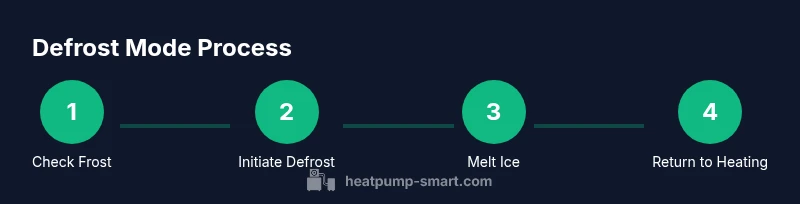
Modern air-source heat pumps use an electronic defrost control that looks at multiple signals: outdoor temperature, coil temperature, time since last defrost, and sometimes humidity. When the outdoor coil approaches freezing and frost begins to accumulate, the controller initiates defrost by reversing the refrigerant flow and turning off the indoor fan briefly to melt ice. The defrost cycle typically lasts a few minutes and ends when the ice is cleared and the coil temperature rises.
Heatpump Smart analysis shows that the defrost sequence is not just a simple ice melt; it is carefully timed to prevent energy waste. Short defrost cycles minimize energy loss while maintaining indoor comfort. If your system spends too long defrosting, it can indicate sensor misreads, a faulty reversing valve, or a control board issue. In most homes, you will not notice defrost as it happens quickly, but you might hear the outdoor unit click or a brief gust of warm air from the indoor unit during the cycle.
Manual vs automatic defrost: pros and cons
Most modern heat pumps rely on automatic defrost that starts when sensors detect frost. Automatic defrost is convenient because it happens without user intervention and is calibrated to your climate. However, some models or thermostats offer manual defrost controls for edge cases, such as when temperatures are borderline or when frost forms unusually fast due to wind or moisture. The manual option can be helpful if frost persists after the automatic cycle.
Pros of automatic defrost:
- Less user effort
- Optimized cycle length for efficiency
Cons of manual defrost:
- Requires model support
- Risk of incorrect timing if misused (excess energy use or unnecessary wear)
If your unit has a manual defrost control, consult the owner's manual for exact steps and safety precautions. If not, rely on automatic defrost and schedule a service check if frost remains.
Safety checks before initiating defrost and what to expect
Before you begin any defrost-related actions, ensure the outdoor area is clear of snow, ice, and debris that could block airflow. Verify that the system is not in emergency heat mode and that indoor temperature targets are achievable for the current conditions. If your manual provides a specific defrost procedure, follow those steps precisely.
During defrost, you may notice the outdoor fan slowing or stopping and a brief warm-up of indoor air as heat transfer shifts. Defrost cycles are typically brief, designed to melt ice quickly and return the system to heating. If you observe extended cycling beyond the usual duration (more than 10 minutes in many climates), it could indicate a sensor or control issue that warrants a technician.
Authority sources
For further reading and official guidance on heat-pump defrost behavior, consult credible sources such as:
- https://www.energy.gov
- https://www.nrel.gov
- https://www.eia.gov
Troubleshooting and maintenance to keep defrost effective
If frost persists or defrost seems unusually long, start with basic checks: confirm outdoor temperature thresholds are within expected range for your climate, verify sensor and thermostat readings are accurate, and ensure the reversing valve and outdoor fan function correctly. Regular maintenance, including coil cleaning and ensuring adequate airflow, reduces the frequency and duration of defrost cycles. The Heatpump Smart team recommends scheduling annual service and using the defrost mode as intended to maximize efficiency and comfort.
Tools & Materials
- Heat pump owner's manual(Keep on-site for model-specific defrost controls and safety notes)
- Outdoor thermometer(To gauge if outdoor conditions trigger defrost cycles)
- Clean cloth or soft brush(For light frost removal from coils if needed without damage)
- Screwdriver set (Phillips/flathead)(Only if you need to access service panels (careful; ensure power is off))
- Gloves and safety glasses(Personal protection when inspecting outdoor unit)
Steps
Estimated time: Estimated total time: 15-25 minutes
- 1
Check frost presence
Visually inspect the outdoor coil for ice or frost buildup. If frost covers a noticeable portion of the coil or blocks airflow, defrost may be needed. Confirm conditions align with model guidance before proceeding.
Tip: Use a flashlight to spot frost in shaded areas and avoid poking at ice with sharp tools. - 2
Locate defrost controls
Find the defrost control on your thermostat, outdoor unit panel, or control app. If your model supports manual defrost, the option will be labeled clearly.
Tip: If you can't find a defrost option, your unit may rely solely on automatic defrost. - 3
Initiate defrost (if supported)
If your system supports manual defrost, activate it via the panel, app, or thermostat following the manual’s steps. Confirm the cycle has started by listening for a change in compressor or fan operation.
Tip: Do not force defrost with tools; use only the official control. - 4
Monitor the defrost cycle
Observe the outdoor unit for ice melting and the indoor system for normal return to heating. A typical defrost cycle lasts a few minutes; avoid interrupting the cycle.
Tip: If the cycle stalls, power cycle the unit only if the manual permits; otherwise contact a tech. - 5
Return to normal heating
After defrost completes, the system should resume heating automatically. Check indoor temperature accuracy and comfort levels to ensure proper operation.
Tip: If indoor temperature doesn’t stabilize within 15 minutes, verify thermostat settings. - 6
Post-defrost checks
Inspect the outdoor coil for residual frost and wipe away any remaining moisture. Ensure there is clear airflow around the outdoor unit to prevent rapid re-icing.
Tip: Keep surrounding debris cleared year-round to minimize frost formation.
Your Questions Answered
What is defrost mode and why is it needed?
Defrost mode temporarily reverses refrigerant flow to melt frost on the outdoor coils, restoring heat transfer. It prevents efficiency losses caused by ice buildup and helps maintain indoor comfort in cold weather.
Defrost mode melts frost on the outdoor coils to keep your heat pump heating efficiently.
How can I tell if my heat pump is in defrost mode?
Look for ice melting on the outdoor coil, a brief change in outdoor fan operation, or a momentary shift in indoor air temperature. Some models show a defrost indicator on the control panel or app.
You’ll often hear the outdoor unit cycle and possibly a brief warm air burst indoors when defrost is active.
Can I manually start defrost mode?
Some models support manual defrost via the control panel or app. If your unit lacks a manual option, defrost will occur automatically as designed by its controls.
If your model supports it, you can start defrost manually; otherwise the system handles it automatically.
What should I do if frost doesn’t melt after defrost?
If ice remains after a defrost cycle, check for sensor or valve issues and verify the control settings. Persistent frost may indicate a fault requiring a technician.
If frost sticks around after defrost, it’s time to call a pro to check sensors and valves.
How long does a defrost cycle typically last?
Most defrost cycles last only a few minutes. If cycles routinely exceed 10 minutes, investigate sensor readings or service the unit.
Usually just a few minutes; long cycles mean you should have it checked.
Watch Video
Top Takeaways
- Recognize frost signs early and verify defrost needs.
- Distinguish automatic vs manual defrost capabilities for your model.
- Follow safe steps and consult the manual if unsure about controls.
- Regular maintenance reduces frost-related inefficiency.