How to Defrost a Heat Pump
Learn how to safely defrost your outdoor heat pump, prevent ice buildup, and maintain efficiency with expert guidance from Heatpump Smart.


Defrosting a heat pump safely starts with identifying ice on the outdoor unit and allowing the system to use its automatic defrost cycle. If icing persists, power down the outdoor unit and gently remove loose ice with a plastic tool. Keep clear around the unit and avoid heating liquids or metal implements.
What ice formation means for heat pumps and why it happens
Ice buildup on outdoor heat pump components is a common winter challenge. When outdoor temperatures drop, the defrost cycle of many air-source heat pumps activates to melt frost on the outdoor coil. This process helps maintain efficient heating, but improper defrosting or excessive ice can reduce airflow and system performance. In this section we’ll explore the physics of ice formation, how the defrost cycle works in typical systems, and why homeowners should care about keeping the outdoor unit clear. According to Heatpump Smart, understanding icing dynamics is critical for maintaining comfort and efficiency during cold snaps. By recognizing the signs early, you can address icing safely and minimize energy waste while protecting the equipment.
Signs ice is affecting performance and when to intervene
Look for visible ice on the outdoor coil, reduced airflow from the indoor vents, and longer cycling times than usual. If you notice frost buildup along the fins or a frozen condensate line, this is a cue to inspect the unit and consider defrost steps. Icing can indicate a number of issues—from blocked airflow due to debris to refrigerant charge problems. In many cases, a well-timed defrost cycle will clear ice without intervention, but persistent icing warrants a closer look by a technician. Heatpump Smart’s guidance emphasizes treating icing as a warning flag rather than a nuisance to ignore.
Safety and preparation: getting ready to work on the system
Safety is essential when dealing with outdoor electrical equipment. Before touching anything, turn off power to the outdoor unit at the disconnect switch or circuit breaker to prevent shocks and compressor damage. Wear eye protection and insulated gloves, and keep children and pets away from the area. Clear the surrounding area of snow, leaves, and other debris that could obstruct airflow. If you’re unsure about electrical safety, it’s better to wait for a professional; safety always comes first when handling heating and cooling equipment.
Automatic defrost vs manual defrost: what to know
Most modern heat pumps include an automatic defrost function that periodically melts frost on the outdoor coil. This is usually sufficient under typical winter conditions. Manual defrost should only be considered if you observe ice persisting beyond the normal defrost cycle or if the unit is blocked. Manual defrost requires careful steps to avoid damaging fins or electrical components. Heatpump Smart recommends prioritizing automatic defrost and using manual steps only when necessary and safe.
How to inspect the outdoor unit and environment
Start by evaluating clearance around the unit—ideally, at least 12 to 24 inches of unobstructed space on all sides. Remove any snow, ice, or plant matter from the top and sides of the unit to improve airflow. Check that the outdoor fan, fins, and coils are unobstructed, and look for bent fins or damaged shielding. Debris inside the coil can hinder heat exchange and promote icing. If you find damage or heavy ice accumulation, consider professional service to avoid worsening the problem.
Step-by-step overview (high-level) for a safe defrost
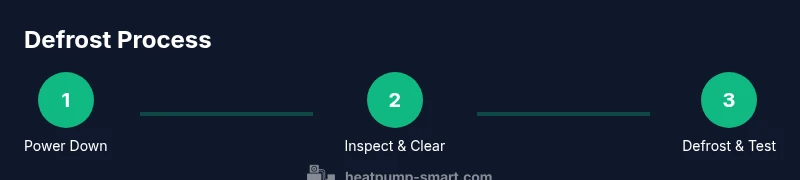
A safe defrost approach begins with power-down precautions, followed by ice removal with non-metallic tools, clearing debris around the unit, and allowing the system to run its defrost cycle or switch to a heating mode as recommended by the manufacturer. After defrost, recheck airflow and drainage, then monitor system performance for a short period to ensure warmth returns to the indoor spaces. This high-level plan aligns with Heatpump Smart’s emphasis on safety, prevention, and correct airflow.
After defrost: testing performance and airflow
Once defrost is complete, listen for the outdoor fan and feel for warm air at the indoor registers. Check that water drains properly from the condensate line and that there’s no lingering frost on the outdoor coil. If airflow remains weak or temperatures fail to rise, there may be a refrigerant or sensor issue. Document any recurring icing events and note weather conditions to help a technician diagnose root causes more accurately.
Prevention: reduce icing with maintenance and best practices
Preventing icing is easier than repeatedly defrosting. Regularly replace or clean air filters, ensure attic and duct work are well insulated, and schedule seasonal inspections. Keep the outdoor unit free of snow drifts, leaves, and nearby vegetation. Use a programmable thermostat to maintain consistent outdoor temperatures, which can reduce frost formation during cold spells. Proactive maintenance often yields the best long-term efficiency gains, as Heatpump Smart often notes in its homeowner guides.
Common mistakes that worsen icing
Avoid using hot water, metal tools, or propane torches to melt ice, as these can damage fins or electrical components. Don’t block the outdoor unit with debris or fencing that restricts airflow. Relying on heat inside the house to thaw ice on the outdoor coil is ineffective and wastes energy. Finally, neglecting routine maintenance can lead to more frequent icing and reduced system life.
Tools & Materials
- Safety glasses(Protect eyes from ice chips and debris)
- Insulated gloves(Thermal protection and grip)
- Plastic scraper or non-metallic brush(Gently lift ice without bending fins)
- Soft brush or microfiber cloth(Clean fins and remove loose debris)
- Flashlight/headlamp(Improve visibility in shaded outdoor area)
- Mild soap and water spray bottle (optional)(Light cleaning to remove grime)
Steps
Estimated time: 15-60 minutes
- 1
Power down outdoor unit and secure area
Turn off the outdoor unit at the disconnect switch or circuit breaker and wait for the fan to stop. This prevents electrical shocks and compressor damage during manual defrost.
Tip: If you must work near the unit, use lockout-tagout procedures where available. - 2
Inspect surroundings and ice buildup
Check the outdoor coil for ice buildup and ensure the area around the unit is clear of snow, leaves, and other debris that could impede airflow.
Tip: Do not start the unit again if the ice is thick or you see signs of damage. - 3
Remove loose ice with a plastic tool
Gently scrape away loose ice from the top and sides of the outdoor coil without applying force to the fins, which can bend them.
Tip: Work from the top down to avoid ice falling onto electrical components. - 4
Check drain path and clear debris
Inspect the condensate drain and pan for blockages and clear any obstructions to prevent water backup after defrost.
Tip: A small amount of water near the unit is normal during defrost. - 5
Restart and observe the defrost cycle
Restore power and let the system run its defrost cycle. Monitor airflow and indoor comfort as the outdoor unit clears ice.
Tip: If the unit does not enter a defrost cycle within a reasonable time, consult the manual or a pro. - 6
Evaluate performance after defrost
Ensure warm air is flowing from indoor vents and the outdoor coil is clear of ice. If ice reforms quickly, there may be an underlying issue.
Tip: Document weather conditions to help diagnose recurring icing with a technician. - 7
Decide if professional help is needed
If icing recurs despite proper defrost, or you observe unusual noises, refrigerant smells, or dimmed electrical components, contact a qualified technician.
Tip: Regular maintenance reduces the likelihood of recurring icing and extends equipment life.
Your Questions Answered
What should I do if ice keeps forming on the outdoor unit?
If ice formations persist, ensure automatic defrost is functioning, clear surrounding debris, and verify there are no obstructions to airflow. Refrain from aggressive ice removal, which can damage fins. If icing recurs, schedule a professional inspection to check refrigerant levels and sensor operation.
If ice keeps forming, check the defrost cycle and airflow, then call a professional if it reoccurs after safe cleaning.
Can I manually defrost the outdoor unit?
Manual defrost is sometimes necessary, but it must be done safely with power off and using non-metallic tools to avoid damaging fins or wiring. Follow manufacturer guidelines and Heatpump Smart tips to prevent harm.
Manual defrost is possible, but only with power off and non-metal tools, following the manufacturer’s guidance.
Is it safe to run the defrost cycle during very cold temperatures?
Defrost cycles are designed to operate in cold weather, but extremely low temperatures can affect efficiency. If icing is frequent, check air filters, airflow, and refrigerant conditions, and consider professional assessment.
Defrost cycles handle cold weather, but frequent icing may need a professional check.
Will using a de-icer spray damage the unit?
De-icer sprays or hot water can damage outdoor coils and fins. Do not apply such liquids directly to the unit; rely on the built-in defrost cycle or professional service for persistent ice.
No. Do not spray de-icers or hot water on the unit.
How often should I schedule maintenance to prevent icing?
Schedule seasonal checks that include outdoor coil cleaning, fin inspection, and airflow clearance. Regular maintenance reduces ice formation and keeps the heat pump running efficiently.
Have seasonal checks to prevent icing and keep efficiency high.
When should I call a professional for icing problems?
Call a certified technician if icing reoccurs after defrost attempts, if you notice unusual noises, or if the system fails to reach comfortable indoor temperatures after defrost. Early professional help can prevent component damage.
Call a professional if icing repeats or you notice other signs of trouble.
Watch Video
Top Takeaways
- Identify ice buildup before acting
- Prefer automatic defrost; use manual steps only when safe
- Protect yourself and the unit with proper safety gear
- Maintain clearance and routine maintenance to prevent icing
- Call a pro if icing persists