What to Do When a Heat Pump Ices Up
Urgent troubleshooting for heat pump icing: identify causes quickly, apply safe fixes, and prevent re-icing with a clear plan for homeowners, builders, and property managers.


Most icing on a heat pump is caused by restricted airflow or a dirty outdoor coil. First, turn off the outdoor unit, clear snow and debris, and ensure at least 3 ft of clearance around the condenser. Then replace or clean the indoor air filter and verify the thermostat is set to Heat with Auto fan. If ice persists, call a professional.
Why heat pumps ice up in cold weather
Heat pumps are designed to extract heat from the outside air, but when temperatures drop and humidity is high, moisture can freeze on the outdoor coil or fans. Ice buildup reduces airflow, traps heat, and can prevent the defrost cycle from clearing the ice. If you notice visible ice on the condenser, you should act quickly to protect the compressor and maintain indoor comfort. According to Heatpump Smart analysis, icing is a common issue in cold climates and often stems from airflow problems, dirt, and improper defrost timing. The fix is usually simple and safe when caught early, but prolonged icing can indicate a mechanical fault or refrigerant issue that requires professional attention.
Immediate safety steps you should take now
Safety comes first. If you see ice on the outdoor unit, turn off the heat pump at the thermostat and switch the outdoor unit off at the breaker if accessible. Do not strike ice with sharp tools or attempt to chip it aggressively. Clear all surrounding snow, ice, and debris, leaving at least 3 feet of clearance on all sides. This improves airflow and reduces frost growth. If you have an emergency heat setting, you can switch to it to maintain some warmth, but avoid running multiple systems concurrently if you’re unsure. After the area is cleared, monitor the system for ice melt during the next defrost cycle and avoid manual re-activation while ice is present.
Common causes of icing in home heat pumps
Ice formation on the outdoor unit can result from several interacting factors. A blocked or dirty air filter reduces indoor airflow and can force the outdoor coil to frost. Debris, snow, or ice around the condenser restricts airflow and heat transfer. Cold outdoor temperatures combined with high humidity can overwhelm the unit’s ability to melt ice during defrost cycles. A misconfigured thermostat or a malfunctioning defrost control can also prevent proper defrosting. Finally, a refrigerant leak or low refrigerant charge may cause abnormal icing as the system struggles to balance pressures.
How to diagnose icing safely (non-invasive checks)
First, inspect obvious blockages around the outdoor unit: remove snow or leaves, trim vegetation, and ensure 3 ft of clearance. Check the indoor air filter and replace if dirty or clogged. Confirm the thermostat is set to Heat with Auto fan, not on a forced or emergency heat setting. Listen for the outdoor fan; if it isn’t running during defrost, ice may persist. Do not attempt refrigerant checks yourself; refrigerant work requires a licensed technician. If the ice continues after these checks, there’s likely a more significant issue.
Step-by-step fix for the most common cause: dirty filters and restricted airflow
- Power down the system safely and locate the air filter. 2) Remove and inspect; if dirty, replace with an equivalent filter. 3) Clean the surrounding area and ensure nothing blocks the return air path. 4) Verify the outdoor unit has at least 3 ft of clearance and is free of debris. 5) Re-energize the system and set to Heat with Auto fan. 6) Observe the defrost cycle and look for ice melt. 7) If icing recurs, schedule a professional inspection to check ductwork and refrigerant charge.
Handling refrigerant or defrost system faults (when to call a pro)
If the ice returns after basic fixes, or if you notice hissing, oily residues, or uneven cooling, a licensed HVAC technician should inspect for refrigerant leaks or a faulty defrost control. Refrigerant work is hazardous and legally restricted to qualified technicians. A pro will perform pressure testing, leak detection, and, if needed, adjust the defrost timer and sensor calibrations. Regular maintenance reduces the risk of these faults.
Prevention and maintenance to reduce future icing
Create a simple winter maintenance routine: check and replace filters every 1–3 months, keep outdoor unit clear of snow and debris, and schedule professional checks twice a year. Use the system's built-in defrost function regularly and ensure the thermostat is correctly configured for heating. Clean coils and inspect ductwork for leaks or insulation issues that worsen icing. Heatpump Smart recommends keeping a log of maintenance activities to spot trends and prevent recurring ice buildup.
When to call a professional and what to expect
If icing persists beyond the first defrost cycle or if you notice unusual noises, reduced heating capacity, or ice forming across the entire outdoor unit, call a licensed HVAC technician. Expect a thorough inspection of the outdoor coil, defrost control, thermostat signals, and refrigerant charge. Repairs may include coil cleaning, fan motor service, or refrigerant work. Regular maintenance will reduce the chance of future icing and prolong system life.
Quick action plan for the next frost day
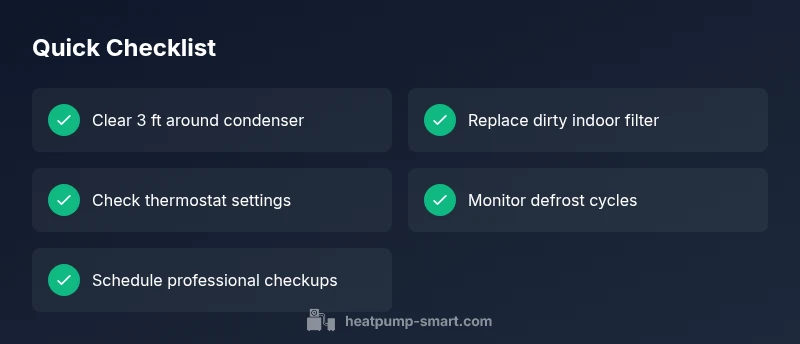
- Check outdoor clearance and remove snow around the condenser.
- Inspect and replace indoor air filters if dirty.
- Confirm thermostat is in Heat with Auto fan mode.
- Avoid using aggressive tools to remove ice; let the system defrost naturally.
- Schedule a proactive service if icing recurs within a week.
Steps
Estimated time: 60-90 minutes
- 1
Power down safely
Turn off the heat pump at the thermostat and switch off at the breaker if accessible. This prevents electrical hazards and prevents further ice growth while you inspect. Do not attempt to chip ice if not supported by the system manual.
Tip: Use the system's power switch or breaker to ensure no unexpected startup. - 2
Clear surrounding area
Remove snow and debris from around the outdoor unit, maintaining at least 3 ft of clearance on all sides to promote airflow and efficient defrost.
Tip: Keep footwear dry and avoid standing on ice around the unit. - 3
Inspect indoor air filter
Open the return air path and inspect the filter. If dirty or discolored, replace with a compatible filter of the correct size and rating. This restores airflow and reduces frost formation.
Tip: Note the filter type for future replacements. - 4
Verify thermostat settings
Set the thermostat to Heat with Auto fan. Ensure it's not stuck in a non-heating mode or emergency heat, which can confuse defrost timing.
Tip: If you use Emergency Heat, plan to switch back to normal operation as soon as possible. - 5
Re-energize and observe
Power the system back on and watch the outdoor coil as it goes through a defrost cycle. Ice should melt and the fan should resume normal operation.
Tip: If ice re-forms within the first hour, stop and call for service. - 6
Call for professional help if needed
If icing recurs or you notice leaks, strange noises, or reduced heating performance, contact a licensed HVAC technician promptly.
Tip: Document symptoms and times to help the technician diagnose quickly.
Diagnosis: Heat pump outdoor unit develops visible ice buildup on coils
Possible Causes
- highRestricted airflow due to blocked vents or dirty air filters
- highDirty outdoor coil or debris obstructing heat exchange
- mediumThermostat set to wrong mode or fan settings
- lowLow refrigerant charge or refrigerant leak
- mediumMalfunctioning defrost control or defrost cycle not engaging
Fixes
- easyClear debris and ensure outdoor unit has at least 3 ft clearance; remove snow and leaves
- easyReplace or clean indoor air filter and verify airflow paths are open
- easyCheck thermostat settings to Heat with Auto fan and ensure defrost mode engages properly
- easyIf ice persists, allow ice to melt during a safe defrost cycle and avoid manual chiseling
- hardIf icing continues after basic steps, contact a licensed HVAC technician to check defrost system and refrigerant
Your Questions Answered
Why does my heat pump ice up in cold weather?
Ice forms when outdoor coils cannot shed moisture properly due to restricted airflow, dirty coils, or a malfunctioning defrost cycle. Humidity and freezing temps compound the problem. Regular maintenance helps prevent this.
Ice happens when airflow is blocked, coils get dirty, or the defrost cycle isn’t working. Regular maintenance helps prevent it.
Can I fix ice buildup myself?
For simple issues like clearing debris, replacing filters, and adjusting thermostat settings, you can fix ice buildup safely. More complex problems like refrigerant leaks or defective defrost controls require a licensed technician.
Some fixes are safe to do yourself, but refrigerant or defrost failures need a pro.
Should I turn off the heat pump if it freezes?
If ice forms heavily, turn the system off to prevent damage and allow defrost. Don’t run it in EMERGENCY HEAT unless necessary for comfort. Once ice melts, resume normal operation and monitor for recurrence.
Turn it off if there’s heavy ice and let it defrost. Then check if it recurs.
How long should a defrost cycle take?
Defrost cycles typically occur automatically and last only a few minutes. If ice persists after several cycles, or ice quickly redevelops, a professional inspection is advised.
Defrost cycles usually finish quickly. If it keeps icing, get a pro.
How can I prevent icing in winter?
Maintain clean filters, keep outdoor units clear of snow and debris, and schedule regular professional maintenance. Correct thermostat settings and ensuring proper refrigerant charge also help prevent icing.
Keep filters clean, outdoor area clear, and get regular maintenance.
Watch Video
Top Takeaways
- Check airflow and clear obstructions first
- Keep outdoor clearance at 3 ft or more
- Replace or clean filters regularly
- Verify thermostat and defrost settings
- Call a pro if icing persists