What Causes Heat Pump Freeze Up: Urgent Troubleshooting Guide
Learn urgent, practical troubleshooting for heat pump freezing up. Discover common causes, quick checks, and a step-by-step fix to keep your system warm in cold weather.


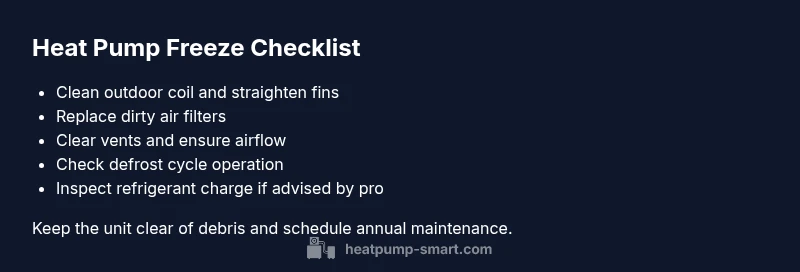
The most likely causes are a dirty outdoor coil, restricted airflow, a malfunctioning defrost cycle, or low refrigerant pressure. Start with quick, simple checks: clean the outdoor coil; replace or clean air filters; ensure vents aren’t blocked; verify thermostat settings. If icing persists, shut the unit off and contact a qualified technician.
Why Heat Pumps Freeze Up in Cold Weather
In winter, heat pumps can accumulate frost on the outdoor coil. When humidity and low temperatures collide, moisture freezes on the coil before the defrost cycle clears it. This not only reduces heating efficiency but can trap additional moisture inside ductwork. The situation is often aggravated by poor airflow and blocked vents, which prevent warm indoor air from circulating to the outdoor unit. Heatpump Smart's analysis shows that climate-related frost is typically triggered by combined factors, including outdoor coil exposure and humidity levels, rather than a single fault. Understanding the interaction helps you prioritize fixes that address both icing and underlying causes.
Common Causes of Freezing Up
A few culprits stand out as the most frequent triggers. Dirty outdoor coils reduce heat transfer and promote frost formation. Restricted airflow from dirty filters, blocked returns, or closed vents prevents proper warm air circulation. A faulty defrost control or sensor can fail to clear frost efficiently. Low refrigerant pressure, usually due to a leak, lowers the boiling temperature and increases frosting risk. In very cold climates, oversized equipment can cycle on and off, promoting ice buildup. Each cause has a practical fix, and often more than one is at play.
Quick Checks You Can Do Now
Before calling a technician, perform a few safe, non-invasive checks. Start by turning off the unit to prevent further ice formation (if ice is thick). Inspect and replace the air filter if dirty. Clear any debris obstructing the outdoor unit and ensure the outdoor coil is visible. Check that all supply vents inside the home are open and unobstructed. Verify thermostat settings, ensuring the system isn’t set to a mode that encourages frost formation (e.g., set to Heat with a comfortable target). These steps are low-risk and often resolve mild icing.
Diagnosing with Symptoms
Frost on the outdoor coil but normal indoor airflow usually points to outdoor-side issues. Ice that forms rapidly after startup may indicate a defrost cycle problem or refrigerant pressure issues. If you notice reduced heating output, frequent cycling, or unusual noises, document the symptoms and consult the diagnostic flow below. Remember: frost is a symptom, not a diagnosis, and addressing the root cause will prevent repeat icing.
Step-by-Step Fix for the Most Common Cause: Dirty Outdoor Coil
Power down the system, then carefully clear debris from the outdoor cabinet and gently rinse the coil top to bottom with a garden hose. Avoid high-pressure jets that can bend fins. Let it dry completely before restarting. If ice persists after cleaning, allow it to melt in a warm environment or use a low-heat blower on the compressor housing. After the coil is clean and dry, reset the thermostat and run a short test cycle to confirm normal operation.
Prevention: Keeping Your System Ice-Free
Establish a regular maintenance routine that includes changing or cleaning air filters every 1–3 months during heating season, and scheduling professional inspections at least once a year. Keep the outdoor unit clear—2 feet of clearance around the condenser, free from snow, leaves, or overgrowth. Ensure the thermostat is set correctly and the defrost cycle is enabled and functioning. Small daily habits, like tidying the outdoor area and protecting the unit from debris, dramatically reduce frost risk over time.
Safety, Warnings, and When to Call a Pro
Frost icing can indicate underlying refrigerant or electrical issues that require professional diagnosis. Never attempt refrigerant repairs yourself; handling refrigerants without proper certification is hazardous and illegal in many areas. If icing recurs after basic fixes, or if you notice buzzing sounds, warm air that won’t heat, or a compressor that seems stuck, contact a licensed HVAC technician promptly to prevent further damage.
Steps
Estimated time: 60-120 minutes
- 1
Power down and safety check
Turn off the heat pump at the thermostat and lockout the outdoor unit at the breaker if accessible. This prevents electrical shock during inspection. Verify that the area around the outdoor unit is clear of snow and debris.
Tip: Always double-check breaker status and avoid working on a live system. - 2
Inspect and replace air filters
Remove the furnace filter and inspect for excessive dirt or clogging. Replace with a new filter of the correct size and reinstall. A clean filter improves airflow and reduces frosting risk.
Tip: Check filter condition monthly during winter and replace as needed. - 3
Check outdoor unit and fins
Clear leaves, snow, and debris from the outdoor cabinet. Gently brush and straighten bent fins with a fin comb if needed. Ensure the condenser fan spins freely and is not obstructed.
Tip: Do not use a metal tool that could bend fins; use plastic or a specialized comb. - 4
Rinse the outdoor coil
Rinse the coil from top to bottom with a garden hose. Avoid high-pressure jets that can bend fins. Let the coil air-dry before powering the unit back on.
Tip: Rinse only when the unit is off and ice is not actively forming. - 5
Test defrost cycle and thermostat
Turn the system back on and observe if the defrost cycle initiates. If ice recurs quickly or the defrost cycle fails to engage, note the behavior for the technician.
Tip: Document any unusual noises or cycling patterns to aid diagnosis. - 6
Assess refrigerant and electrical checks
If icing persists after cleaning, a refrigerant issue may exist. A licensed technician should verify refrigerant charge and inspect for leaks, as this work requires certification.
Tip: Do not attempt to seal or recharge refrigerant yourself.
Diagnosis: Heat pump outdoor unit is frosty and not delivering heat, with reduced indoor warmth
Possible Causes
- highRestricted airflow due to dirty air filters, blocked returns, or closed vents
- highDirty outdoor coil accumulating frost
- highFaulty defrost cycle or sensor failing to trigger defrost
- mediumLow refrigerant charge from a leak
- lowThermostat settings or controls causing excessive cooling or short-cycling
Fixes
- easyClean or replace air filters and clear blocked vents
- easyClean the outdoor coil and ensure the condenser fan is operating
- mediumInspect and test the defrost cycle control; replace if faulty
- hardCheck refrigerant charge and look for leaks; call a pro if charge is low
- easyVerify thermostat and system mode for proper defrost scheduling
- easySchedule a professional inspection if icing recurs
Your Questions Answered
Why does a heat pump freeze up in winter?
Frost forms when humidity meets cold outdoor temperatures, and the defrost cycle fails to clear it. Dirtier outdoor coils and blocked airflow also contribute. Fixing the root causes—airflow, coil cleanliness, and defrost function—helps prevent recurring icing.
Frost forms when it’s cold and humid, often due to airflow and coil issues; cleaning and checking defrost helps prevent it.
Can a dirty filter cause icing?
Yes. A clogged filter reduces airflow, which can cause the indoor and outdoor components to freeze up. Replacing the filter improves airflow and reduces frost risk. Regular filter maintenance is key.
A dirty filter can trap cold air and promote frost buildup; replace it to restore airflow.
What is a defrost cycle, and what if it fails?
The defrost cycle temporarily reverses operation to melt frost on the outdoor coil. If it fails, frost accumulates and reduces efficiency. A technician can diagnose sensor, control, or relay failures and repair the defrost circuit.
The defrost cycle melts frost; if it doesn’t work, frost worsens and needs a professional check.
Is a refrigerant leak a common cause of icing?
Low refrigerant pressure can cause icing because the evaporator coil may get too cold. Leaks require professional repair and a proper recharge. Do not attempt to seal refrigerant lines yourself.
A refrigerant leak can frost the coil; only a licensed tech should fix leaks and recharge.
How often should I have my heat pump inspected?
Annual professional inspections are recommended, with seasonal checks of airflow, coils, and thermostat settings. Regular maintenance reduces the risk of icing and extends equipment life.
Have a pro inspect yearly and do seasonal checks to prevent freezing.
When should I contact a professional urgently?
If icing recurs after basic fixes or you notice unusual noises, heat loss, or ice on critical components, call a licensed HVAC technician promptly. Delayed diagnosis can escalate damage.
Call a licensed HVAC tech promptly if icing returns or you hear unusual noises.
Watch Video
Top Takeaways
- Address airflow first to prevent icing.
- Regular maintenance reduces frost risk.
- Defrost cycle faults require prompt attention.
- Call a licensed pro if icing recurs after basic fixes.