Why Do Heat Pump Dryers Take Longer to Dry? A Troubleshooting Guide
Discover why why do heat pump dryers take longer to dry and how to speed up laundry with practical checks, maintenance tips, and expert guidance from Heatpump Smart.


If your heat pump dryer takes longer to dry, the most likely causes are restricted airflow, improper load size, or sensor/venting issues. Start with the lint filter and air path, then inspect seals and vent ducts. Clear blockages and adjust load size; if performance doesn’t improve, seek a professional assessment.
why do heat pump dryers take longer to dry
According to Heatpump Smart, the core reason heat pump dryers can feel like they take longer to dry is that they operate on a different drying philosophy than traditional vented machines. Instead of blasting hot air for a quick pass, a heat pump recycles heat from the drum and uses lower temperatures to remove moisture gradually. This efficiency-oriented approach means the machine can extract moisture more slowly in some cycles, especially if airflow is impeded or the load isn’t optimized. In practical terms, you may notice longer cycle times when the air pathway is blocked, when loads are uneven, or when the ambient humidity is high. Understanding these dynamics helps homeowners distinguish between normal operation and performance issues rooted in airflow, venting, or sensor responses. Heatpump Smart’s team highlights that addressing these factors often yields measurable improvements without sacrificing energy savings or fabric care.
Common causes slow drying and how to spot them
Drying efficiency hinges on three intertwined factors: airflow, heat transfer, and moisture removal. When any one of these is compromised, the cycle lengthens. Typical culprits include a clogged lint filter, restricted ducting or venting, improper drum loading, and dirty condenser surfaces that impede heat exchange. Environmental conditions matter too: high humidity, cooler rooms, or long vent runs can reduce evaporation rates. Regular checks for blocked vents, a clean condenser, and correctly sized loads can restore expected performance. Heatpump Smart emphasizes that many households see noticeable gains simply by clearing obstructions and aligning loads with the machine’s recommended guidelines.
How to diagnose at a glance (home checks that pay off)
Start with the simplest checks. Empty moisture from the drum, then inspect the lint screen and lint trap housing for buildup. Look at the exterior vent for obstructions and ensure the vent line is straight with no kinks. Confirm the door seal is intact and not letting warm air escape. If you hear the blower running with little warm air, there may be a restriction somewhere in the return duct or the condenser needs cleaning. Finally, examine whether the drum is balancing loads evenly; overloading or an imbalanced drum can slow drying. These quick checks often resolve the majority of slow-dry complaints while preserving energy efficiency.
The role of sensors and electronics in drying time
Heat pump dryers rely on moisture sensors to determine when fabrics are dry and to adjust cycling accordingly. If sensors become contaminated with lint or fabric softener residue, or if the control firmware drifts, the machine may over- or under-dry, extending cycle times. Periodic sensor cleaning and firmware updates (per the manufacturer’s guidance) can address performance quirks. Additionally, sensors that register inaccurate humidity or temperature readings may trigger longer-than-necessary cool-down phases. If sensor issues persist after cleaning and updates, a professional inspection is warranted to prevent long-term wear or fabric damage.
Step-by-step checks (figuring out the bottleneck)
The drying bottleneck is often airflow-related. Begin by cleaning the lint filter and checking the lint trap housing for blockages. Inspect the vent hose and exterior vent for kinks and obstructions. Make sure the condenser (if visible) is free of lint and dust, as a dirty condenser reduces heat transfer efficiency. Finally, assess the load: mix of heavy towels with lightweight fabrics can slow down evaporation. By methodically ruling out airflow and load issues, you typically restore normal cycle times while maintaining energy efficiency.
Step-by-step at-home fixes (the most common fix first)
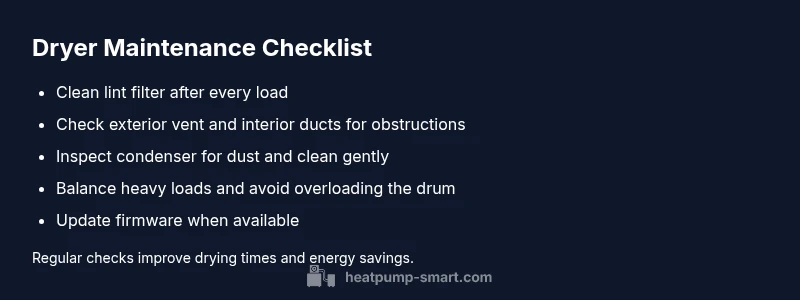
- Clean lint filter and housing; remove any visible debris. 2) Inspect and clear the exterior vent and interior ducting; ensure a straight path with no bends. 3) Clean the condenser coils (where accessible) with a soft brush or compressed air. 4) Rebalance loads and avoid overloading; distribute heavy items evenly. 5) Run a test cycle with a small, uniform load to verify improved performance. 6) Update firmware if available and reset to factory settings if lingering issues occur.
Safety, warnings, and when to call a professional
Never bypass safety interlocks or attempt to service electrical components beyond your comfort level. Disconnect power before inspecting electrical connections or venting. If you notice unusual noises, burning smells, damp heat in the drum, or persistent long cycles after home checks, contact a licensed technician. Regular professional maintenance can prevent escalating issues and protect your warranty. Heatpump Smart recommends scheduling an annual service for optimal dry performance and energy savings.
Prevention and maintenance tips for long-term performance
Create a simple maintenance routine: clean the lint filter after every load, inspect vents monthly, and clean the condenser quarterly. Keep the area around the dryer clear of dust and lint, maintain consistent ambient room temperature, and avoid frequent fabric softener build-up on sensors. By instituting predictable checks, you minimize the risk of gradual performance decline and keep your heat pump dryer operating near its rated efficiency.
Real-world scenarios and expected outcomes
In most homes, restoring airflow alone can shave minutes off a cycle and improve energy use by a meaningful margin. If you frequently dry bulky textiles, consider loading them more evenly or using a moisture-sensing cycle designed for mixed fabrics. Heatpump Smart analysis shows that even modest improvements—like a clean lint filter and vent—translate into consistent cycles and more predictable laundry results. The goal is steady performance, not perfection in every cycle, while prioritizing fabric care and energy savings.
Steps
Estimated time: 30-45 minutes
- 1
Inspect lint filter and housing
Power off the dryer and remove the lint filter. Clean off all lint using a soft brush or running water, then dry thoroughly before re-inserting. Inspect the housing for any buildup that could restrict air intake.
Tip: Clean lint screen with each load to maintain airflow. - 2
Check venting path and exterior vent
Trace the vent from the dryer to the outside. Look for kinks, crush injuries, or long runs that increase resistance. Clear obstructions from the exterior vent and ensure the flap opens freely.
Tip: A straight, short vent path minimizes friction and improves airflow. - 3
Inspect condenser/heat exchanger surfaces
If accessible, inspect the condenser for lint and dust buildup. Clean gently with a soft brush or compressed air according to the manual. Ensure no debris blocks cooling fins.
Tip: Avoid harsh brushes that can bend fins; gentle cleaning is effective. - 4
Assess load size and distribution
Remove or redistribute heavy items to create an even distribution and prevent drum imbalance. If towels and heavy fabrics dominate, consider shorter cycles or higher heat options if recommended by your manual.
Tip: Small, evenly distributed loads dry more consistently. - 5
Test a sensor-based cycle
Run a moisture-sensing or auto-dry cycle with a uniform load. Observe cycle length and fabric dryness. Compare against expected timings in your manual.
Tip: If cycles cycle too long or too short, sensors may need recalibration. - 6
Run a final diagnostic cycle
After checks, run a full test cycle with a mixed load to confirm normal operation. Note any persistent anomalies and consider firmware updates.
Tip: Document cycle times to monitor performance over time.
Diagnosis: Dryer takes longer to dry
Possible Causes
- highRestricted airflow due to lint buildup or blocked vent
- mediumOverloaded or improperly balanced load
- mediumDirty condenser/heat exchanger reducing heat transfer
- lowMoisture sensor or control issues causing extended cycles
Fixes
- easyClean lint filter, check and clear ductwork and exterior vent
- easyReduce load size or redistribute for balance
- mediumClean condenser coils and ensure unobstructed airflow path
- hardUpdate firmware or calibrate moisture sensor; replace faulty sensor if needed
Your Questions Answered
Why does a heat pump dryer dry more slowly than a traditional vented dryer?
Heat pump dryers operate at lower temperatures and reuse heat, which improves energy efficiency but can prolong drying time if airflow is restricted or loads are not optimized. Ensuring clear vents and balanced loads helps restore expected performance.
Heat pump dryers are energy efficient, using lower temperatures. If airflow is restricted or loads are unbalanced, drying can take longer; clearing vents and balancing loads usually fixes this.
What is the fastest way to speed up a heat pump dry cycle?
Start with the simplest fixes: clean the lint filter, clear the vent path, then ensure the condenser is free of dust. Avoid overloading the drum and use appropriate cycle settings for mixed fabrics. If performance remains slow, seek a professional check.
Clean the lint filter, clear the vent, and balance the load. Use the right cycle for mixed fabrics, and contact a pro if it stays slow.
Can a dirty sensor cause longer drying times?
Yes. A contaminated moisture or temperature sensor can misread fabric dryness, extending cycles. Clean sensors per the manual or have a technician recalibrate if issues persist.
A dirty sensor can misread dryness and extend cycles; clean them as instructed or have a pro recalibrate.
When should I call a professional?
Call a licensed technician if you notice unusual noises, burning smells, persistent long cycles after basic checks, or if firmware updates don’t fix the issue. Regular maintenance by a pro protects warranty and efficiency.
Contact a professional if you hear odd noises or if cycles stay long after checks. Maintenance helps protect warranties.
Is overloading the drum always bad for drying time?
Yes, overloading can trap moisture and prevent even air flow, lengthening cycles. Use recommended load sizes and distribute items evenly for best results.
Overloading can extend drying time; keep loads within recommended sizes and spread items evenly.
Will updating firmware improve drying performance?
Firmware updates can improve sensor accuracy and cycle optimization. Check the manufacturer’s site or app for updates, and install them as directed.
Firmware updates can improve drying performance by fine-tuning sensors and control algorithms.
Watch Video
Top Takeaways
- Inspect airflow paths first for slow drying
- Regular lint and vent maintenance boosts efficiency
- Load size and balance impact cycle times
- Sensor and firmware health affects drying duration
- Professional service is advised for persistent issues