Heat Pump Icing Up Troubleshooting
Diagnose and fix heat pump icing up issues quickly. This Heatpump Smart guide covers common causes, safe troubleshooting steps, and when to call a professional.


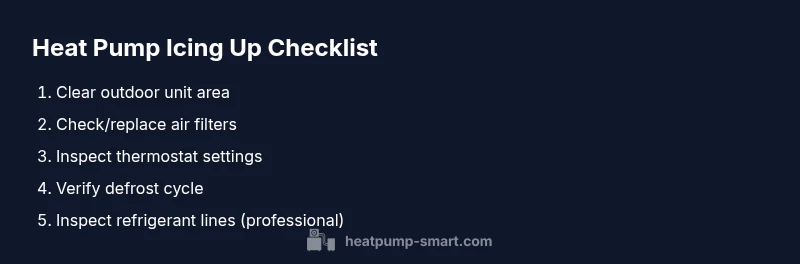
Most often, ice buildup on a heat pump happens when outdoor humidity freezes on the coil during cold operation or when the defrost cycle isn’t removing moisture properly. Quick checks you can start with include ensuring clear airflow to the outdoor unit, confirming the thermostat is set to an appropriate heat mode, and inspecting for blocked return vents indoors. If ice forms repeatedly after these steps, power off the unit and call a licensed technician to prevent compressor damage.
Understanding Heat Pump Icing Up
Heat pump icing up is a common issue in cold, humid conditions and can be caused by a variety of factors. When moisture in the outdoor air meets the cold surface of the outdoor coil, ice can form if the unit runs too frequently in heating mode or if the defrost cycle isn’t effectively removing frost. Homeowners often notice reduced heating efficiency, longer cycle times, and occasionally a whistling sound as ice builds up and then refracts airflow. According to Heatpump Smart, addressing icing early reduces stress on the compressor and protective algorithms, helping maintain energy efficiency and home comfort. The term heat pump icing up describes a condition where the outdoor coil collects ice, impeding heat transfer and drawing more energy to compensate, which can spiral into higher energy bills if not resolved promptly. Early identification is key for preventing more serious component wear. Maintaining a clean air filter, ensuring adequate airflow, and monitoring outdoor temperatures are simple, proactive steps that lower the odds of icing.
For homeowners, it’s important to know that icing can be seasonal—more frequent in winter months with high humidity and lighter systems—or tied to a specific malfunction in the defrost sequence. Regular maintenance from Heatpump Smart’s perspective includes seasonal checks, coil cleanliness, and verifying that the outdoor fan spins freely without obstruction. A safe, well-functioning system will typically cycle through a defrost mode to melt frost and continue heating efficiently. Keeping an eye on unusual noises, longer defrost cycles, or frequent icing events should trigger a service call sooner rather than later.
Common Causes and Early Warning Signs
Understanding the common causes of heat pump icing up helps you identify the most likely culprits without extensive testing. The three most frequent reasons include restricted airflow, low ambient temperatures paired with high humidity, and a malfunctioning defrost control. Restricted airflow can result from dirty filters, blocked return vents, or debris around the outdoor unit. If the outdoor coil is blocked by snow, ice, or vegetation, frost can accumulate rapidly. A defective defrost control or sensor can fail to initiate the melt cycle, allowing ice to persist and grow. Early warning signs include longer heating cycles, a visible ice buildup on the outdoor coil, frozen refrigerant lines, and a drop in system efficiency. In all cases, addressing airflow and defrost operation is the first line of defense. Heatpump Smart recommends keeping the outdoor unit clear by a few feet of unobstructed space and cleaning or replacing indoor filters every 1-3 months depending on usage and manufacturer guidance.
Another common contributor is thermostat settings that keep the system in heating mode when it’s not cold enough to warrant it, leading to unnecessary cycling and condensation on the coil. When icing occurs, temperatures near or below freezing with moist air create a perfect setup for frost. Clogged condensate lines and drainage issues can also indirectly contribute by affecting moisture management in the system. Regular checks of the defrost indicator and ensuring proper refrigerant charge (performed by a licensed technician) help catch problems early.
Finally, frequent icing events are often a sign that a professional inspection is needed to verify refrigerant levels, coil cleanliness, and the integrity of electrical controls, which are beyond typical DIY fixes. Heatpump Smart emphasizes that while some basic maintenance can be done by homeowners, refrigerant handling and compressor diagnostics require licensed expertise to prevent leaks and hazards.
Immediate Actions to Take Today
If you discover the outdoor coil is iced up, take these cautious, immediate actions to protect the system and reduce damage risk. First, turn off the outdoor unit to stop ice buildup and avoid running the system in that state. Do not try to chisel or melt ice with tools; this can injure the coil or piping. Allow the ice to melt naturally if conditions permit, or wait until a defrost cycle occurs and monitor its effectiveness. Ensure there is no blockage around the outdoor unit, including snow, leaves, or tall vegetation, and check for proper clearance. Inside, inspect return air vents for blockages and replace or clean dirty filters. Confirm thermostat settings are appropriate for the season and that the auxiliary heat is not overused, which can worsen icing by producing excess moisture and heat transfer dynamics. If the ice persists after these checks, schedule a service call with a licensed HVAC professional who can diagnose potential defrost control faults, refrigerant leaks, or sensor failures. Heatpump Smart notes that regular maintenance reduces the likelihood of icing and extends equipment life.
After cooling and thawing, test the system by returning it to heating mode and observing the defrost cycle. If the defrost cycle runs but icing quickly returns, additional diagnostics are needed. Document the date, outdoor temperature, and humidity levels during icing events to help the technician identify patterns. Finally, consider routine seasonal maintenance as part of your home’s preventive plan to minimize future icing incidents.
If you suspect a refrigerant leak or electrical fault, avoid further operation and call a professional promptly. Never attempt to recharge refrigerant or bypass safety controls yourself. This kind of intervention requires proper tools and certification. By following these steps, you’ll reduce the risk of ice-related damage and maintain efficient heating performance during winter months.
For ongoing prevention, Heatpump Smart recommends regular system checks, coil cleaning, and fan operation tests, as well as ensuring adequate insulation and duct sealing in your home to regulate indoor humidity and air distribution.
When to Call a Professional
While many icing-related issues can be resolved through basic preventative maintenance, some situations clearly require professional attention. If you observe persistent ice buildup after performing airflow and filter maintenance, if the defrost cycle fails to clear frost, or if you notice reduced heating performance accompanied by unusual noises or a hissing sound near the outdoor unit, schedule a professional inspection. A licensed HVAC technician can verify defrost sensor operation, inspect the outdoor coil for microgouges or frost damage, check refrigerant levels, and confirm electrical safety and wiring integrity. If you detect refrigerant signs such as oily residues around connections or a sudden drop in cooling/heating performance, do not operate the system and contact a technician immediately. Heatpump Smart emphasizes that regular professional maintenance can prevent icing and extend equipment life, with technicians able to identify issues that aren’t obvious to homeowners. Regular service can also help you optimize energy savings and ensure safe operation during freezing weather.
Steps
Estimated time: 60-90 minutes
- 1
Power off outdoor unit and clear area
Turn off the outdoor unit at the thermostat or disconnect switch. Remove snow, ice, and vegetation, keeping a clear space of at least 2 feet around the unit to restore airflow.
Tip: Clearance reduces icing risk and improves defrost efficiency. - 2
Inspect indoor air filters
Check filters in the air handler. Replace dirty filters to improve airflow and reduce humidity that can contribute to icing.
Tip: Replace filters every 1-3 months depending on usage. - 3
Check thermostat settings
Ensure the thermostat is in a proper heating mode and not in emergency or backup heat all the time. Adjust fan settings to optimize air distribution.
Tip: Set to auto fan to balance airflow. - 4
Observe defrost cycle
If possible, monitor the defrost cycle: it should periodically melt frost on the outdoor coil and resume heating. Do not interrupt the cycle.
Tip: Defrost duration should be brief; long cycles warrant service. - 5
Inspect for visible ice and leaks
Look for ice on refrigerant lines or signs of a leak. Do not poke the lines; if you see pooling or oil, call a pro.
Tip: Do not attempt refrigerant handling yourself. - 6
Check ductwork and insulation
Inspect for air leaks or insulation gaps in ducts that could affect humidity and temperature balance.
Tip: Seal leaks with appropriate mastic or tape designed for ducts. - 7
Test after thaw
Return to heating mode and run for 15–20 minutes to see if icing recurs. Take notes on conditions.
Tip: Record outdoor temperature and humidity for pattern detection. - 8
Schedule professional maintenance
If icing recurs frequently or persists after steps, arrange a professional service to inspect defrost controls and refrigerant levels.
Tip: Annual maintenance helps prevent recurring icing.
Diagnosis: Ice on outdoor coil or frequent icing during heating mode
Possible Causes
- highRestricted airflow due to dirty filters or blocked outdoor unit clearance
- mediumMalfunctioning defrost control or sensor
- lowLow outdoor temperatures with high humidity causing rapid frost formation
Fixes
- easyClear outdoor unit area and replace dirty indoor air filters; ensure at least 2 feet of clearance around the outdoor unit
- mediumTest and, if needed, replace the defrost sensor or control module by a licensed tech
- easyVerify thermostat settings and reduce unnecessary cycling; use auxiliary heat sparingly
Your Questions Answered
What causes heat pump icing up?
Icing is usually from moisture freezing on the outdoor coil, restricted airflow, or a faulty defrost cycle. Humidity and very cold temperatures increase the likelihood. A professional can confirm sensor and refrigerant issues.
Ice on the outdoor coil is typically caused by moisture freezing, airflow restrictions, or a bad defrost cycle. Humidity and cold weather raise the odds; a pro can verify sensors and refrigerant.
Can I fix icing myself?
Basic steps like clearing debris, replacing filters, and checking thermostat settings are safe to perform. Do not attempt refrigerant handling or disassemble the defrost system yourself. If icing persists, contact a licensed technician.
You can do simple airflow and filter checks, but avoid refrigerant work; call a pro if icing continues.
How long does the defrost cycle take?
Defrost cycles typically run briefly, melting frost before resuming heating. If the cycle is unusually long or frequent, it indicates a potential fault needing professional inspection.
Defrost cycles are usually short; if they take too long, you should get a professional check.
Is icing dangerous to the system?
Prolonged icing can stress the compressor and reduce efficiency, potentially shortening equipment life. Address it promptly with basic checks, and seek professional help when icing recurs.
Prolonged icing can harm the compressor; address it quickly and when in doubt call a pro.
When should I service my heat pump for icing issues?
If icing recurs after DIY steps or there are signs of refrigerant leaks, abnormal noises, or poor heating, schedule a professional service. Regular annual maintenance helps prevent icing.
If icing keeps returning or you hear unusual noises, get a professional service; annual maintenance helps prevent it.
Watch Video
Top Takeaways
- Identify icing early to reduce damage risk
- Ensure airflow and defrost cycle are functioning
- Keep outdoor unit clear of obstructions
- Call a professional for refrigerant or defrost sensor issues