Replacement Cost for Heat Pump: A Homeowner's Guide to Costs and Value
A detailed guide to the replacement cost for heat pump systems, including installed price ranges, influencing factors, and strategies to maximize value with rebates, financing, and smart installation.


Current data shows the replacement cost for heat pump systems, installed, typically falls in the range of $5,000 to $15,000, depending on system type (air-source vs geothermal), home size, and electrical upgrades. Labor, ductwork, and permits can push totals higher. The Heatpump Smart Analysis, 2026 notes that higher-efficiency models and advanced controls add upfront value but improve long-term energy savings.
Understanding what drives the replacement cost for heat pumps
Replacement costs for heat pumps are influenced by a blend of equipment price, installation labor, and site-specific work. According to Heatpump Smart, the sticker price is only part of the story. The team found that electrical panel upgrades, ductwork modifications, refrigerant line runs, and control-system upgrades can substantially alter the final total. Climate, home layout, and existing ventilation also push the cost up or down. When you look at replacement cost for heat pump, remember that a more efficient unit often comes with higher upfront costs, but it can deliver larger energy savings and better comfort over time. This broader view helps homeowners evaluate whether a higher initial investment pays off in reduced operating costs and improved reliability.
Cost ranges by heat pump type
Not all heat pumps cost the same to install. Air-source systems typically cost less upfront than geothermal, but the final price depends on efficiency ratings (SEER), heating and cooling capacity, and whether ductwork exists or must be added. Mini-split systems offer flexibility but can incur higher labor costs for multiple indoor units. When you compare the replacement cost for heat pump options, consider long-term energy savings, maintenance needs, and potential rebates. Heatpump Smart analyses indicate that the upfront price gap between system types often narrows once rebates and incentives are factored in, but the initial investment remains a major consideration for homeowners.
Ancillary costs and site-specific considerations
Beyond the unit price, several site-specific factors can add to the total cost. A home with an undersized electrical panel may need service upgrades to support a higher-load heat pump, while older homes may require rewiring or upgraded breakers. Ductwork alterations, new insulation, and even trenching for geothermal loops can push costs upward. Permitting fees, refrigerant handling, and potential asbestos or mold remediation add further layers to the price. On the upside, modern heat pumps often come with long warranties and reduced maintenance costs, which can improve the long-term value proposition. Always request a detailed breakdown from your installer so you can see how much is allocated to equipment, labor, ductwork, and permits.
How to estimate your replacement cost
Start with a realistic goal for comfort and energy savings. Gather quotes from at least three licensed installers and compare apples to apples: same efficiency levels, same zoning, and similar installation conditions. Provide your existing ductwork details, electrical panel capacity, and desired thermostat features. Ask installers to model both a standard and an high-efficiency option to see the delta in cost and savings. Don’t forget to factor in rebates, tax credits, and financing options. A transparent cost estimate should show equipment price, labor, permits, electrical upgrades, ductwork, and contingencies. Heatpump Smart recommends verifying that quotes include a comparable warranty package and post-install support.
Financing options, rebates, and value over time
Financing can make replacement cost for heat pump more manageable by spreading out the upfront price. Look for utility rebates, state incentives, and federal programs that apply to energy-efficient equipment. Many installers offer financing plans or payment schedules that align with anticipated energy savings. When evaluating value, consider the total cost of ownership: upfront price, energy savings, maintenance, and expected lifespan. In many cases, a slightly higher upfront cost with better efficiency yields lower lifetime costs and fewer service calls, leading to a better return on investment.
Real-world scenarios and example calculations
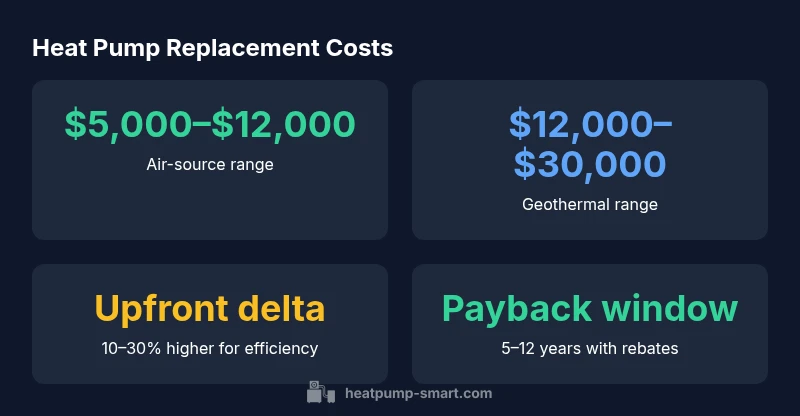
Consider a typical single-family home in a moderate climate with existing ductwork. An air-source heat pump replacement might cost between $5,000 and $12,000 before rebates, while geothermal could range from $12,000 to $30,000 due to trenching and loop installation. A home that upgrades to a higher SEER rating or includes smart controls could see upfront costs rise by 10–30%, but annual energy costs may drop by a meaningful margin. In climates with strong cooling seasons, the efficiency gains can drive a faster payback, especially when rebates cover part of the investment. These scenarios illustrate how site conditions and selected features shape the final replacement cost for heat pump.
Steps to get accurate quotes: a practical checklist
- Document existing equipment, ductwork, and electrical capacity before requesting quotes.
- Ask for a side-by-side comparison with the same efficiency ratings and zoning.
- Request a clear breakdown for equipment, labor, ductwork, permits, and contingencies.
- Check warranties and after-install support; ensure service availability in your area.
- Confirm any rebates or financing options are included in the quote.
- Read customer reviews and verify installer credentials. A well-documented quote helps you make an apples-to-apples comparison.
Maintenance and longevity to preserve value
Proper maintenance can extend heat pump life and protect your investment. Schedule regular air filter changes, coil cleaning, and annual professional inspections. Maintaining high efficiency reduces energy use, which compounds savings over time. A proactive maintenance plan also helps you catch potential issues early, preserving performance and minimizing unexpected outlays. Heatpump Smart suggests pairing regular maintenance with a thoughtful replacement strategy to maximize the total value of your system.
Typical installed cost ranges by heat-pump system type
| System Type | Typical Installed Cost Range | Notes |
|---|---|---|
| Air-source heat pump | $5,000–$12,000 | Most affordable, fastest payoff |
| Geothermal heat pump | $12,000–$30,000 | Requires trenching or vertical loop |
| Ducted mini-splits | $4,000–$10,000 | Zoned cooling/heating; flexible installation |
Your Questions Answered
What is the typical replacement cost for a heat pump installed in a single-family home?
Costs vary by system type, home size, and existing ductwork. Installed ranges commonly fall within the $5,000–$15,000 band before rebates, with higher-end options and geothermal systems at the upper end. A detailed quote from a licensed installer will reflect your home’s specifics.
Costs vary by system type and home specifics; expect roughly five to fifteen thousand dollars before rebates.
What factors influence the replacement cost for heat pumps?
Key drivers include system type, efficiency (SEER rating), heating capacity, ductwork or zoning needs, electrical upgrades, permits, and refrigerant lines. Climate and home layout also affect installation complexity and total price.
System type, efficiency, and installation scope mostly drive the price.
Is geothermal heat pump more expensive to install than air-source?
Yes, geothermal installations typically have higher upfront costs due to loop or trench work, but can offer strong long-term energy savings. Air-source systems are usually less expensive to purchase and install.
Geothermal costs more upfront but can save more energy over time.
Can I qualify for rebates or tax credits for replacement heat pumps?
Many regions offer rebates, incentives, or tax credits for efficient heat pump installations. Availability varies by location and program rules, so check with your local utility and state programs as part of your planning.
Rebates and incentives reduce upfront costs; check local programs.
Should I replace my heat pump now or wait?
If your current unit is failing or highly inefficient, replacing now reduces ongoing repair costs and energy waste. If it’s functioning well, you can time replacement to align with rebates and budget, but don’t delay beyond the point of reliability.
If it’s failing or costly to operate, replace sooner; otherwise, plan with rebates.
What is the best way to get accurate quotes for replacement cost?
Provide detailed home specifics, compare apples-to-apples quotes (same efficiency and zoning), and require a full breakdown of equipment, labor, permits, and contingencies. Check warranties and post-install support as part of the decision.
Ask for full breakdowns and comparable specs when comparing quotes.
“Replacement costs vary widely by system and site, but the long-term value hinges on energy savings and reliability. Plan for total cost of ownership, not just the upfront price.”
Top Takeaways
- Know the full replacement cost, including installation and upgrades.
- Compare system types to balance upfront price and long-term savings.
- Explore rebates and financing to improve affordability.
- Get multiple quotes to accurately capture site-specific factors.
- Plan for total cost of ownership, not just sticker price.