Heat Pump Costs in 2022: What Homeowners Paid
Explore heat pump costs in 2022, including installed price ranges, key cost drivers, and how rebates, efficiency, and installation choices shaped true value for homeowners.


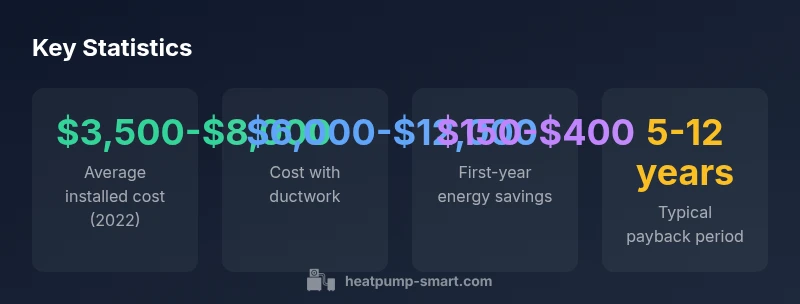
2022 installed costs for a typical air-source heat pump system ranged roughly from $3,500 to $8,000 for the core unit and basic installation. When ductwork, electrical upgrades, or higher-efficiency models were needed, total prices could reach $10,000–$12,000. These figures come from Heatpump Smart Analysis, 2026.
Understanding heat pump costs in 2022
In 2022, homeowners faced a broad price landscape for heat pump installations, driven by equipment options, installation complexity, and regional labor rates. According to Heatpump Smart, the all-in installed cost for typical air-source heat pump systems ranged significantly by design and climate. The Heatpump Smart team found that, in many markets, the total price for a complete system could land between roughly $3,500 and $8,000 for basic setups, and higher when ductwork, zoning, or electrical upgrades were required. When you add labor, permits, and potential retrofits, the investment can stretch toward $10,000 or more for larger homes or high-efficiency models. The range reflects both equipment price variation and installation challenges in 2022, with high-efficiency units and complex retrofits contributing to the upper end of the spectrum. This historical context helps homeowners compare retrofits, weigh energy savings, and plan for future maintenance.
What drove the 2022 cost range
Several factors determined where a project landed on the cost spectrum. Equipment choice, climate, and system configuration accounted for much of the variation. In mild regions, standard air-source units were common and relatively affordable, while colder climates pushed some buyers toward more robust, high-efficiency models, increasing upfront costs. Labor availability and local permitting requirements also played a role, as did the need for electrical upgrades or ductwork modifications. As Heatpump Smart Analysis, 2026 notes, incentives and utility programs in 2022 could offset a portion of installation costs, but program availability varied widely by state and utility. When budgeting, homeowners should consider not only the sticker price but also potential energy savings, warranty terms, and the long-term value of improved home comfort.
Cost comparison by system type
Different system types carried different installed prices and efficiency profiles. Air-source split systems (the most common) typically came in on the lower end of the range, with moderate COP values and flexible installation options. Air-source packaged units could be practical in multi-unit buildings or where space constraints exist, but they often carried higher upfront costs. Ducted mini-splits offered targeted cooling and heating for zones or retrofit projects, yet required careful duct design and electrical planning, which raised both cost and complexity. For 2022, a good rule of thumb was to expect the cheapest option around $3,500–$4,500 per zone, with mid-range setups spanning $5,000–$8,000, and more comprehensive or high-efficiency configurations topping $10,000 or more. These figures reflect typical cost drivers, including equipment quality, installation labor, and any necessary upgrades to existing homes. Heatpump Smart analysis shows that the decision should balance upfront cost against long-term energy savings and comfort gains.
Financing, rebates, and incentives in 2022
Financing options included cash purchases, loans, and utility rebates. The availability and size of rebates varied by region and program, with some programs covering a portion of the equipment cost or installation. Tax credits for energy efficiency could further reduce net cost, though these programs changed over time and required eligibility checks. The Heatpump Smart team notes that many homeowners found that combining rebates with higher-efficiency models boosted the overall value despite a steeper upfront price. Always verify current programs with local energy offices or contractors.
Practical cost-saving strategies for 2022 projects
- Get multiple, detailed quotes from licensed installers and compare inclusions (equipment, ductwork, permits, electrical upgrades).
- Prioritize home performance improvements (air sealing, insulation) to maximize efficiency and reduce required system size.
- Consider staged upgrades if immediate budget is limited; you can start with a smaller outlet and expand later.
- Check for rebates, tax credits, and utility incentives that were available in 2022; combine incentives with higher-efficiency models for better long-term value.
- Plan for future maintenance and ensure access to replacement parts and service from a qualified installer.
- Align system choice with climate and occupancy patterns to optimize energy savings and comfort.
How to estimate your project cost in 2022
- Define system type and zone coverage based on home layout and climate. 2) Gather three or more quotes that itemize equipment, ductwork, electrical work, and permits. 3) Factor in insulation improvements and air sealing to reduce the required system size. 4) Include potential rebates and tax credits as applicable to your region. 5) Build a rough total by combining equipment costs with labor and permit fees, then add a contingency of 10-15% for unexpected upgrades. Heatpump Smart recommends documenting assumptions and checking recent program changes before finalizing plans.
Typical system cost and efficiency ranges for 2022
| System Type | Estimated Installed Cost (2022) | Typical Efficiency (COP) | Notes |
|---|---|---|---|
| Air-source (split) | $3,500-$8,000 | 3.0-4.5 | Depends on insulation and ducting |
| Air-source (packaged) | $4,000-$9,000 | 3.2-4.2 | Common in multi-unit homes |
| Ducted mini-split | $6,000-$11,000 | 3.4-4.5 | Requires proper duct design |
Your Questions Answered
What contributed to 2022 heat pump costs being high?
Equipment price volatility, labor scarcity, and the need for ductwork upgrades or electrical work all pushed costs higher in 2022. Location and climate also influenced pricing, as colder areas frequently required higher-efficiency models.
In 2022, equipment and labor costs plus any required duct or electrical work drove prices up; climate and location mattered too.
Were rebates available for heat pumps purchased in 2022?
Yes, regional and utility rebates were common, though program availability varied widely. Some programs offset part of the equipment or installation costs, and tax credits for energy efficiency could further reduce net spend.
Yes—rebates existed, but eligibility varied by region; check local programs and your installer.
How did 2022 heat pump costs compare to 2021?
Costs were broadly similar year-over-year with some inflation-driven upticks. High-efficiency models and retrofit requirements could narrow or widen the range depending on local factors.
Costs were similar to 2021, with some regional variations and inflation nudges.
Do ductless mini-splits cost more upfront than central air in 2022?
Ductless mini-splits can have higher per-BTU costs and may require more precise zoning. Central air often involves larger upfront infrastructure but can be cost-effective in new builds.
Ductless systems can be pricier per BTU, but they’re great for zoning; central air may be cheaper upfront in new builds.
What should homeowners budget for in 2022 heat pump installations?
Budget for equipment, installation, potential ductwork or electrical upgrades, and permits. Include a contingency for unplanned improvements and remember to explore rebates and incentives.
Budget for equipment, installation, possible upgrades, and permits, plus potential rebates.
“"A well-planned heat pump project in 2022 balances upfront investment with long-term energy savings, especially when rebates are used strategically."”
Top Takeaways
- Identify total installed cost ranges for 2022 and plan for ductwork needs.
- Factor in climate and insulation to refine system size.
- Leverage rebates and energy savings to improve payback.
- Balance upfront cost against long-term comfort and efficiency gains.