Replacing Boiler with Heat Pump: A Practical Guide
Learn how to replace your boiler with a heat pump. This educational guide covers planning, sizing, permits, installation steps, safety, and long-term energy savings for homeowners and builders.


Goal: replace an existing boiler with a heat pump system. This process includes assessing home heating needs, selecting an appropriate heat pump, confirming electrical capacity, securing permits, and a phased installation with indoor and outdoor components. The guide covers sizing, ductwork or distribution, refrigerant considerations, commissioning, and energy savings potential, with safety at the forefront.
Why replacing boiler with heat pump matters
Replacing boiler with heat pump can deliver reliable comfort and meaningful energy savings when the system is properly sized and installed. In many homes, heat pumps provide both heating and cooling with lower operating costs over the life of the equipment. According to Heatpump Smart, a thoughtful replacement project begins with understanding your home’s heat loads, climate, and distribution so the new system can meet demand without overworking the compressor or wasting energy. This block outlines the core rationale: improved efficiency, better control over indoor climate, and a path to reduced carbon impact. You’ll also see how a heat pump integrates with existing ducts or radiant systems, and why a professional assessment is essential before you commit to a model.
Key takeaway: any boiler-to-heat-pump transition should start with a clear plan and credible load calculations to prevent undersizing or oversizing the new system.
Planning prerequisites for boiler replacement with a heat pump
Before you remove the boiler, you need a solid plan. Begin with a professional load assessment to determine the heating capacity your home requires, factoring in climate, insulation, windows, and occupancy patterns. Decide between air-source and geothermal (ground-source) options, and evaluate how your current distribution works—forced air, radiant, or hydronic systems each have unique integration challenges. Check electrical service capacity and available space for the outdoor unit, indoor air handler, and any new ductwork. Permitting is common for major HVAC changes; identify local requirements early to avoid surprises. Finally, establish a realistic budget that includes equipment, installation labor, ductwork adjustments, and potential rebates. Heatpump Smart emphasizes aligning expectations with the home’s actual needs rather than chasing the latest technology for its own sake.
Practical note: a thorough planning phase reduces costly revisions during installation and helps ensure the transition delivers the expected comfort and savings.
Sizing and selecting a heat pump for replacement
Sizing a heat pump correctly is critical to performance. An undersized unit will struggle in cold snaps and run constantly, while an oversized model will short-cycle and waste energy. Your installer should perform a manual J load calculation (or equivalent) to determine the appropriate capacity in BTUs and the right SEER/HSPF ratings for your climate. Consider auxiliary heat sources for very cold periods and the distribution path—ducts, hydronic coils, or air handlers—that will carry the heated or cooled air to living spaces. In addition to capacity, evaluate refrigerant type compatibility, warranty terms, noise ratings, and the system’s control options, including smart thermostats and zoning capabilities. Heatpump Smart notes that proper sizing lays the groundwork for comfort, efficiency, and long-term reliability.
Real-world tip: ask for a written sizing report and reference climate data to ensure the selection matches your local conditions.
Ductwork, distribution, and indoor components
Your home’s ductwork and indoor components often determine how effectively a heat pump performs after replacement. If you already have a forced-air system, you may need duct sealing, balancing, or minor rerouting to accommodate the new equipment’s airflow characteristics. For homes with radiant or hydronic heating, a heat pump may require a compatible outdoor condenser with a hydronic coil or a dedicated air handler. In any case, zoning can improve comfort by distributing heat more evenly and letting you control temperature rooms-by-room. Consider energy efficiency features like variable-speed blowers, smart thermostats, and weather compensation controls. Heatpump Smart underscores the value of integrating controls that maximize efficiency and maintain occupant comfort across seasons.
Installation process overview: from prep to commissioning
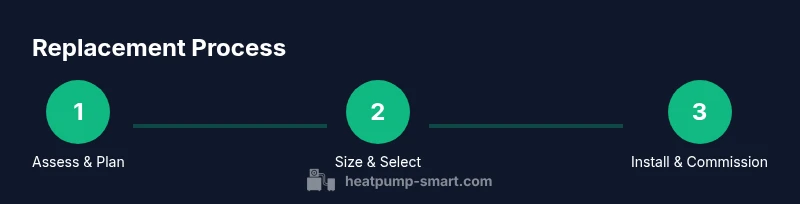
A boiler-to-heat-pump installation unfolds in phases: site prep (clearance, compressor routing, and outdoor placement), mechanical connections (refrigerant lines, electrical, and ductwork), indoor-unit installation, and outdoor-unit setup. The refrigerant charge is set by the manufacturer’s specifications and must be checked with calibrated gauges. Electrical work should meet local codes, including grounding and disconnect switches. The commissioning phase validates airflow, refrigerant levels, thermostat responsiveness, and safety interlocks. Finally, the system should be monitored for a few cycles to confirm stable operation across heating and cooling modes. This process relies on skilled technicians who can handle refrigerant safely and verify code compliance, minimizing the risk of leaks or poor performance.
User experience: expect a staged process rather than a single-day swap, with the timing dependent on home size, duct condition, and permitting.
Safety, permits, and professional requirements
Replacing a boiler with a heat pump involves electrical, refrigerant, and mechanical work that typically requires licensed professionals. Refrigerant handling is subject to environmental and safety regulations, and improper charging can damage equipment or harm occupants. Many jurisdictions require permits and post-install inspections to ensure compliance with energy codes and safety standards. Plan to hire a contractor who is experienced with heat pump installations, offers proper warranties, and provides documented measurements and test results. Always verify that the technician holds relevant licenses and that the work will be inspected according to local requirements. Heatpump Smart advocates for safety-first planning and professional oversight to protect homeowners and maximize system performance.
Costs, savings, and long-term considerations
Costs for replacing a boiler with a heat pump depend on equipment type (air-source vs geothermal), ductwork needs, and labor. While the upfront investment can be higher than a traditional boiler, long-term operating costs may be lower due to higher efficiency and fewer fuel-price fluctuations. Tax credits, rebates, and utility incentives can improve payback, but availability varies by location. Maintenance requirements differ from boiler systems and typically involve annual checks of refrigerant charge, filter replacements, and coil cleaning. When evaluating an installation, request a clear breakdown of equipment, labor, permits, and any required duct modifications, along with a realistic projection of annual energy savings based on your climate data. Heatpump Smart recommends calculating payback using your local energy rates and a professional load analysis to set realistic expectations.
Authoritative sources and further reading
- U.S. Department of Energy: Heat Pump Systems — https://www.energy.gov/energysaver/heat-pumps
- Energy.gov: Heat Pump Basics and Installation Guidance — https://www.energy.gov/eere/buildings/articles/heat-pump-systems
- National Renewable Energy Laboratory (NREL) — https://www.nrel.gov/
These sources provide foundational information on heat pump technology, efficiency considerations, and installation best practices for homeowners and builders.
Tools & Materials
- Heat pump system (air-source or geothermal)(Choose based on climate and existing distribution)
- Outdoor condenser unit(Placement with airflow and minimal noise impact)
- Indoor air handler or hydronic coil(Match to heat pump type and ductwork)
- Copper refrigerant lines and insulation(Pre-charged line set if applicable)
- Electrical service upgrade or dedicated circuit(Panel capacity must support new load)
- Thermostat compatible with heat pump controls(Smart or programmable for zoning)
- Piping, condensate drainage, and pump as needed(Drainage must meet code requirements)
- Refrigerant access tools and gauges(Typically handled by licensed tech)
- Permitting documents and safety gear(PPE and site safety gear)
Steps
Estimated time: varies by project; multi-day installation depending on scope
- 1
Assess current system and load
Perform a professional load calculation to determine the heating capacity needed. Review climate, insulation, windows, and occupancy to avoid undersizing or oversizing. Document current boiler efficiency and fuel source for comparison.
Tip: Request a written report that includes a baseline energy assessment and recommended heat pump size. - 2
Select heat pump type and size
Choose between air-source and geothermal based on climate and space. Validate the system’s SEER/HSPF ratings and ensure compatibility with existing ducts or hydronic loops.
Tip: Ask for a sizing worksheet and compare at least two model options with long-term efficiency data. - 3
Check electrical capacity and permits
Confirm your electrical service can support the heat pump’s start-up load. Identify required permits and inspections and plan for any panel upgrades or wiring changes.
Tip: Engage the utility or local authority early to determine rebate eligibility and permit timelines. - 4
Plan ductwork and distribution
Evaluate ductwork condition, sealing needs, and potential zoning. Decide whether to reuse existing ducts or install new or supplemental lines for balanced airflow.
Tip: Preserve insulation on ducts and seal leaks to maximize efficiency. - 5
Prepare installation space and outdoor location
Select an outdoor unit location with adequate airflow, convenient service access, and minimal noise impact on living spaces. Prepare indoor spaces for the new air handler or coil.
Tip: Provide a stable base for outdoor equipment to prevent vibration transmission. - 6
Install outdoor unit and indoor components
Mount and connect the outdoor condenser, indoor coil, and any required air handler. Ensure secure mounting, proper refrigerant line routing, and weatherproof connections.
Tip: Maintain manufacturer clearance guidelines for heat dissipation and service access. - 7
Connect refrigerant lines and electrical
Have a licensed technician braze and leak-check refrigerant lines. Complete electrical connections and establish a safe disconnect. Verify ground and bonding per code.
Tip: Never attempt refrigerant work without proper certification; improper charging can damage the unit. - 8
Commission, test, and balance
Perform system startup, calibrate thermostats, balance airflow, and test heating and cooling modes. Check for leaks, verify consumption, and ensure legal and warranty requirements are met.
Tip: Run a full cycle test for multiple scenarios to confirm stable operation.
Your Questions Answered
What is the main benefit of replacing a boiler with a heat pump?
The main benefit is improved energy efficiency and home comfort, with potential long-term energy savings. A proper installation ensures reliable heating and cooling across seasons.
The main benefit is better energy efficiency and comfort when the system is sized and installed correctly.
Is this project suitable for my climate?
Heat pumps work well in a wide range of climates, especially with modern high-efficiency models. In very cold regions you may choose a heat pump with supplemental heat or hybrid configurations.
Heat pumps work in many climates, but in very cold areas a hybrid approach can help.
Will replacing boiler impact space heating distribution?
Yes, ductwork or distribution changes may be needed to optimize airflow and temperature consistency. Zoning can improve comfort.
You might need some ductwork changes for even heating.
What are typical installation costs?
Costs vary with equipment type, ductwork, and labor. A detailed quote should separate equipment, labor, permits, and potential duct work costs.
Costs vary; get a detailed quote from a pro.
Do I need a permit or inspection?
Most jurisdictions require permits for major HVAC changes and an inspection upon completion. A licensed contractor can manage filings.
Yes, permits are usually required for replacements like this.
How long does installation take?
Installation duration depends on home size and complexity. A typical replacement spans several days with a professional crew.
It varies, but expect a multi-day project.
Watch Video
Top Takeaways
- Size matters: correct heat pump capacity ensures comfort and efficiency.
- Permits and professional installation are usually required.
- Duct and control strategies determine real-world performance.
- Plan for rebates and long-term maintenance.