Boiler vs Heat Pump: An In-Depth Home Comparison
Compare boilers and heat pumps across efficiency, costs, climate suitability, and installation needs. This Heatpump Smart guide helps homeowners decide the best heating solution.


boiler vs heat pump: two mature heating technologies. For many homes, heat pumps offer higher efficiency and comfortable, reliable heat in moderate climates, while boilers can be cheaper upfront and robust in extreme cold with proper support. The best choice depends on climate, insulation, and long-term energy goals.
How boilers work vs heat pumps: core mechanisms
Boiler systems rely on burning fuel to heat water, which then circulates to radiators or underfloor systems to warm living spaces. Heat pumps rely on a refrigerant cycle to move existing ambient heat from outdoors or the ground into the home. In a boiler vs heat pump comparison, the fundamental difference is energy transfer vs energy generation. According to Heatpump Smart, the core distinction lies in energy pathways: boilers generate heat on-site, while heat pumps move heat from another source. This contrast shapes efficiency, emissions, and long-term costs, especially in well-insulated homes. The choice should align with your climate, available fuel, and long-term plans for upgrade or retrofit.
The basic science behind efficiency: energy transfer and COP/SEER concepts
Efficiency isn’t a single number for heating devices; it’s a relationship between input energy and useful heat produced over time. Boilers can achieve high efficiency with condensing designs, but their performance is tied to fuel type and combustion cleanly. Heat pumps deliver heat by moving energy rather than generating it; their efficiency scales with outdoor temperature and system design. In practice, a well-insulated home with a properly sized heat pump can deliver comfort with less electricity per unit of heat compared with a fossil-fueled boiler, while a boiler may excel in extreme cold when a supplemental heat source is used. The Heatpump Smart team emphasizes evaluating seasonal performance and real-world climate data rather than label ratings alone.
Upfront costs and long-term running costs: a holistic view
Upfront cost is often lower for traditional boilers, especially in retrofit situations where piping and radiators are already in place. Heat pumps typically involve higher initial investment due to equipment, outdoor units, and professional refrigerant work. Over the life of the system, running costs hinge on energy prices, efficiency, and maintenance needs. In many mid-latitude homes with good insulation, heat pumps can offer lower ongoing costs, while homes with high gas prices or older, inefficient boilers may see different economics. Heatpump Smart’s analysis suggests that total cost of ownership hinges on climate, electricity vs gas pricing, and the home’s envelope, not just sticker price.
Climate and performance: where each shines
Climate strongly influences boiler vs heat pump performance. Heat pumps excel in moderate temperatures and well-insulated homes, delivering consistent comfort with high efficiency. In very cold climates, some heat pump models may require supplemental heating, which can affect operating costs. Boilers, especially condensing types, can provide reliable, rapid heat regardless of outdoor temperatures when fuel availability and venting are favorable. The right choice often depends on local energy prices, building design, and whether you plan to phase out fossil fuels or keep them as backup. Heatpump Smart researchers note that system selection should account for climate resilience and long-term energy strategy.
Space, installation, and integration with existing systems
Boilers tend to connect with hydronic radiators and are straightforward in homes already featuring steam or hot-water systems. Heat pumps, especially air-source types, require outdoor space for equipment and may need additional ductwork or air handlers for centralized heating. In retrofit projects, the integration complexity varies with current piping, thermostat zoning, and whether you aim for a full heat pump replacement or a hybrid setup. Planning should include outdoor unit placement, refrigerant line routing, and electrical service upgrades. Heatpump Smart emphasizes coordinating with qualified installers to minimize disruption and ensure proper load balancing.
Maintenance, reliability, and lifespan expectations
Boilers often demand annual service to tune burners, inspect venting, and check pressure, especially if fossil fuels are involved. Heat pumps require periodic refrigerant and electrical checks, with attention to outdoor unit cleanliness and airflow. Lifespan varies by model, usage, and maintenance frequency; both systems can deliver long service when properly cared for. Regular filter changes, thermostat checks, and system diagnostics help sustain performance and prevent unexpected breakdowns. The Heatpump Smart team notes that proactive maintenance is key to preserving efficiency across both technologies.
Environmental impact and emissions: comparing footprints
Fuel choice drives emissions for boilers, particularly if gas or oil is used. Heat pumps typically have lower direct emissions, especially when powered by low-carbon electricity. However, the overall environmental impact depends on the electricity grid, refrigerant choices, and system efficiency. In regions with decarbonized electricity, heat pumps offer a cleaner heating path, while boilers may still be viable in hybrid configurations or where electrical grids are less green. Heatpump Smart highlights evaluating lifecycle emissions and local energy mix when weighing environmental considerations.
Compatibility and home design: zoning and distribution
Your home’s existing distribution system—radiators, underfloor heating, or forced-air—affects which option fits best. Boilers align with hydronic networks and can leverage existing radiators, while heat pumps often require air handlers or hydronic converters to maintain uniform comfort. Zoning strategies, thermostat controls, and building envelope improvements influence perceived comfort and energy bills. Planning should include potential retrofits to achieve balanced heat distribution and minimize temperature variance between rooms.
Financial incentives and rebates considerations
In many regions, heat pumps come with incentives designed to accelerate decarbonization, but boilers may qualify for certain programs as well. The best approach is to map available rebates, tax credits, and utility programs to your home improvement plan. These incentives can influence the overall project economics and shorten payback periods when used alongside proper insulation upgrades. Heatpump Smart recommends consulting local energy programs early and budgeting for any required grid or utility interconnections.
Real-world decision frameworks: how to decide for your home
Begin with a thermostat-controlled energy audit, followed by a cost-of-ownership analysis that includes climate data and energy prices. Consider your insulation level, existing distribution, and appetite for disruption during installation. For homes in moderate climates with good envelopes, a heat pump often blends comfort and efficiency; for older or extremely cold homes with fossil-fuel infrastructure, a boiler may be the simpler path or a hybrid solution. Heatpump Smart encourages building a simple scoring rubric that weighs climate suitability, ongoing energy costs, and installation logistics.
Common myths about boilers and heat pumps
Myth: heat pumps don’t work in cold weather. Reality: climate-resilient models perform well in many cold climates with proper design. Myth: boilers are universally cheaper to run. Reality: running costs depend on energy prices, efficiency, and usage patterns. Myth: upgrades must be dramatic to save energy. Reality: envelope improvements and smart controls can dramatically boost any system’s performance. Debunking these myths helps homeowners focus on real drivers: climate, efficiency, and total cost of ownership.
Next steps: planning your upgrade and how to act now
Start with a no-pressure consultation from a licensed installer, gather multiple quotes, and request performance data for both options. Prioritize designing an upgrade that includes insulation, air sealing, and appropriate controls. Map energy costs, potential incentives, and installation timelines to avoid project creep. The Heatpump Smart team recommends early decision-making on a preferred direction to align contractor scheduling and permit processes.
Comparison
| Feature | Boiler | Heat Pump |
|---|---|---|
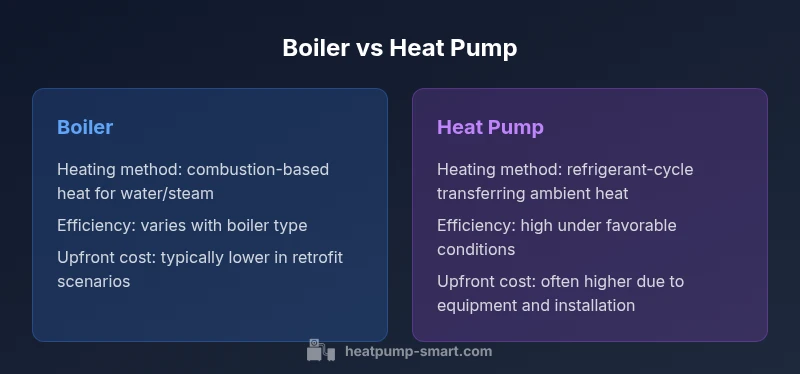
| Heating method | Combustion-based heat generation for water/steam | Refrigerant-cycle heat transfer extracting ambient heat |
| Efficiency potential | Depends on boiler type (condensing or non-condensing) | Higher efficiency under favorable outdoor conditions and proper sizing |
| Upfront cost | Typically lower upfront in retrofit scenarios | Typically higher upfront due to equipment and installation |
| Running costs | Gas/oil costs influence operating costs | Electricity price and efficiency drive operating costs |
| Space requirements | Requires space for fuel storage and boiler unit | Requires outdoor unit and indoor air handling or hydronic integration |
| Climate performance | Consistent heat with fuel supply; dependent on venting and fuel | Strong performance in moderate climates; potential supplemental heat in extreme cold |
| Maintenance | Annual burner service and venting checks | Regular refrigerant/electrical checks and outdoor unit care |
| Environmental impact | Emissions depend on fuel source | Lower direct emissions when powered by low-carbon electricity |
Advantages
- Lower upfront costs in many retrofit scenarios
- Broad fuel options for boilers and established service networks
- Boilers can deliver rapid heat in extreme cold with proper backup
- Heat pumps offer high efficiency and can reduce long-term energy use
- Potential incentives exist for heat pumps in many regions
Disadvantages
- Higher long-term running costs if energy prices rise or efficiency drops
- Boilers rely on fossil fuels unless paired with greener sources
- Heat pumps require space for outdoor unit and may need system redesign
- Installation can be more disruptive and costly in older homes
Heat pumps are generally the better long-term option for most well-insulated homes in moderate climates; boilers may be preferable in extreme cold or when existing fossil-fuel infrastructure is heavily embedded.
Choose a heat pump if your home has strong insulation and you want lower operating costs and emissions. A boiler might be the right fit if you’re in an exceptionally cold climate, need a simple retrofit, or want to leverage existing fuel infrastructure. The Heatpump Smart team’s verdict is to weigh climate, envelope, and energy prices carefully before deciding.
Your Questions Answered
Which heating system is more energy-efficient overall: boiler or heat pump?
Heat pumps generally offer higher energy efficiency in well-insulated homes and moderate climates, due to moving heat rather than burning fuel. Boilers can be efficient in certain designs and conditions, especially in very cold climates when paired with backup systems. Your climate and envelope determine the real-world efficiency you’ll experience.
Heat pumps are usually more energy-efficient in the right climate and with good insulation, but boilers can still be efficient where fuel costs align and upgrades are limited.
Can a boiler be replaced with a heat pump in an existing home?
Yes, many homes can swap a boiler for a heat pump, though the project may involve new ductwork or hydronic changes and possibly outdoor unit installation. A hybrid approach or staged upgrade can minimize disruption and allow testing of comfort levels before full replacement.
You can replace a boiler with a heat pump, often in stages to manage disruption and comfort testing.
Do heat pumps work in very cold climates?
Modern cold climate heat pumps are designed to maintain comfort down to lower temperatures, sometimes with a supplemental heat source during peak cold snaps. The effectiveness depends on unit sizing, refrigerant charge, and backup strategies.
Yes, many cold climate heat pumps perform well, especially with proper sizing and backup support.
What maintenance is required for boilers vs heat pumps?
Boilers require regular burner service, vent inspection, and pressure checks. Heat pumps need periodic refrigerant and electrical checks, filter changes, and outdoor-unit maintenance. Both benefit from annual professional checks for longevity and efficiency.
Boilers need burner service; heat pumps need refrigerant and electrical checks. Regular maintenance keeps both efficient.
How do upfront costs compare to running costs?
Upfront costs for heat pumps are higher due to equipment and installation, while boilers are typically cheaper to install. Running costs depend on energy prices, efficiency, and usage; heat pumps often save money over time in suitable climates.
Upfront costs for heat pumps are higher, but running costs can be lower with efficient operation.
Are there incentives or rebates that affect these choices?
Many regions offer incentives for heat pumps to reduce emissions, while boilers may qualify for certain programs as well. Check local utility programs and national incentives to understand potential payback.
There are incentives for heat pumps in many areas; check local programs for potential savings.
What’s the best first step to start evaluating options?
Start with an energy audit, gather quotes, and compare performance data for both options. Consider envelope improvements and smart controls to maximize any system’s efficiency.
Begin with an energy audit and multiple quotes to compare options deeply.
Top Takeaways
- Assess climate and insulation before choosing
- Prioritize total cost of ownership, not just upfront price
- Heat pumps excel in efficiency in moderate climates
- Boilers can be reliable with proper fuel and support
- Explore incentives to maximize project value