Replacing a Heat Pump: A Complete Step-by-Step Guide
Practical, step-by-step guide to replacing a heat pump, covering planning, sizing, installation, safety, and contractor tips for homeowners and property managers.


Replacing a heat pump involves planning, safety checks, and correct installation. This guide delivers a concise, quotable summary and links to a full step-by-step process you can follow to ensure reliable performance. You will learn how to replace a heat pump from start to finish: assess if replacement is required, select a compatible replacement, disconnect and remove the old unit safely, install the new heat pump, connect refrigerant lines, electrical, and controls, and test performance, efficiency, and safety compliance. This article also covers cost considerations, common pitfalls, and how to choose a contractor.
Why replace a heat pump and when it's worth it
Replacing a heat pump is a major home improvement decision. If your current system shows persistent breakdowns, rising energy bills, poor heating or cooling performance, or refrigerant leaks, replacement is worth evaluating. According to Heatpump Smart, modern heat pumps deliver higher seasonal efficiency and better comfort than legacy models, especially in extreme climates. A well-timed replacement can restore system reliability, reduce running costs, and qualify you for utility rebates. Before you decide, consider the age, repair history, and compatibility with your existing ductwork or new air handler. If the unit is over 12-15 years old, replacement often becomes financially sensible due to efficiency gains and the cost of frequent repairs.
Planning considerations and prerequisites
A successful replacement starts with a plan. Start by documenting current equipment details: outdoor unit model, refrigerant type, duct setup, and electrical service. Check local permits and homeowner association rules. Determine your target performance: heating/cooling needs, comfort levels, and whether you want a heat pump with a high SEER/HSPF rating. Heatpump Smart analysis shows that aligning the new unit with existing ductwork and electrical capacity minimizes retrofit costs. Decide whether you’ll preserve the interior air handler or install a new compact indoor unit to improve efficiency. Gather quotes from at least two licensed contractors, and ask about refrigerant handling, warranty terms, and post-installation commissioning.
Choosing a replacement unit: size, efficiency, and compatibility
Selecting the right heat pump depends on load calculations, climate, and home layout. Begin with a Manual J load calculation or a reputable calculator to size the system correctly; oversizing or undersizing leads to comfort and efficiency problems. Compare SEER, HSPF, and ENERGY STAR ratings, and review compressor type (inverter vs. traditional) and refrigerant compatibility. Ensure the outdoor unit matches your home’s electrical service and available space. If your home uses a gas furnace or hybrid setup, plan how controls will integrate with existing thermostats and smart controls.
Installation overview and process (highlights)
A proper replacement follows a disciplined sequence: turn off power, safely disconnect the old unit, remove it, and prepare the mounting pad. Install the new outdoor unit on a solid pad, connect refrigerant lines (handled by licensed tech), wire the unit to the electrical service, and integrate with the indoor air handler. Complete a vacuum test to check for leaks, then charge refrigerant to specification. Finally, perform a commissioning test to verify airflow, temperatures, and system responsiveness. Note: refrigerant charging and sealed-system work require licensed personnel under most codes.
Safety, permits, and hiring a pro
Replacing a heat pump involves electrical work, refrigerant handling, and lifting heavy equipment. Always cut power at the breaker before any service and use lockout-tagout practices. Many jurisdictions require permits for new installations and inspections after completion. Hiring a qualified HVAC contractor reduces risk, ensures proper refrigerant management, and protects warranties. Get written quotes, check licenses, and confirm that the installer will perform a test run and provide documentation of the system’s efficiency ratings and warranty terms.
Maintenance handoff and long-term performance
After replacement, schedule a short break-in period with moderate running to stabilize the refrigerant charge and lubrication. Set up routine maintenance: filter changes, coil cleaning, and annual inspections. Track energy usage to verify expected savings and compare to the contract promises. Keep maintenance records and warranty documents in a centralized place. Heatpump Smart recommends a proactive maintenance plan to extend the life of your new unit and maintain peak efficiency through changing seasons.
Tools & Materials
- Digital multimeter(Check electrical supply and safe voltage before starting)
- Wrench set (metric/SAE)(For disconnecting service fittings)
- Vacuum pump(For refrigerant line vacuum test)
- Manifold gauge set(To verify refrigerant pressure)
- Leak detector(Optional for rapid leak checks)
- Copper refrigerant lines (line set)(Only if existing lines are damaged or undersized)
- Electrical disconnect switch(Install near outdoor unit)
- Pad or mounting base(Level and solid ground for outdoor unit)
- Thermostat/controller(If updating controls or adding smart thermostat)
- Refrigerant handling by licensed technician(Only a licensed tech should handle refrigerant)
Steps
Estimated time: 4-8 hours
- 1
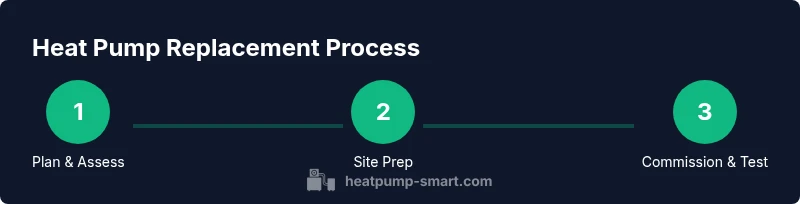
Plan and assess
Review current system specs, perform a qualitative assessment of ductwork, and define performance goals. Confirm local permitting requirements and budget constraints before purchasing equipment.
Tip: Document existing unit serial numbers and service history for warranty transfer. - 2
Prepare and safety check
Turn off power at the main disconnect, verify no voltage is present, and lockout equipment. Set up the work area with clear space and protective gear.
Tip: Take photos of wiring before disassembly to aid reassembly. - 3
Disconnect old unit
Carefully disconnect electrical connections, refrigerant lines, and mounting hardware from the outdoor unit. Label wires and lines for easy reference during installation.
Tip: Refrigerant work requires licensed personnel; plan accordingly. - 4
Remove old unit and prep site
Remove the existing outdoor unit and prepare a fresh mounting pad. Check for level, debris, and secure clearance around the unit.
Tip: Inspect duct connections and indoor equipment for compatibility with the new unit. - 5
Install new outdoor unit and connect lines
Place the new unit on the pad, connect refrigerant lines, and wire to the electrical service. Ensure proper seal and strain relief for lines.
Tip: Have refrigerant charging performed by a licensed technician; use vacuum test before charging. - 6
Commission and test
Power up, run through a full system test, verify airflow, temperatures, and controls. Document performance data and warranties.
Tip: Record operating pressures and outdoor temperature during initial run.
Your Questions Answered
Do I need permits to replace a heat pump?
In many areas a building or mechanical permit is required for a heat pump replacement. Ensure inspections are scheduled after installation to confirm compliance with local codes.
A permit is often required; check your local codes and arrange inspections after installation.
Can I replace a heat pump myself?
Refrigerant handling and electrical work typically require a licensed HVAC technician. DIY can void warranties and pose safety risks.
It's generally not recommended to do this yourself; hire a licensed professional.
How long does replacement take?
A straightforward outdoor unit swap may take a full day, with additional time if ductwork or indoor components require changes.
It usually takes about a day, depending on the home’s complexity.
How do I size a replacement heat pump?
Accurate load calculations and climate considerations determine the correct size. Oversizing or undersizing reduces comfort and efficiency.
Sizing is critical for efficiency and comfort; get a proper load calculation.
Are rebates available for replacement?
Many regions offer rebates or incentives for high-efficiency heat pumps. Check with your utility provider and local programs.
Check local rebates with your utility and state programs.
Watch Video
Top Takeaways
- Plan first, verify permits and compatibility
- Size and efficiency matter for long-term savings
- Use licensed pros for refrigerant work
- Test thoroughly and document performance