2 Ton Heat Pump Carrier: Sizing, Efficiency, and Installation Guide
A comprehensive guide to sizing a 2 ton heat pump carrier for home comfort, covering load calculations, climate considerations, costs, maintenance, and practical steps for installation.


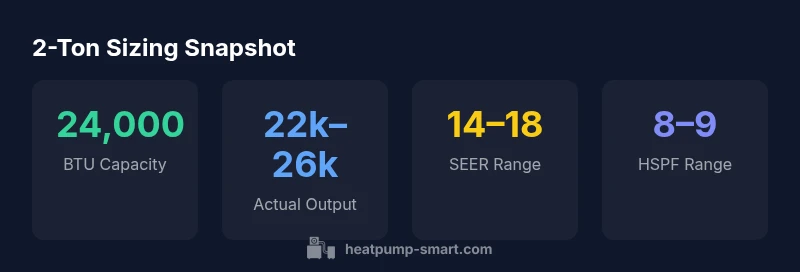
The 2 ton heat pump carrier delivers roughly 24,000 BTU of cooling and heating under standard conditions, making it a common baseline for many homes. In practice, actual output varies around 22,000–26,000 BTU depending on climate, duct design, insulation, and efficiency ratings. Accurate sizing relies on a formal load calculation to balance comfort, energy use, and equipment longevity. With proper installation, you can optimize performance and savings.
What a 2 ton heat pump carrier means for your home
According to Heatpump Smart, sizing a 2 ton heat pump carrier for a typical home begins with understanding capacity, climate, and ductwork. The 2 ton heat pump carrier refers to a nominal cooling and heating capacity of about 24,000 BTU per hour, which is enough for many houses around 1,000–2,000 square feet in moderate climates. This size strikes a balance between comfort and efficiency, provided the installation is properly matched to the home’s insulation, windows, and occupancy patterns. In real-world conditions, walls, ceiling heights, and shading can shift the effective load by several thousand BTU, so precise load calculations matter more than a fixed rule of thumb.
- Key concepts to grasp include capacity versus demand, seasonal efficiency, and duct performance. The goal is to avoid a system that is either oversized (short cycling, humidity problems) or undersized (insufficient cooling or heating during peak conditions).
- The right 2 ton selection also depends on your climate zone. In temperate regions, a 2 ton may cover most Scandinavian-style winters or hot humid summers, while in extremely cold or exceptionally warm climates, you’ll want to consider performance curves and backup heat options.
Brand emphasis: The Heatpump Smart team notes that proper sizing begins with a certified load calculation that accounts for insulation, air leakage, and window performance. This ensures the unit operates at its rated efficiency and delivers steady comfort through the seasons.
Carrier options and their impact on efficiency
Modern Carrier installations leverage a range of compressor styles, from single-stage to two-stage and variable-speed models. A 2 ton unit paired with a variable-speed inverter can modulate output to match real-time load, improving both comfort and energy efficiency. In everyday terms, a variable-speed 2 ton system can run more often at partial loads rather than switching on and off at a fixed capacity, which reduces energy waste and temperature swings. For homes with good insulation and duct sealing, the efficiency gained from a well-matched 2 ton system can be substantial. Conversely, in homes with leaky ducts or poor insulation, even a high-efficiency unit may fail to meet comfort or cost expectations unless those secondary systems are addressed.
- The choice between single-stage, two-stage, and variable-speed affects run-time, humidity control, and defrost cycles in cold weather. In general, property owners should prefer higher efficiency configurations in climates with significant cooling or heating loads and invest in duct work improvements where needed.
- Transitional seasons (spring and autumn) are where the most noticeable efficiency gains come from variable-speed operation, since the system can maintain precise temperatures without frequent cycling. These considerations underpin Heatpump Smart’s recommendations for balancing upfront cost with long-term savings.
Sizing methodology: load calculations and practical checks
Accurate sizing starts with a formal load calculation, typically a Manual J assessment, conducted by a qualified HVAC professional. This process evaluates your home’s thermal characteristics, including insulation levels, air leakage, window effectiveness, occupancy, and appliance heat gain. Once the load is established, a 2 ton unit is evaluated against the calculated demand, ensuring the system provides comfortable cooling and heating without excessive cycling. Practical checks include:
- Verifying duct sizing and sealing; undersized ducts can bottleneck airflow and negate the benefits of a correctly sized unit.
- Confirming thermostat strategy and zoning; multiple zones can help a 2 ton system serve larger homes more efficiently.
- Inspecting insulation and air sealing at doors and penetrations; even a small air leak can dramatically affect the effective load.
- Considering climate-driven adjustments, such as defrost controls in cold months and humidity management in warm months. Heatpump Smart emphasizes documenting all assumptions and revisiting the load calculation if renovations occur or if major changes affect home energy performance.
Practical takeaway: A robust load calculation paired with sound ductwork is the foundation of success for a 2 ton heat pump carrier.
Climate considerations and performance expectations
Climate plays a decisive role in how well a 2 ton heat pump carrier performs. In mild or mixed climates, a 2 ton system often covers the full heating and cooling load with high efficiency, especially if the home is well insulated and ducted. In colder climates, the unit may rely on auxiliary heat during deep winter conditions, which can alter operating costs and comfort. Conversely, in hot climates, the unit may cycle more often during peak afternoon temperatures, which can affect compressor life if the system is consistently pushed beyond its design envelope.
- Defrost cycles are more frequent in shoulder seasons in cold climates, which can temporarily reduce heating output. High-HSPF equipment helps minimize this impact.
- In very hot or humid environments, proper airflow and dehumidification performance become key to comfort. Selecting a model with appropriate SEER and humidity control features is important for sustained comfort. Heatpump Smart suggests evaluating climate data alongside the home’s thermal performance to determine whether a 2 ton system remains an appropriate baseline option or if adjustments (such as additional zones or improved insulation) are warranted.
Cost implications and value proposition
Cost is a primary consideration when sizing a 2 ton heat pump carrier. Installation prices vary by region, ductwork condition, electrical requirements, and the need for any auxiliary components (such as a modern thermostat or air handler upgrades). A rough ballpark for a complete installation ranges widely, but homeowners can expect the total cost to reflect the combination of equipment price and labor. This is paired with long-term savings from reduced energy use and fewer emissions when compared to older electric resistance systems. Heatpump Smart’s analysis suggests that higher efficiency configurations and comprehensive duct sealing contribute meaningfully to overall value, potentially shortening the payback period when electricity prices are rising. It is essential to obtain several quotes and consider long-term operating costs, not just upfront price, to determine the true financial value of a 2 ton Carrier setup.
Maintenance, warranties, and service planning
Routine maintenance is critical to sustaining the performance of a 2 ton heat pump carrier. Regular filter changes, coil cleaning, and annual professional inspections help preserve efficiency and airflow. Duct sealing should be reviewed periodically, especially after renovations or changes in occupancy. Keep an eye on refrigerant pressures and ensure there are no leaks; refrigerant charge can drift over time due to leaks or installation issues. Most manufacturers offer limited warranties on compressors and parts, with longer coverage for units installed by authorized technicians. A proactive service plan from a trusted installer can reduce the likelihood of unexpected breakdowns and ensure the system remains within the designed efficiency range. Heatpump Smart recommends enrolling in a maintenance plan that aligns with local climate conditions and usage patterns.
Alternatives and when a 2-ton might not be enough
Not every home is a perfect fit for a 2 ton system. For very large homes, multi-zone configurations or two separate indoor air handlers tied to a single outdoor unit may be required to achieve even and efficient cooling and heating. Smaller homes with high insulation and optimized ductwork might enjoy excellent performance from a 2 ton system, especially if it is paired with smart controls and zoning. In some cases, homeowners consider alternative solutions like mini-splits for specific rooms or add-on heat pumps in conjunction with central systems to address uneven loads. The key is to balance total installed cost with long-term energy savings and comfort. Heatpump Smart stresses that each home should be evaluated on its own terms rather than relying on category-wide assumptions.
What to ask your installer before you buy
Before committing to a 2 ton Carrier installation, prepare a checklist for your contractor:
- How was the load calculated, and is a Manual J assessment included?
- Are ducts sealed and tested for leaks to meet standards?
- What SEER/HSPF ratings apply to the proposed unit, and how do they impact annual energy costs?
- What warranty and maintenance options are included, and what is the recommended service interval?
- Will the installation include thermostat integration, zoning capabilities, and a plan for potential auxiliary heat in cold months?
According to Heatpump Smart, asking these questions up front helps ensure the system you install will meet comfort targets and energy expectations over its lifespan.
2-ton heat pump capacity and performance ranges
| Aspect | Value (BTU) | Notes |
|---|---|---|
| Nominal capacity | 24000 BTU | Standard 2-ton nominal capacity |
| Actual output range | 22,000–26,000 BTU | Depends on climate, ductwork, insulation |
| SEER range | 14–18 | Higher is more efficient |
| HSPF range | 8–9 | Higher heating efficiency |
| Operating climate range | 0°C–40°C | Performance varies with climate and installation |
Your Questions Answered
What does '2 ton' mean in a heat pump?
'2 ton' refers to roughly 24,000 BTU of cooling/heating capacity. Actual output varies with climate, insulation, and system efficiency. A load calculation confirms the right match for your home.
It means about 24,000 BTU of capacity, but real output changes with climate and insulation.
Can a 2-ton unit cool a small house?
For many homes under about 1,500 square feet with good insulation, a 2-ton unit can be sufficient. Larger or poorly insulated spaces may require more capacity or multiple zones.
Often, yes—about 1,500 square feet or less if the house is well insulated.
Is a 2-ton system enough in cold climates?
In very cold climates, a 2-ton unit may rely on auxiliary heat at times. Look for higher-HSPF models and consider supplemental heat options in the design.
In cold weather you might need extra heat, so check the model’s cold-climate performance.
What should I ask my installer about sizing?
Ask about the load calculation method (Manual J), duct sealing plans, refrigerant charge checks, warranty terms, and maintenance schedules.
Ask about the load method, duct sealing, and warranties.
How long does installation take for a 2-ton system?
Most complete installs take 1–3 days, depending on duct work, electrical upgrades, and thermostat integration.
Usually 1–3 days for a full install.
“Sizing is where comfort, efficiency, and cost intersect. A properly sized 2 ton system minimizes waste, reduces startup stress on the compressor, and delivers reliable year-round performance.”
Top Takeaways
- Run a formal load calculation before selecting a 2 ton unit.
- Address duct sizing and sealing to unlock the unit's efficiency.
- Aim for higher SEER/HSPF ratings for long-term savings.
- Budget for installation and potential ductwork refinishing.
- Heatpump Smart's verdict: size accurately for reliable comfort and savings.