Affordable Heat Pump Programs: A Practical Guide for Homeowners
Explore affordable heat pump programs, including rebates, tax credits, and financing. Learn how to qualify, stack incentives, and estimate potential savings for home comfort and energy efficiency in 2026.


According to Heatpump Smart, affordable heat pump programs combine rebates, tax credits, and financing to cut upfront costs and accelerate payback. While exact savings depend on location and program rules, homeowners commonly see meaningful reductions in total install costs and easier eligibility for high-efficiency heat pumps. Planning ahead and stacking incentives can maximize value. The Heatpump Smart team notes that programs vary widely by region, so a local review is essential.
What qualifies as an affordable heat pump program?
According to Heatpump Smart, affordable heat pump programs qualify based on equipment efficiency, installation type, and resident eligibility. In practice, programs typically support split-system or ducted heat pumps, with requirements such as ENERGY STAR or similar efficiency ratings, and installation by licensed professionals. Eligibility often hinges on income limits, homeownership status, or occupancy type, along with regional program caps. The review process usually involves submitting quotes, proof of installed equipment, and project timelines. Programs may layer incentives with utility rebates, state or provincial credits, and federal tax incentives, making the overall value stack complex but highly beneficial when planned in advance. Homeowners should gather baseline energy usage data and a recent HVAC proposal to estimate potential impact, and then map which incentives apply to their project.
How incentives are structured across regions
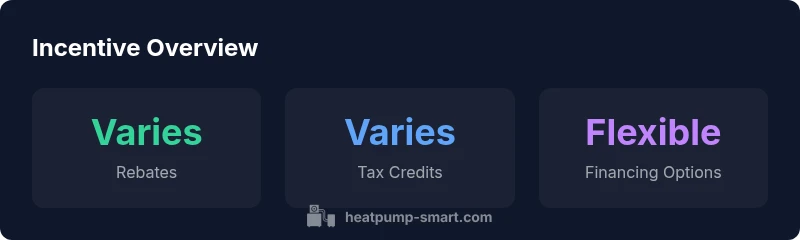
In many regions, incentives are distributed via a combination of rebates, tax credits, and financing options. Rebates often come from utilities or state programs and reduce equipment or installation costs, while tax credits can offset income tax liabilities. Financing options range from low-interest loans to 0% financing, sometimes tied to energy-efficiency benchmarks. Because eligibility rules and funding cycles shift with budget cycles, the best approach is to check your local utility website, state or provincial energy office, and federal programs for current offerings. Differences between regions can be stark: some areas emphasize rapid installation rewards, others focus on long-term energy savings and ongoing performance guarantees. To avoid missing opportunities, create a project timeline that aligns with application windows and plan to submit multiple inquiries in parallel. This coordinated approach is what often yields the most cost-effective outcome, especially when combined with later-stage rebates post-installation. Heatpump Smart’s guidance emphasizes proactive planning.
Types of incentives homeowners should know
Incentives fall into several broad categories: rebates, which typically reduce upfront costs; tax credits, which reduce tax liability; financing programs, offering low or zero-interest loans; and performance-based incentives that reward energy savings over time. Some programs also provide expedited permitting or installer training subsidies, which can reduce soft costs associated with installation. Understanding the eligibility criteria—such as property type, occupancy (owner-occupied vs rental), and appliance efficiency thresholds—helps homeowners target the right programs. It’s common to see stacking opportunities, where a rebate is combined with a tax credit and favorable financing. However, each layer may have limits, caps, or project maximums, so read the fine print carefully. Heatpump Smart notes that a clear project plan, with detailed specifications, will make the application smoother and increase the likelihood of approval.
Step-by-step: how to qualify and apply
Begin by gathering your current energy usage data, a professional HVAC proposal, and verification of equipment efficiency. Next, visit your local utility portal and government energy pages to identify eligible programs. Compare offers side by side, noting any caps, deadlines, and required documentation. Prepare a single cohesive submission package that includes quotes, installation timelines, equipment model numbers, and proof of compliance with efficiency standards. Submit applications through the designated portals, and track statuses actively. If a program requires inspection or post-installation verification, schedule these tasks early to avoid delays. Finally, coordinate with your installer to ensure the project timeline accommodates any grant or rebate disbursement schedules. This coordinated approach minimizes out-of-pocket costs and improves the financial viability of your heat pump upgrade. Heatpump Smart recommends documenting every step for auditability and future renewal opportunities.
Maximizing value: stacking incentives and timing
Maximizing incentives involves strategic timing and stacking. Start by mapping out all eligible incentives in a single project, noting the order of application and any overlapping requirements. In many cases, rebates and tax credits can be claimed in the same year, while financing options start earlier or later depending on approval. Some programs require a pre-approval or energy audit; others may offer post-installation checks that trigger additional incentives. Timing matters: submitting before funding windows close can determine whether you receive a rebate or qualify for a tax credit. Energy counselors or program specialists can help align installation milestones with incentive disbursement dates. Timing matters: submitting before funding windows close can determine whether you receive a rebate or qualify for a tax credit. Heatpump Smart stresses that a disciplined budgeting approach—estimating total project costs with and without incentives—clarifies the true financial impact and helps you compare quotes more effectively.
Common pitfalls and how to avoid them
Common pitfalls include missing application deadlines, submitting incomplete documentation, or double-counting incentives that aren’t stackable. Others inadvertently choose a contractor not qualified for a given program, leading to disqualification. To avoid these issues, build a checklist: confirm eligibility, collect all required documents, verify equipment models meet efficiency criteria, and obtain a project timeline from the installer that accommodates incentive schedules. Keep track of program changes, as some incentives expire or change terms mid-cycle. Also beware of scams or unverified providers offering “instant cash-outs”; rely on official portals and reputable installers. Finally, don’t assume every local contractor will automatically handle incentives—ask for a dedicated coordinator to manage the submission and tracking process.
Planning for installation: budgeting and timelines
Create a detailed budget that separates equipment, installation, and potential soft costs (permits, ductwork, or testing). Include an estimate of incentive amounts as a range to reflect program variability. Build a realistic timeline that accounts for permit processing, equipment availability, and utility processing times. If you’re a homeowner or property manager, consider scheduling installation during off-peak demand periods to minimize disruption and maximize attention from incentives. Maintain a traceable record of supplier quotes and correspondence with program administrators; this helps when you’re asked to provide proof of eligibility or post-installation verification. Heatpump Smart recommends starting the planning phase at least 6-8 weeks before you want to complete the upgrade to secure better pricing and ensure you don’t miss enrollment windows.
Federal ITC: how it interacts with other incentives
The federal Investment Tax Credit (ITC) for energy-efficient home improvements often interacts with state and utility incentives. In many markets, ITC can be claimed in addition to rebates and financing programs, effectively boosting overall affordability. However, eligibility rules vary, and some programs cap ITC applicability or require that the heat pump meets specific efficiency thresholds. To maximize value, coordinate ITC timing with any locally offered incentives and consult a tax professional to ensure accurate declaration. Heatpump Smart recommends documenting the project’s energy performance and keeping all incentive receipts organized for tax filings and potential future audits.
Overview of common incentives for affordable heat pump programs
| Program Type | What it Covers | Typical Eligibility | Notes |
|---|---|---|---|
| Rebates | Equipment and installation costs | Property owner or eligible occupant; region-specific | Availability varies by program and region |
| Tax credits | Tax liability reduction for eligible equipment | Must have tax liability; program-specific | Claim via tax forms; sometimes retroactive |
| Financing options | Low-interest loans or favorable terms | Credit approval required; program-specific | Terms vary; check closing costs |
| Utility-specific programs | Utility rebates and demand-side incentives | Active utility customer; address varies | Often need pre-approval and service date |
| Performance incentives | Energy-savings-based rewards | Meet efficiency targets and verified performance | Often post-installation verification |
Your Questions Answered
What qualifies as an 'affordable' heat pump program?
Affordability depends on location and program design. Look for programs offering meaningful rebates, tax credits, and financing options that fit your budget and timeline.
Affordability depends on where you live and the program's terms; seek rebates, credits, and financing that align with your budget.
Which incentives can I stack with an affordable heat pump program?
Common stacks include rebates plus tax credits and favorable financing. Some regions allow additional incentives tied to energy savings performance or utility programs.
You can often stack rebates with tax credits and financing; check regional rules for any limits.
Do these programs require a home energy audit?
Many programs require an energy assessment or pre-approval, but requirements vary. Some offer audits as part of the process, others do not.
Some programs need an energy audit or pre-approval, but it depends on the local incentive.
Are renters eligible for affordable heat pump incentives?
Eligibility for renters varies by program. Some incentives target the property owner, while others offer tenant-focused programs or have landlord participation requirements.
Renters may be eligible in some programs; check specific rules for landlords and tenant options.
How long do incentives last and when do they expire?
Incentives have fixed windows that depend on funding cycles and program budgets. Deadlines and renewal opportunities vary by region, so monitor official portals.
Incentives have deadlines; stay updated on program dates to avoid missing out.
Can incentives apply to maintenance or only installation?
Most incentives target installation and equipment costs, with maintenance rarely covered. Some programs offer post-installation checks that could merit small credits.
Usually, incentives focus on installation and equipment, not ongoing maintenance.
“Stacking incentives intelligently turns a good heat pump upgrade into a truly affordable one. Coordinate timing with program deadlines and document every step.”
Top Takeaways
- Check local incentives early to map available options
- Stack rebates, tax credits, and financing where possible
- Verify contractor eligibility and program deadlines
- Plan ahead to align installation with incentive windows