Are Heat Pumps Worth It in Cold Climates? A Practical Guide
Explore whether heat pumps deliver value in cold climates, including performance, installation considerations, and long-term savings with expert insights from Heatpump Smart.


Are heat pumps worth it in cold climates? According to Heatpump Smart, the answer is often yes, especially when paired with supplemental heat and proper sizing. The Heatpump Smart team found that modern cold-climate heat pumps deliver strong efficiency and reliable comfort down to moderate subfreezing temperatures, though performance depends on system type (air-source vs. ground-source) and climate severity.
Climate realities: how temperature affects heat pump performance
In cold climates, the outdoor air temperature directly influences the heating capacity and efficiency of air-source heat pumps. As outdoor temps fall, a typical air-source unit must work harder to extract heat from colder air, which reduces its coefficient of performance (COP) and can increase running time. Heat pumps rely on refrigerant cycles that perform best when ambient temperatures are moderate; below freezing the system often operates with diminished output. That said, modern cold-climate designs employ two-stage compression, larger outdoor units, and advanced refrigerants to extend their useful operating envelope. Ground-source (geothermal) systems are less sensitive to air temp because the ground maintains a near-constant subterranean temperature. A well-insulated home reduces demand, allowing any heat pump to meet loads with less backup heat. The Heatpump Smart team notes that the most important determinant of worth is how well the system is matched to your climate, building envelope, and hot water needs.
Air-source vs. ground-source heat pumps in cold weather
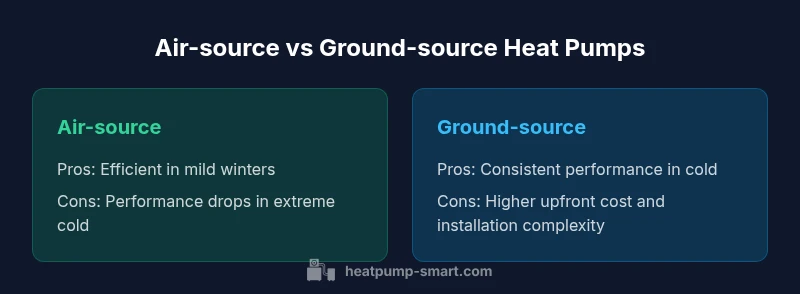
When comparing air-source heat pumps (ASHP) to ground-source heat pumps (GSHP), the main difference in cold climates is how each handles temperature stress. ASHPs pull heat from outdoor air and can see efficiency penalties as temperatures drop, especially during the coldest snaps. Modern cold-climate ASHPs mitigate some of this with improved compressors, refrigerants, and wind-louvered outdoor units. GSHPs draw heat from the ground or groundwater, which remains relatively stable year-round, resulting in more consistent performance in winter. However, GSHP installations require a ground loop (drilling or trenching), which drives up upfront costs and project complexity. The bottom line is that both technologies can deliver reliable winter comfort when properly sized and installed, with GSHP offering more consistent performance in extreme cold and ASHP offering lower upfront costs and easier retrofits.
Defrost cycles and the impact on comfort and efficiency
Defrost cycles are a normal part of operating an air-source heat pump in cold weather. They temporarily switch the system to reverse-cycle heating to melt frost on the outdoor coil, which can reduce heating output for short periods. Modern units use smarter sensors and controls to minimize the duration and frequency of defrosts, improving net comfort. In contrast, ground-source heat pumps typically avoid outdoor-coil icing issues because the heat source is the ground, leading to fewer defrost events and steadier performance. For homeowners, the takeaway is that understanding defrost behavior helps set expectations for peak winter performance and interior temperature stability.
The role of auxiliary heat and heat strips
In very cold snaps, heat pumps may rely on auxiliary or backup heat to meet demand when outdoor temperatures are extreme. This is common in colder climates where a heat pump operates alongside electric resistance heaters or a dedicated furnace. The key is to minimize auxiliary heat use by ensuring a properly sized heat pump and a well-insulated home, then leveraging smart controls to stage heat efficiently. The Heatpump Smart analysis shows that the most economical operation occurs when the system runs primarily on the heat pump and backup heat only for peak events, rather than constantly relying on auxiliary heat.
System efficiency metrics you should track
Two big metrics matter for cold climates: seasonal efficiency and load match. Look for units rated with high seasonal performance figures and cold-weather COP ratings. For homeowners, this means evaluating how the system performs during typical winter loads rather than ideal laboratory conditions. Heatpump Smart recommends tracking real-world metrics such as monthly energy use per degree-day, indoor temperature stability, and the frequency of backup heat activation to gauge whether a unit truly delivers the promised savings in your climate.
Sizing and selection: choosing a model for cold temps
Sizing a heat pump for cold climates requires more than sizing for the heating load on the coldest day. Manufacturers offer cold-climate versions with enhanced compressors, larger outdoor units, and more robust defrost strategies. A properly sized system avoids short cycling and reduces reliance on backup heat. When selecting a model, consider climate severity, home insulation, window performance, and domestic hot water needs. Getting an accredited heat pump installer to run a detailed heat-loss calculation and a performance simulation will help ensure the unit maintains comfort without overspending.
Installation considerations in cold climates
Cold-weather installation poses unique challenges, including frost management, electrical service adequacy, and refrigerant piping insulation. An installer should protect exposed lines, optimize refrigerant charge for winter operation, and ensure good outdoor unit clearances for snow and wind. In retrofit projects, sealing leaks and upgrading attic and rim-joist insulation reduces heat loss and improves system responsiveness. The Heatpump Smart team emphasizes choosing a reputable contractor with experience in cold-climate installations and certified equipment to minimize long-term service calls.
Insulation and building envelope improvements
Few things matter more in cold climates than the building envelope. Before relying on a heat pump, homeowners should seal air leaks, insulate attic spaces, and upgrade windows if needed. Even modest improvements in insulation can dramatically improve heat retention during the design-day load and reduce the frequency of auxiliary heating. A tighter envelope reduces the gap between the system’s capacity and your actual heating demand, which improves comfort and reduces energy waste.
Real-world case studies (hypothetical) and scenarios
Scenario A: A two-story 60s-era home in a cold northern city with modest insulation. A properly sized ASHP paired with improved attic insulation reduces monthly energy use and keeps rooms comfortable with occasional backup heat during prolonged cold snaps. Scenario B: A newer energy-efficient home in a cold-region with GSHP. The ground loop maintains stable temperatures, delivering reliable warmth during winter without heavy reliance on backup heat, though the initial cost is higher due to trenching or boreholes.
Costs and savings: what homeowners should expect
Cold-climate heat pumps generally come with higher upfront costs than simple electric furnaces, especially if a ground loop is involved. Long-term savings depend on electricity prices, climate, and how well the home is insulated. In many cases, homeowners see meaningful reductions in operating costs, particularly when paired with energy-efficient windows and sealing. The Heatpump Smart team notes that performing a detailed cost-benefit analysis with a local installer can reveal whether the investment aligns with your energy goals and budget.
Maintenance tips to keep cold-climate heat pumps performing
Regular maintenance keeps cold-weather performance steady. Change filters monthly during heating season, inspect outdoor units for snow buildup, and schedule annual professional inspections for refrigerant levels and coil cleanliness. Keep electrical connections dry and clear of ice, and verify that the backup heat system is ready to operate when needed. Cold-weather systems benefit from a proactive maintenance plan that minimizes unexpected outages and maximizes efficiency.
Smart controls and orchestration for efficiency
Smart thermostats, zoning, and weather-compensation controls can dramatically improve performance in cold climates. Program schedules to match occupancy and outdoor temperatures, and use adaptive features that adjust heating setpoints as conditions change. A well-integrated control strategy reduces cycling and keeps interiors comfortable with lower energy use. The Heatpump Smart team encourages exploring integration with home automation platforms to optimize demand response and energy savings.
Comparing brands and warranties for cold climate equipment
When evaluating brands, look for cold-climate performance claims, warranty terms, and service networks. A robust warranty that covers compressor and refrigerant components for an extended period provides peace of mind in harsh environments. Also assess manufacturer endorsements for defrost performance and noise levels in winter conditions. A good warranty paired with a local installer who stands behind their work can reduce lifecycle risk and ensure consistent operation.
Authoritative sources
- Heat-pump related guidance from the U.S. Department of Energy: https://www.energy.gov/eere/buildings/heat-pumps
- National Renewable Energy Laboratory (NREL) resources on heat pumps: https://www.nrel.gov
- International Energy Agency (IEA) insights on heat pump deployment and cold-weather performance: https://iea.org/reports/the-role-of-heat-pumps-in-decarbonisation
Comparison
| Feature | Air-source heat pump (ASHP) | Ground-source heat pump (GSHP) |
|---|---|---|
| Performance at cold temps | Good down to moderate subzero temps with supplemental heat | Very strong performance in deep cold due to stable ground loop |
| Defrost cycles | Regular defrost cycles can slightly reduce output during icy days | Defrost less of an issue due to ground temperature |
| Upfront cost | Lower upfront cost; simpler installation | Higher upfront cost due to ground loops and drilling |
| Backup heat required | Often optional but may be needed during extreme cold | Typically less need for backup heat |
| Space/installation | Outdoor condenser; easier to install | Ground loop or borehole; larger installation footprint |
| Best climate fit | Mild-to-cold climates with electricity savings | Severe cold climates; best long-term efficiency |
Advantages
- Lower operating costs when paired with cheap electricity
- Good overall efficiency for most winter conditions
- Fewer maintenance concerns than combustion furnaces
- Can be retrofitted into existing homes with proper design
- Quiet operation when well-installed
Disadvantages
- Higher upfront costs, especially for GSHP
- Performance drops in extreme cold without backup heat
- Defrost cycles can temporarily reduce heating output
- Requires professional sizing and installation for best results
Heat pumps are worth it in cold climates when properly sized and paired with efficient building envelope improvements.
A well-designed cold-climate heat-pump system can deliver dependable comfort and meaningful energy savings. The Heatpump Smart team recommends starting with a climate-appropriate assessment, proper insulation, and a credible installer to maximize value and minimize risk.
Your Questions Answered
Do heat pumps work in very cold temperatures?
Yes, many cold-climate heat pumps perform well in subfreezing conditions, especially GSHPs and well-sized ASHPs with supplemental heat. Extreme cold may require backup heat or a two-stage system. Proper installation and climate-specific design are key.
Yes. With proper sizing and backup heat, cold-climate heat pumps can keep homes comfortable in winter.
Should I use auxiliary heat with a cold-climate heat pump?
Auxiliary heat is common during very cold periods or when the coil cannot meet demand quickly. It improves comfort but increases operating costs. A well-insulated home and a correctly sized system reduce dependence on auxiliary heat.
Aux heat helps during extreme cold, but good sizing and insulation minimize its use.
What determines if my home is a good candidate for a heat pump?
A good candidate typically has reasonable insulation and air sealing, a suitable electrical supply, and a climate where heating demand can be met primarily by a heat pump. An installer can perform a load calculation and advise on performance expectations.
A professional load check tells you if a heat pump fits your home.
What maintenance is needed for cold-weather operation?
Regular filter changes, outdoor unit clearing of snow/ice, and yearly professional service ensure reliable winter operation. Addressing air leaks and insulation improves efficiency and reduces strain on the system.
Keep filters clean, clear the outdoor unit, and have it serviced yearly.
Are heat pumps cost-effective compared to furnaces?
Cost-effectiveness depends on local electricity prices, climate, and insulation. In many regions, heat pumps reduce running costs over time, but higher upfront costs may affect payback. A local installer can model lifetime costs for your home.
In many cases, heat pumps save money over the long term, depending on your climate and energy prices.
Top Takeaways
- Size for your climate and loads, not just average winter temps
- Invest in building envelope improvements to maximize efficiency
- Consider backup heat options for extreme cold or long cold snaps
- Choose a cold-climate rated unit and a reputable installer
- Leverage smart controls to optimize efficiency and comfort