How Cold Will a Heat Pump Work in Winter: A Practical Guide
Explore how cold temperatures affect heat pump performance, efficiency, and comfort. Heatpump Smart explains what to expect, how to compare models, and when to add backup heat for winter.


According to Heatpump Smart, most modern air-source heat pumps keep delivering warmth well below freezing, typically down to about -5°C to -15°C, depending on design and refrigerant. Performance falls as outdoor temps drop, and very cold days may require supplemental heat. For severe cold, look for cold-climate refrigerants and backup heat options.
How Cold Will a Heat Pump Work? Key Climate Realities
Understanding the question begins with two core ideas: heating output and efficiency. When outdoor temperatures are cold, an air-source heat pump must extract heat from colder air, which lowers its COP and reduces heat delivered per unit of electricity. The intent of this guide is to explain what to expect, how to compare models, and what strategies help maintain comfort. According to Heatpump Smart, most modern heat pumps continue to operate well below freezing, typically down to about -5°C to -15°C, depending on design and refrigerant. Modern cold-climate designs add features like variable-speed compressors, improved outdoor coils, and intelligent defrost controls to maximize performance in winter. The upshot is that the answer to how cold will a heat pump work is not a single number; it depends on the unit, climate, and how you balance heat source options.
As you read, keep in mind that warmth inside your home is not only a function of outdoor temperature. It also depends on insulation, air leakage, thermostat settings, and the size and layout of the space. A heat pump moves heat rather than making it, so there is always a limit set by the outdoor air temperature and the machine’s rated capacity. On the coldest days, you may notice longer runtimes or more cycling of auxiliary heat, even with a capable cold-weather unit. This is why selecting a system tuned for your climate, and planning for backup heat, is essential.
Temperature Thresholds: What Counts as Cold Across Climates
Readers in different regions call the same conditions different names. In milder winters, a temperature of 0°C (32°F) is just a chilly day; in colder regions, -10°C (14°F) or lower becomes the benchmark for winter performance. The key for homeowners is to understand how your climate fits into a heat pump’s performance curve. Most manufacturers publish COP (coefficient of performance) and heating capacity curves that show how each model performs as outdoor temperature falls. While a heat pump may maintain comfortable indoor temperatures down to a certain threshold, its true performance depends on the pairing of the outdoor temperature, indoor setpoint, and the heat load of the space. For homes that experience extended cold spells, it’s common to run auxiliary heat when outdoor temperatures plummet, then rely on the heat pump again as conditions improve. Remember that humidity, air movement, and solar gain also influence perceived warmth. If you live in a climate with frequent subfreezing days, choose a unit rated for cold-weather operation and plan for backup heat options.
Cold-Climate Design Features That Help
Manufacturers design cold-climate heat pumps to stay productive in lower temperatures. Key features include: variable-speed compressors that ramp up or down to match demand, advanced refrigerants optimized for cold air, and frost-management systems that minimize defrost cycles while maintaining heat output. Indoor components like the air handler and coil may be sized to minimize heat loss, and some models pair with thermal storage or enhanced controls that adjust fan speed, heat pump operation, and defrost timing. For a unit intended for winter, look for: outdoor-rated components and warranty coverage for cold operation, frost sensors, and a defrost strategy that minimizes time spent in dehumidifying mode. The result is a system that continues to move heat even on days when the mercury drops, reducing the need for oversized backup heat. This is why choosing a model designed for cold climates, rather than a standard unit, matters for comfort and energy bills.
Backup Heat, Defrost Cycles, and Seasonal Changes
Even the best cold-weather heat pumps rely on supplemental heat during the coldest periods. Electric resistance or a gas-fired backup can maintain comfort when the outdoor air offers little heat energy. Defrost cycles that prevent frost buildup on the outdoor coil can temporarily reduce heat output, but advanced controls limit energy loss. When the outside temperature stays low for an extended period, the system may switch from heating mode to a mixed mode, using backup heat while the outdoor coil defrosts. In practice, you may notice the indoor temperature remains steady, but the thermostat calls for extra watts from the backup source. The presence of backup heat is not a failure; it’s an intentional design to ensure comfort when cold air reduces the heat pump’s natural heating capacity.
Reading Performance Data: COP Curves, HSPF, and Real-World Metrics
To understand how cold will a heat pump work in your home, read the performance data provided by manufacturers. COP curves show how efficiency changes with outdoor temperature; higher COP at milder conditions means more efficient operation, while COP declines as it gets colder. Seasonal Performance Factor (SPF) or Heating Seasonal Performance Factor (HSPF) summarizes performance over winter months. Remember that real-world performance differs from lab ratings due to insulation, air leakage, and thermostat practices. For a complete picture, compare several models using the same outdoor conditions and load estimates, and consider the effect of defrost cycles and backup heat. This is where Heatpump Smart analysis shows that selecting a model with a strong cold-weather COP, robust defrost logic, and a reliable backup heat option yields the most consistent comfort and energy savings.
Practical Steps to Improve Winter Performance in Homes and Buildings
If you’re upgrading or selecting a system, plan for winter-specific needs. Start with proper insulation and air sealing to reduce heat loss, then size the system to match the space’s heat load. Position thermostats away from drafts and ensure proper sensor placement so the system reads accurate indoor temperatures. Install a robust outdoor unit clearance with no snow obstruction, and verify that the defrost cycle is functioning as intended. Schedule a professional tune-up before the cold season and review the refrigerant charge and airflow. In addition, consider supplementary heat options for peak demand days and ensure electrical service is adequate for backup heat. With these steps, you’ll maximize comfort and minimize energy use even when how cold will a heat pump work becomes a real-world test.
Heatpump Smart’s Take: Planning for Cold Weather and Winter-Ready Systems
In-depth planning pays off when winter arrives. The Heatpump Smart team recommends selecting a model sized for your climate, with proven cold-weather performance, a reliable defrost strategy, and a clearly defined backup heat option. Testing the system under typical winter conditions and reviewing real-world performance data helps homeowners and property managers anticipate how cold will a heat pump work in practice. The takeaway is to prioritize cold-climate capability, proper installation, and ongoing maintenance. Heatpump Smart’s verdict is that a well-chosen heat pump paired with good insulation and a sensible backup plan delivers steady comfort, predictable energy costs, and long-term reliability.
Tools & Materials
- Outdoor thermometer(Measure ambient temperature outside near the unit)
- Thermostat with outdoor sensor(If available; helps dynamic controls)
- Heat pump model spec sheet/manual(COP, defrost, and backup heat data)
- Insulation and air-sealing materials(Useful for winter upgrades and testing comfort)
- Notebook or digital log(Record outdoor temps vs indoor performance during winter)
Steps
Estimated time: 25-40 minutes
- 1
Identify your climate range
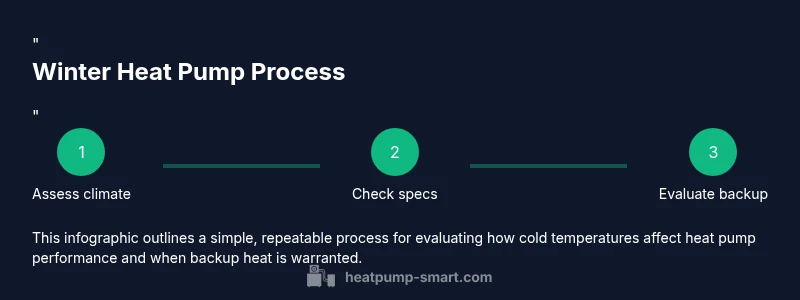
Gather local winter temperature data and compare with your heat pump’s cold-weather specs. This helps set expectations for COP and heat output during the coldest days.
Tip: Use local climate data and the unit’s COP curve to estimate performance at typical winter lows. - 2
Check model's cold-weather specs
Open the user manual and locate the manufacturer’s stated operating range and defrost behavior. This shows whether your unit is designed for your coldest nights.
Tip: Note the lowest outdoor temp at which the unit maintains rated heating capacity. - 3
Review COP curves and capacity
Examine how efficiency (COP) and heating capacity vary as temperatures fall. Compare multiple models under the same outdoor conditions.
Tip: Focus on models with higher COP on colder days and robust defrost control. - 4
Evaluate backup heat options
Determine if electric resistance or another backup heat source is available and how it integrates with the control system.
Tip: Ensure backup heat engages smoothly and safely without overloading electrical service. - 5
Assess defrost cycle behavior
Understand how defrost cycles affect heat output and indoor temperature during cold snaps.
Tip: A shorter, efficient defrost cycle minimizes comfort loss. - 6
Test performance under cold conditions
If possible, observe system operation during a cold spell and log outdoor temp, indoor temp, and energy use.
Tip: Use a simple log sheet to correlate outside temps with heat output. - 7
Plan regular winter maintenance
Schedule annual checks focusing on refrigerant charge, air filter cleanliness, and outdoor coil condition.
Tip: Preventative maintenance preserves efficiency and reliability in winter.
Your Questions Answered
Will a heat pump work in sub-freezing temperatures?
Yes, most heat pumps operate in sub-freezing temperatures, but performance (COP) declines. Models designed for cold climates maintain heat better, and many use backup heat during very cold periods.
Yes. Heat pumps work in sub-freezing weather, though efficiency drops. Cold-climate models handle it better, often with backup heat for the coldest days.
What is COP and how does temperature affect it?
COP stands for coefficient of performance. It measures heating output per unit of electrical input. COP typically decreases as outdoor temperature falls, meaning the system uses more electricity per delivered BTU on very cold days.
COP is heating output divided by energy in. It drops as it gets colder, so more electricity is needed for the same heat.
Do I need backup heat for cold climates?
Often yes. Backup heat can ensure comfort when outdoor temperatures are very low or when defrost cycles limit heat output. The best approach is to plan a compatible backup heat option with your heat pump system.
Usually. Backup heat helps when outside temps are very low or defrost cycles reduce heat output.
Can geothermal systems perform better in cold weather?
Geothermal (ground-source) systems access relatively stable underground temperatures and typically perform better in extreme cold than air-source heat pumps. They require different installation considerations and costs.
Geothermal systems tap into stable ground temps and often perform better in extreme cold, but installation is different.
What maintenance helps winter performance?
Regular maintenance like refrigerant checks, coil cleaning, and filter replacement ensures consistent winter performance and prevents efficiency losses.
Keep up with refrigerant checks, coil cleaning, and filters to maintain winter performance.
How can I tell if I need backup heat?
If you notice frequent runtimes, shivering indoors on cold days, or the thermostat calls for high energy use, discuss backup heat options with a licensed technician.
If you see more runtimes and higher energy use on cold days, consider backup heat options.
Watch Video
Top Takeaways
- Know your model's cold-weather operating range.
- Choose cold-climate designs with robust defrost and backup heat.
- Read COP curves and plan backup heat for peak cold days.
- Maintain insulation and perform winter maintenance.